












Shillong, Jul 7: A study led by researchers from the Zoological Survey of India, Shillong in collaboration with scientists from various institutes and the Hungarian Natural History Museum, has has documented the discovery of two species of bats in India
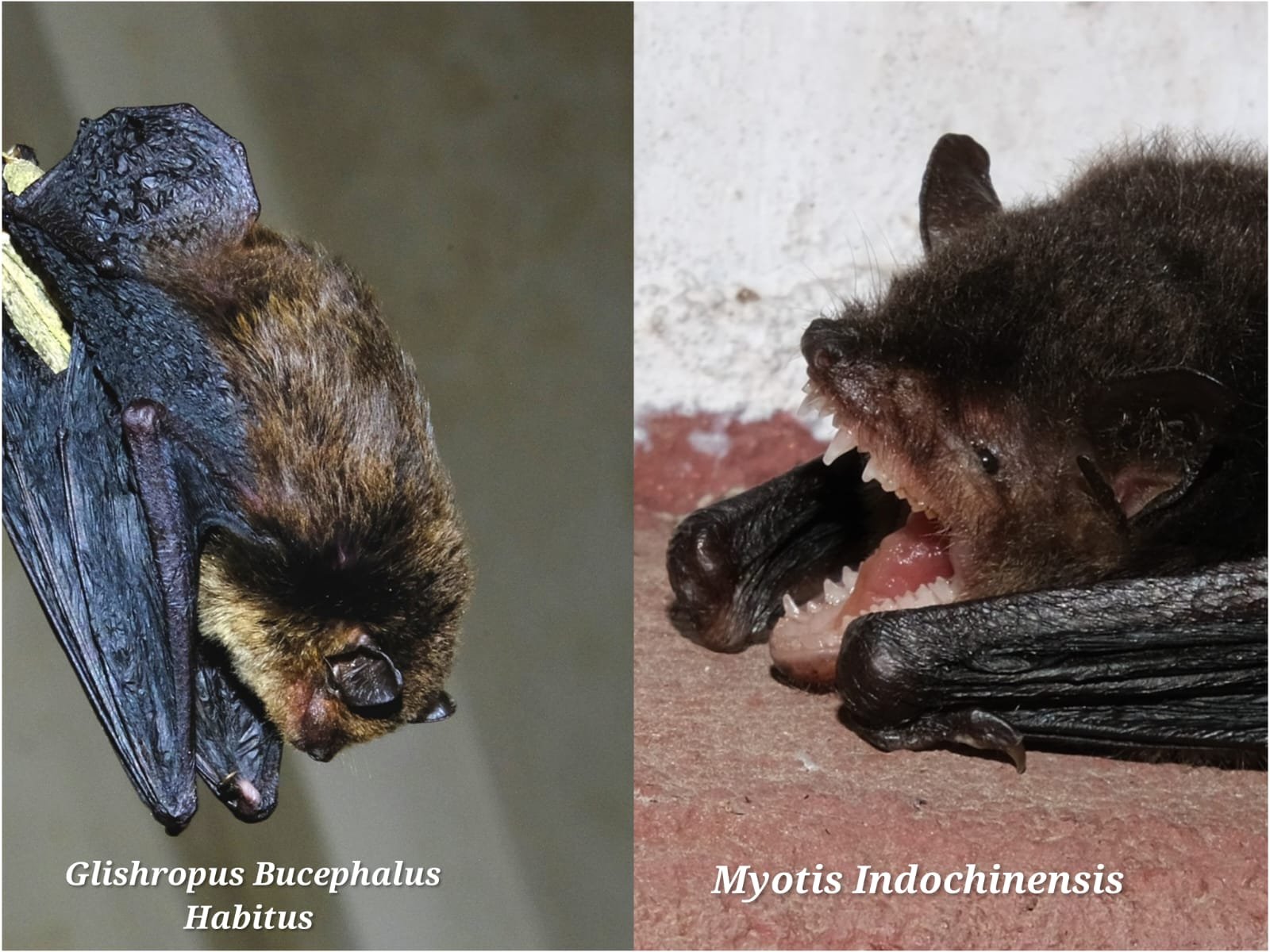
This research documents the very first occurrence of two species of bats named Glischropus bucephalus and Myotis indochinensis in the country.
The findings are based on extensive field surveys conducted across the northeastern state of Mizoram between 2023 and 2025. Researchers said specimens collected during these surveys showed that Glischropus bucephalus, or the Indo-Chinese thick-thumbed bat, had previously been recorded only in parts of Southeast Asia, including Cambodia, Vietnam, and Thailand. The recent find extends its known range roughly 670 kilometers westward, now reaching Mizoram.
Similarly, the Indo-Chinese mouse-eared bat, Myotis indochinensis, has been previously documented only in Vietnam, Laos, and southern China. The discovery from Reiek in Mizoram not only marks a significant geographical extension of approximately 1,300 kilometers westward but also highlights a gap in the knowledge about mammalian diversity in this region.
Lead researcher Dr. Uttam Saikia said the study underscores the need for more comprehensive biodiversity surveys in Northeast India.
He said this study addresses what biologists have termed the ‘Wallacean Shortfall,’ illustrating the knowledge gap regarding species distribution critical for effective biodiversity conservation.
With these current additions, the country’s known bat diversity expands to at least 138 species.