













By Dipak Kurmi
The economic architecture of a nation can sometimes be read through the unusual demands its leadership places upon ordinary citizens. When Prime Minister Narendra Modi addressed a public rally in Hyderabad on May 10, he deviated from standard political rhetoric to deliver an extraordinary appeal that directly targeted personal, private household choices. He explicitly requested citizens to skip buying gold for weddings this year, defer discretionary overseas holidays, and return to remote work setups wherever possible. The sight of a sitting prime minister asking common families to alter deeply ingrained cultural traditions and lifestyle choices because the national balance sheet is under strain indicates that the underlying macroeconomic indicators are profoundly concerning. The messaging from the highest level of government signals that India’s massive import bill has become structurally unsustainable, creating an urgent, high-stakes hunt for immediate breathing room in the country’s balance of payments.
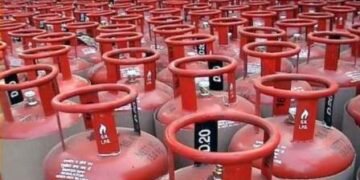
To fully understand the gravity of this appeal, one must look at the brutal geopolitical realities currently playing out in the West Asian maritime channels. India relies on imports to satisfy nearly 88 percent of its crude oil requirements and 60 percent of its liquefied petroleum gas consumption, with the overwhelming bulk of these essential energy flows passing through the narrow, 33-kilometer-wide Strait of Hormuz. Following a rapid escalation of the conflict involving the United States, Israel, and Iran, this critical maritime choke point has been effectively blocked. The immediate consequences for India’s domestic energy architecture have been swift, severe, and structurally paralyzing. Domestic LPG supplies plummeted rapidly to more than 40 percent of normal operating capacity, forcing the central government to invoke the stringent provisions of the Essential Commodities Act. Across major economic centers, the supply chain dislocation manifested instantly as commercial kitchens in Mumbai were forced to shutter and premium hotels in Bengaluru received barely 10 percent of their normal pipeline gas allocations, all while the Indian rupee faced sustained, aggressive depreciation pressure.
The mathematical realities of this energy vulnerability are staggering and run directly through India’s foreign exchange reserves. For every 10-dollar incremental rise in the per-barrel price of international crude oil, an additional 13 to 14 billion dollars is added to India’s annual oil import bill. As international Brent crude prices surged to touch 130 dollars per barrel at the absolute peak of this crisis, the nation began hemorrhaging hard foreign currency at a velocity that no amount of direct Reserve Bank of India market intervention could fully neutralize or stabilize. It is precisely within this volatile context that the Prime Minister’s urgent request to curtail gold imports—historically one of India’s largest non-essential dollar drains—must be analyzed. As the country faces the limits of traditional monetary interventions, the search for strategic self-reliance must shift toward domestic resource optimization. As the poet T.S. Eliot famously noted, home is where one starts, and in the context of an unprecedented global energy shock, India must begin looking squarely at its own geography to secure its long-term sovereign economic stability.
The most potent, scalable solution to this structural vulnerability lies hidden in plain sight across India’s vast agricultural heartland. India possesses one of the largest untapped natural biogas reserves anywhere in the world, generated by an expansive agrarian economy that yields up to 500 million tonnes of agricultural residues annually from paddy, wheat, and sugarcane cultivation. This massive biomass base is further augmented by the organic waste generated by a rapidly urbanizing population of 1.4 billion people, extensive food processing waste streams, and the daily waste output of over 300 million bovine animals. When these colossal volumes of organic waste are directed into anaerobic digesters, they undergo biological breakdown to produce raw biogas. Once this raw gas is purified to remove carbon dioxide and hydrogen sulfide, it is transformed into Compressed Biogas, an eco-friendly fuel that is chemically identical to conventional fossil-derived natural gas and completely compatible with existing gas grid pipelines, city buses, heavy industrial boilers, and domestic piped natural gas networks.
The broader technical potential of India’s compressed biogas sector is estimated at an impressive 90 billion cubic meter equivalents annually. To contextualize this massive figure, India’s total annual liquefied natural gas import dependence, which hovers around 27 to 29 million tonnes, could be substantially offset if even a modest fraction of this domestic biogas potential were systematically realized. Unlike imported fossil fuels, compressed biogas carries absolutely zero geopolitical risk because its primary feedstock grows predictably in Indian agricultural fields rather than flowing through contested maritime choke points in the Persian Gulf. Yet, despite this massive domestic availability, policy execution has lagged significantly behind intent. By late 2025, India had managed to commission barely 130 operational commercial biogas plants against the ambitious target of 5,000 units originally envisioned under the government’s flagship Sustainable Alternative Towards Affordable Transportation initiative. The current maritime blockade at the Strait of Hormuz has suddenly made the steep economic price of this historical policy underperformance entirely visible in hard-dollar terms.
What makes the accelerated scale-up of compressed biogas so incredibly compelling for policymakers is its unique ability to address multiple critical development challenges simultaneously. First, every single tonne of domestic compressed biogas that actively displaces an equivalent unit of imported LNG or LPG represents a dollar that remains securely inside India’s central bank reserves. At crisis-level crude oil prices, this substitution offers profound macroeconomic relief, meaning that a domestic biogas sector operating at just 30 percent of its true technical potential could remove measurable, volatile pressure from the national current account deficit. Second, the commercialization of this sector delivers a massive economic dividend directly to Indian farmers. The primary feedstocks required for large-scale biogas production, such as residual paddy straw, bovine manure, and sugar mill press mud, are currently treated as worthless waste or burned openly, causing massive environmental harm. The annual practice of stubble burning across Punjab and Haryana each October routinely chokes the National Capital Region with toxic smog, but transforming this agricultural residue into a prized industrial feedstock creates a predictable, highly lucrative alternative income stream for rural communities while solving an otherwise intractable political and environmental crisis.
Beyond the direct energy and rural income benefits, the circular economy of compressed biogas production extends deep into national food security via the agricultural fertilizer supply chain. The nutrient-rich slurry generated as a natural byproduct of anaerobic digestion serves as a high-quality, slow-release bio-fertilizer that can directly substitute for imported chemical urea. The geopolitical disruptions surrounding the Strait of Hormuz have already driven global urea prices upward by 50 percent, a consequence of the fact that West Asian states account for nearly one-third of total global fertilizer production. A fully mature, industrialized domestic biogas sector would generate high-grade fermented organic manure at an unprecedented scale, effectively closing a vulnerable supply loop that currently links Indian agricultural production to foreign fertilizer plants at a massive, volatile foreign exchange cost. By localizing both fuel and fertilizer production, India can insulate its domestic food systems from external price shocks while rebuilding soil health through organic carbon replenishment.
To capture these compounding benefits, the administrative gap between aspirational policy frameworks and actual operational production facilities must be closed with extreme urgency. India has already lost a valuable decade, and billions of dollars in foreign exchange, navigating bureaucratic friction points ranging from raw gas blending mandates to the physical logistics of injecting molecules into regional pipelines. What the country requires now is an aggressive re-engineering of existing bioenergy programmes to match the swift pace demanded by the current international crisis. This requires systematic, digital mapping of regional feedstock availability to categorize which biomass types are most suitable for immediate processing, alongside substantial capital investment into robust aggregation supply chains and specialized mechanized storage facilities. Furthermore, the sector requires streamlined institutional guidelines regarding blending mandates, environmental clearances, financial subsidies, and single-window implementation mechanisms, eliminating the jurisdictional confusion that currently arises from the overlapping oversight of multiple central ministries.
Achieving true energy independence also demands that state governments step forward to enact localized, highly responsive biogas policies that feature robust, state-backed Viability Gap Funding mechanisms. It is equally vital that newly instituted compressed biogas blending mandates are enforced across city gas distribution networks with the exact same regulatory rigor and administrative penalties that have successfully driven India’s ethanol blending targets over the recent past. Fortunately, the current domestic political calendar provides an ideal, unencumbered window for executing these necessary reforms. With no major state legislative assembly elections scheduled across the country until early 2027, the central government has a rare, clear five-to-six-month political runway to implement deep structural decisions that may be short-term painful but remain economically non-negotiable. Raising domestic fuel price adjustments, committing public capital to critical rural supply-side infrastructure, and fast-tracking the statutory commissioning of delayed biogas units are far easier to execute when the immediate electoral calendar offers sufficient breathing room.
The maritime crisis at the Strait of Hormuz, despite its massive economic costs and immediate disruptions, has delivered one highly valuable outcome: it has rendered the true price of India’s chronic foreign energy dependency absolutely impossible for policymakers or the public to ignore. By addressing the nation in such plain, unvarnished language from a public stage, the Prime Minister has openly acknowledged the structural vulnerability of the status quo. The logical next step for the Indian state must be to pivot away from a narrative of citizen restraint and asset conservation toward an era of state-led acceleration and rapid infrastructure build-out. Every single molecule of methane that is allowed to escape unharvested from India’s agricultural fields into the atmosphere represents a clear failure of institutional imagination and policy execution. Conversely, every single molecule of clean, domestic gas that is successfully captured, compressed, and directed into a national pipeline represents a hard dollar saved, a rural farmer fairly compensated, and a vital degree of sovereign independence permanently reclaimed under the true banner of Urja Atmanirbharta.
(The writer can be reached at dipakkurmiglpltd@gmail.com)