












Shillong, Oct 29: Arecanut has long been the backbone of many farming families in the Garo Hills region of Meghalaya. However, the crop is currently facing several production challenges, particularly the incidence of bud rot disease, which has led to reduced productivity in recent years.
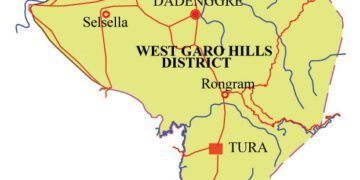
To address these issues and to create awareness about scientific cultivation practices in arecanut while also promoting cocoa cultivation in West Garo Hills, a stakeholders’ meeting was organized at Tura by ICAR–Central Plantation Crops Research Institute (ICAR–CPCRI), Kasaragod, Kerala, in collaboration with ICAR–Krishi Vigyan Kendra (KVK) and the Department of Horticulture, West Garo Hills at SMELC Building, Dakopgre Tura yesterday.
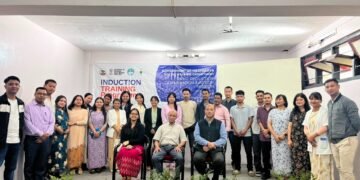
The programme was attended by 112 farmers from two blocks Rongram and Gambegre and 20 officials in total from CPCRI, KVK and DHO office, Tura.
Dr. Vinayaka Hegde, Head, Crop Protection Division, ICAR–CPCRI, inaugurated the programme and emphasized the importance of collaborative efforts to tackle the various problems faced by arecanut farmers.
Tashree Momin, Joint Director of Agriculture highlighted the urgent need to manage bud rot disease, a major constraint affecting arecanut cultivation in Meghalaya.
Thera Marak, District Horticulture Officer stressed the importance of adopting scientific cultivation practices to enhance yield and profitability.
Dr. Joyoshree Mahanta, CTO (Plant Pathology), ICAR–KVK presented the current status of arecanut cultivation in the region and called for strengthened collaboration among stakeholders to address farmers’ challenges.
Scientists from ICAR–CPCRI, Kasaragod, a premier institute under the Indian Council of Agricultural Research (ICAR), explained effective strategies for managing bud rot disease. They noted that Phytophthora, a fungal pathogen, is the causal agent of the disease, and its incidence is often aggravated by low moisture stress and boron deficiency. A holistic approach involving soil and water conservation measures—such as mulching around the palm basin, digging catch pits, planting bananas on hill slopes, and providing irrigation wherever possible—was recommended.
The experts also advised the application of lime to correct soil pH, organic manure, wood ash, and borax to improve palm health. Preventive spraying of Bordeaux mixture on the palm crown was suggested to safeguard the crop from bud rot.
Farmers were further encouraged to follow phytosanitation practices, including the removal of dead palms, and to replant with high-yielding varieties such as Nalbari, Kahikuchi Tall, and Mohitnagar developed by ICAR–CPCRI for better productivity and income.
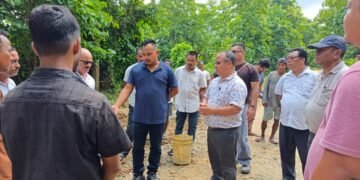
The scientists further highlighted the role of Trichoderma, a beneficial biocontrol agent effective against soil-borne pathogens. As part of the programme, Trichoderma talc formulations developed by ICAR–CPCRI were distributed to 54 farmers, along with a demonstration on the use of carbon fibre telescopic poles for spraying fungicides on the bunches and crown of tall arecanut palms and for harvesting from the ground—eliminating the need for physical climbing.