









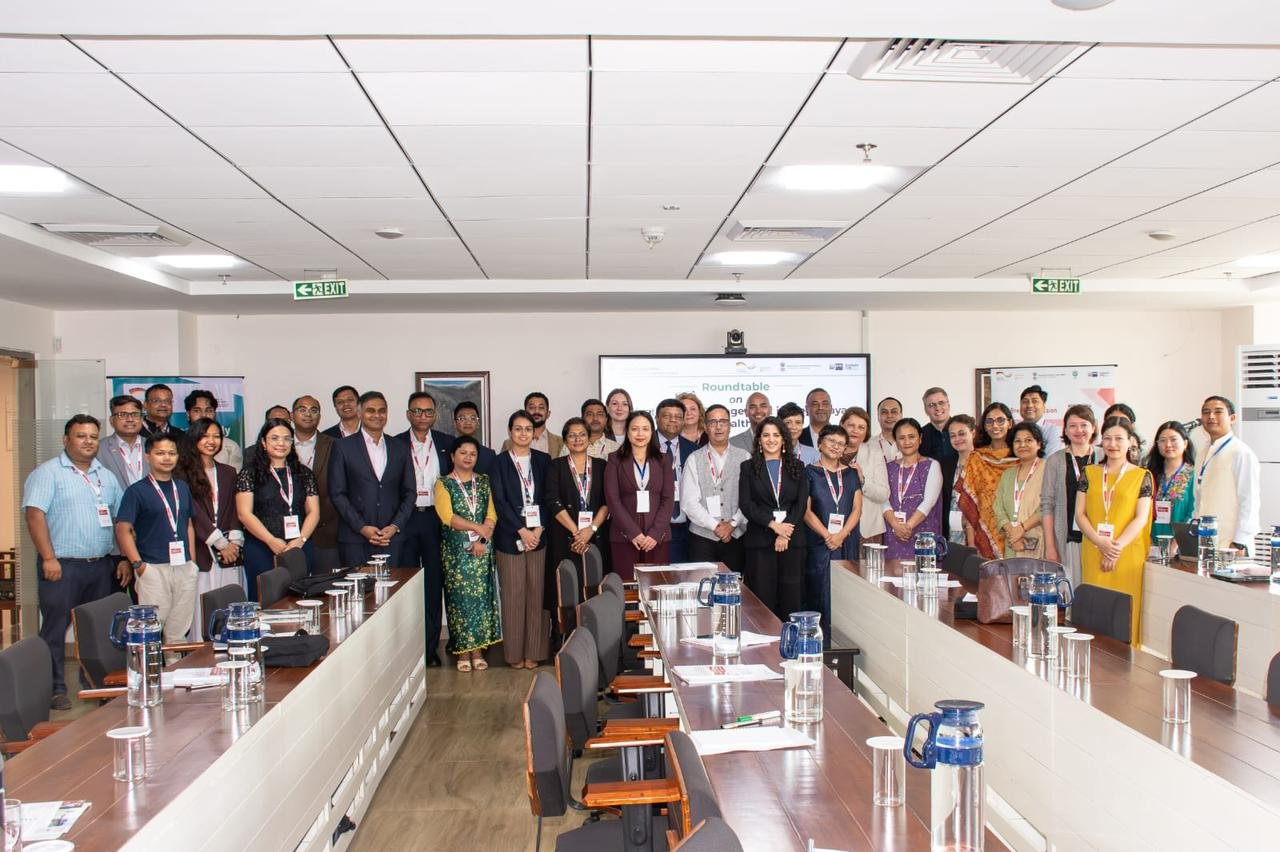
Shillong, May 24: A roundtable on ‘Private Sector Engagement in Meghalaya in the Health Sector’ was jointly organised by the Department of Health and Family Welfare, German International Cooperation (under the GSDP Project), IIM Shillong and Indo-German Chamber of Commerce, at IIM Shillong on May 22.
Over 50 representatives from the state government, GIZ, the Indo-German Chamber of Commerce, German consulate, development partners, industry experts and healthcare stakeholders came together to identify practical areas of collaboration for strengthening healthcare delivery in the state. The aim of the roundtable was to discuss the role of private sector engagement in expanding access, improving quality, mobilising healthcare finance, strengthening technology adoption and building health workforce capabilities.
Setting the tone of the event, Dr Joram Beda, Commissioner and Secretary, Health and Family Welfare, highlighted Meghalaya’s recent health sector innovations, including the MOTHER App, Rescue Mission, Transit Homes and drone-based medicine delivery to remote areas. He noted that these local initiatives have contributed to improvements in maternal and infant health outcomes and have shown how context-specific innovations can address difficult service delivery challenges in a geographically complex state. He also spoke about the Meghalaya Health Advancement Policy, under which untied financial support has been extended to charitable private hospitals, along with support for recruitment of doctors in private hospitals serving public health needs.
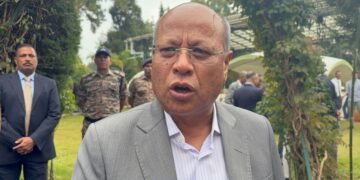
Sharing his inputs in the discussion, Sampath Kumar, Additional Chief Secretary, underlined that Meghalaya’s geography makes innovation not merely desirable but necessary. He highlighted the state’s emerging work in Artificial Intelligence-enabled tuberculosis screening, under which around 90,000 people have been screened, as well as experiments in virtual reality for improving health outcomes. He also noted Meghalaya’s movement towards Universal Health Coverage, with attention to OPD services and preventive healthcare. Kumar further pointed to opportunities for preparing Meghalaya’s nursing workforce for international placements in countries such as Germany and Japan through language and competency training.
A panel discussion on ‘Challenges and opportunities in mobilising healthcare finance’ examined how Meghalaya can attract private sector participation while protecting public health priorities. Speakers discussed outcome-based budgeting, low-cost patient financing models, outcome-based pricing for expensive treatments, senior expert services from Germany and the need to shift from fragmented project-based engagement to a more coordinated multi-donor platform aligned with state priorities. The discussion also highlighted rural service delivery challenges, given that a large share of Meghalaya’s population is dispersed across thousands of villages with difficult connectivity.
The roundtable identified several priority areas for action. These included developing 3-to-6-month specialised training modules for existing medical officers, exploring all-weather last-mile logistics solutions for drug delivery, mapping unmet needs in infrastructure, skills and technology, strengthening telemedicine with local language support, improving data integration between public and private health systems and aligning corporate social responsibility (CSR) investments with Meghalaya’s health sector needs.