







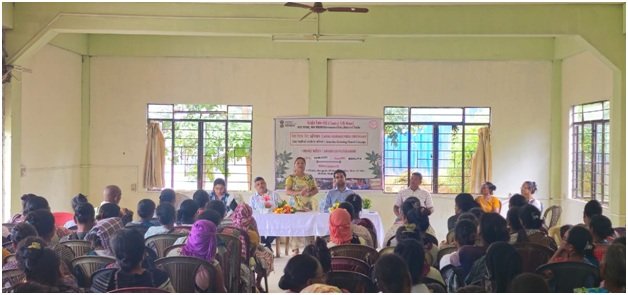
Shillong, Aug 18: In a significant step to promote scientific sericulture, the Central Silk Board (CSB) today organised an awareness programme on silkworm rearing technology at Sohliya village under its flagship “Mera Resham Mera Abhiman” (MRMA) campaign.
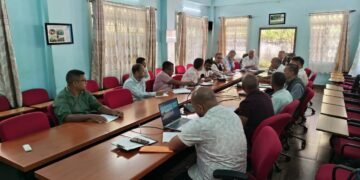
The event, jointly hosted by CSB’s, Muga Eri Silkworm Seed Organization (MESSO), P-3 Unit, Nongpoh, and the District Sericulture Office, Ri-Bhoi, saw enthusiastic participation from 118 farmers across the district, reflecting growing grassroots interest in sustainable sericulture farming.
District Sericulture Officer R. B. Lyngwa, who chaired the programme highlighted the region’s unique potential for sustainable sericulture. She focused on key areas of technology transfer, including improved Eri silkworm rearing techniques, systematic host plant management, and cost-effective disinfection methods to prevent disease outbreaks-practices essential for enhancing cocoons yield and ensuring long-term sustainability.
The technical sessions of the programme were coordinated by Abhishek Singh, Scientist-C, CSB-MESSO, Nongpoh. He stressed the importance of adopting modern and scientific techniques in Eri silkworm rearing to increase yield and profitability, remarking that “our goal is to transform sericulture farming from a cultural practice into a viable and rewarding livelihood for farmers.”
During the interactive session, farmers raised several questions regarding the challenges faced in their rearing activities. Issues related to pest control, host plant care, and disease management were discussed in detail, with experts providing practical solutions and assurances of continued technical support.
Sericulture demonstrators Pynlang Rymbai and Watklet Nongrum encouraged farmers to actively participate in training programmes, demonstrations, and field visits being organised under the MRMA campaign.
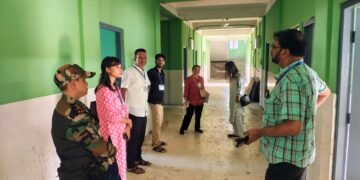
As part of the programme, a field visit was also conducted to the rearing and weaving units of progressive farmers, Taimong Mynsong and Yulisha from Liarkhla village. Farmers were able to observe their successful practices, discuss problems, and exchange experiences, which added a valuable practical dimension to the training.