





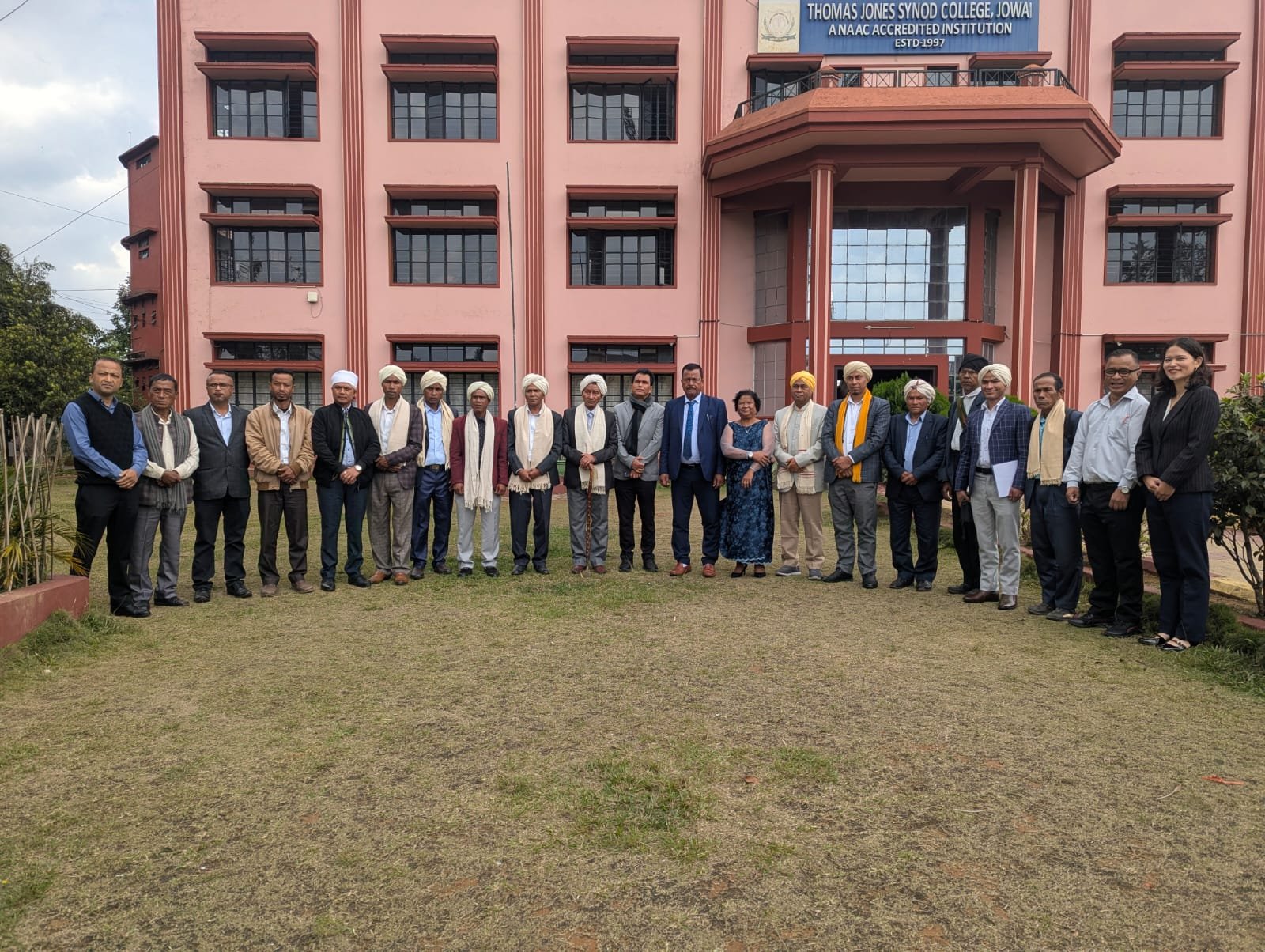
Jowai, Apr 11: The Jaiñtia Hills Autonomous District Council (JHADC) and traditional heads of the region, including Daloi and Sirdars gathered together in one platform to deliberate on the crucial issue of environmental conservation during a seminar held yesterday.
The collaborative seminar on Daloiship and Environmental Conservation was co-hosted by Leiden University in collaboration with the JHADC, Earthtree Enviro Ltd, and Thomas Jones Synod College.
The seminar aimed to deepen understanding of Daloiship and its role in guiding environmental conservation. As environmental concerns become increasingly urgent, the role of the Daloi, as the customary and administrative head of an Elaka, continues to evolve in ensuring responsible land stewardship and the protection of customary law.
The seminar provided a platform to reflect on how Daloiship can contribute to shaping the environmental future of the Jaiñtia Hills while strengthening traditional systems of land custodianship.
With 14 out of 18 Dalois and several Sirdars present, the seminar facilitated meaningful exchanges among traditional leaders, students, and educators.
Hambertus Nongtdu, Executive Member in charge of Forest, JHADC, highlighted a significant milestone achieved by the council in empowering traditional institutions through the enactment of the Jaiñtia Hills Autonomous District (Establishment of Elaka and Village and Election, Appointment, Powers, Functions and Jurisdiction of Daloi, Sirdar and Waheh Chnong) Act, 2015.
He noted that after more than a decade of its implementation, the Chief Executive Member has recently announced plans to amend the Act, and a committee has been constituted for this purpose. He expressed hope that the seminar would generate valuable inputs for the proposed amendments.
Anna Notsu, Research Scholar from Leiden University, expressed optimism that the deliberations would lead to the development of a policy document to be submitted to the JHADC.
Dalois underlined the need for enhanced powers to safeguard both the environment and cultural governance.