


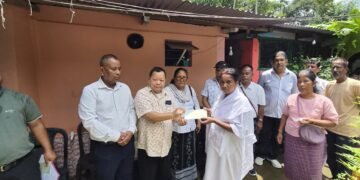

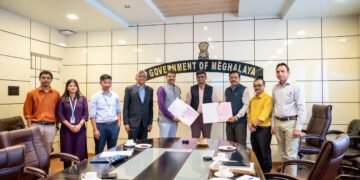








Shillong, Jun 22: The College of Community Science (CCS), Central Agricultural University (Imphal), Tura has transferred three food processing technologies to Prime Meghalaya.
The transferred technologies include the production of strawberry jam, litchi jam, and mango king chilli sauce. These innovations are designed to enhance the value addition of locally available fruits, which is crucial for supporting micro and small food processing enterprises in Meghalaya, the college said.
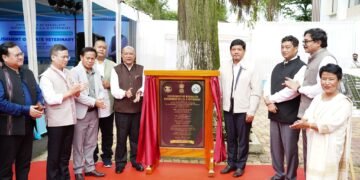
A transfer ceremony was held during the 15th Research Council, 11th Extension Education Council, and 33rd Academic Council meeting held on Monday in Aizawl, Mizoram.
The ceremony was held in the presence of Mizoram Governor Lt. Gen. (Dr.) V. K. Singh (Retd.), academicians, scientists, administrators, and representatives from various constituent colleges and institutions under Central Agricultural University (Imphal).
The technologies were formally received on behalf of Prime Meghalaya by Harshit T.R.
The Governor appreciated the efforts of CAU in advancing agricultural education, research and extension services in the region and encouraged greater collaboration for sustainable agricultural development.
CCS Dean Dr. Jyoti V. Vastrad emphasised the importance of translating research into viable technologies that benefit rural communities and entrepreneurs, highlighting the college’s ongoing endeavours to foster economic growth in the Northeastern region.
The college has developed a number of technologies that are ready for commercialization and industrial adoption, particularly in the areas of food processing, textiles, and rural enterprise development. Among its notable innovations is the Ramei Processing Technology, which is presently being transferred to the Meghalaya Basin Management Agency (MBMA) for wider dissemination and commercialisation among farmers, entrepreneurs, and stakeholder groups across the state.
Another significant advancement is the innovative technology for scouring, whitening, and simultaneous degumming of ramie fiber cultivated in Assam and Meghalaya. This technology is designed to operate with minimal chemicals, water, and energy, making it suitable for both industrial and cottage-scale applications. The MBMA has recognized its potential, advocating for its adoption among integrated village cooperative societies (IVCs) in Meghalaya.
Alongside food processing, the college collaborated on the development of Comilla cotton meditech products. This initiative combines efforts between the College of Community Science, CAU (Imphal, Tura), and ICAR-Central Institute for Cotton Research. Four eco-friendly healthcare products, such as surgipure surgical cotton, sanitary pads, baby diapers, and eco-buds ear buds have been successfully developed using indigenous Comilla cotton.