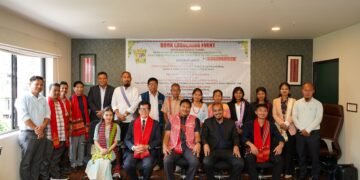









Shillong, May 30: The first academic workshop dedicated to AI-assisted research in Northeast India, NortheastGenAI 2026, concluded on Friday.
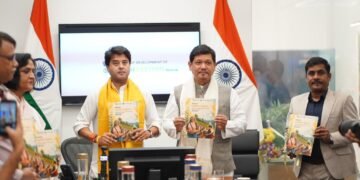
The event showcased two keynote talks and seven paper presentations and release of open-access proceedings aimed at building an AI research ecosystem specific to Northeast.
Organised by Mwire Labs and supported by a Cohere Labs catalyst grant, the workshop featured submissions from various states in Northeast India, including Assam, Meghalaya, Nagaland, and Tripura. Out of 10 submissions, seven papers were accepted, covering a range of critical topics such as endangered language preservation, digital equity in education, and AI-assisted climate monitoring.
Papers included an analysis of the Mising language, which is classified as definitely endangered. The study explored how AI and speech recognition tools can aid in community-led language revitalisation. Another accepted paper proposed Assambench, a systematic benchmark for evaluating large language models in Assamese. From Meghalaya, a paper on Khasi society and gender power argues that Khasi society is better understood as matrilineal rather than matriarchal, presenting an anthropological study of the gap between symbolic female centrality and actual political authority.
The workshop featured keynote speakers like Bonaventure F.P. Dossou from McGill University, who discussed efficient methods for low-resource languages, and Dr. Prabhat Kumar Bharti, who presented his innovative co-reviewer framework. Both speakers emphasised the importance of leveraging AI technology to further research and technology development for low-resource languages and underserved communities.
With the conclusion of NortheastGenAI 2026, the groundwork has been laid for an enduring focus on the rich languages, cultures, and ecosystems of Northeast India. The announcement of NortheastGenAI 2027 promises to continue this mission, fostering dialogue and research opportunities into the future.