












Shillong, Jun 9: The 81st round of the National Sample Survey (NSS) will commence from July 2026 to June 2027 across the country.
The Field Operations Division (FOD) of the National Statistics Office (NSO) under the Union Ministry of Statistics and Programme Implementation conducts nationwide sample surveys on various aspects of socio-economic, industrial and agricultural statistics, etc, since its inception in 1950.
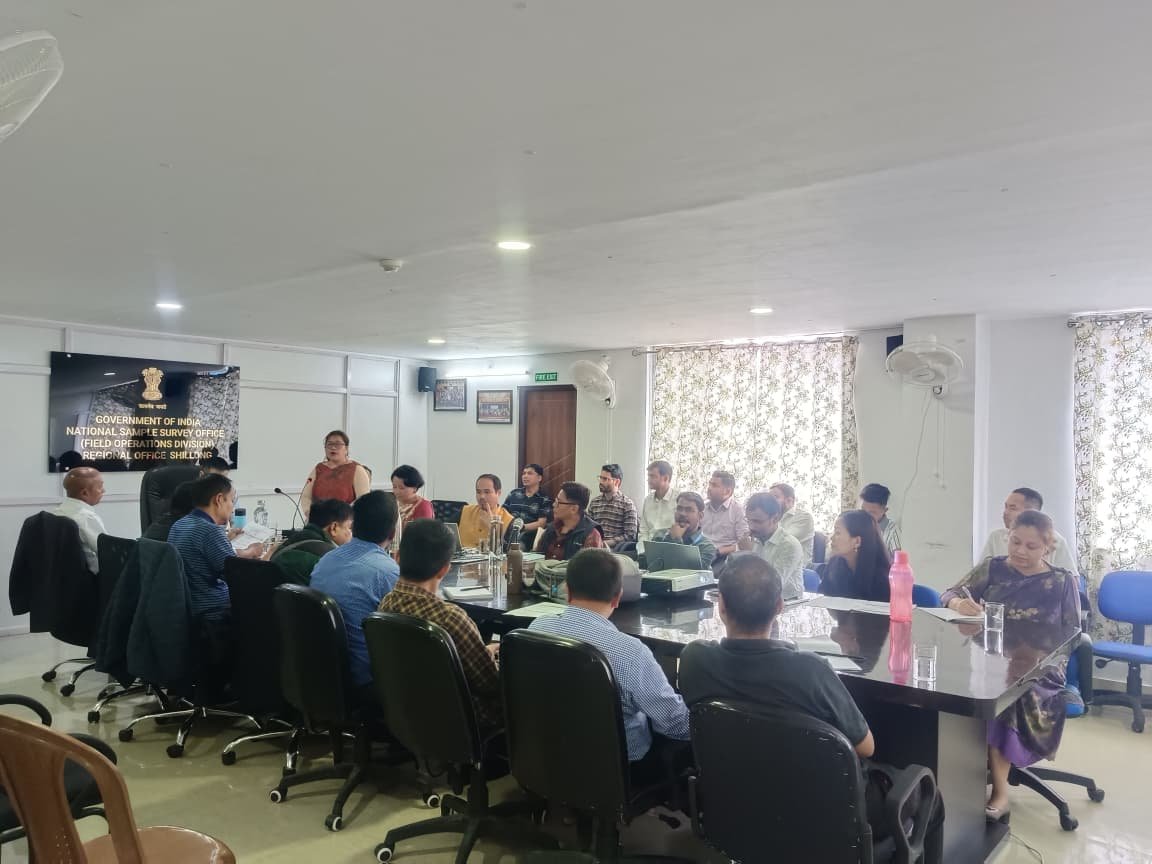
To strengthen capacity building and ensure high-quality data collection, the NSO FOD’s Shillong regional office is organising a four-day regional training camp for field officials, which began yesterday. The programme is also being attended by officers and representatives from the state’s Directorate of Economics and Statistics (DES).
Addressing the inaugural session, Marvin LSF Marwein, Joint Director at the DES, underscored the critical role of the NSS data as a cornerstone for informed governance. He noted that NSS findings provide essential inputs for government planning, policy formulation, budgeting and evidence-based decision-making at both state and national levels. He also highlighted a distinctive socio-economic feature of Meghalaya that a significant proportion of land in the state is owned by women – a rare and noteworthy characteristic. Marwein also emphasised the importance of upholding the highest standards of data quality, stressing that accuracy and reliability are fundamental to the effectiveness of policy decisions and developmental initiatives.
The keynote address was delivered by Orenthung Patton, Deputy Director at the NSO FOD regional office. In his address, he focused on the importance of accurate and reliable data collection through the use of digital tablets, highlighting their role in enhancing efficiency and minimising errors in field operations.
He elaborated on the significance of the ongoing surveys, which provide critical insights into the socio-economic conditions of agricultural households, patterns of indebtedness and asset ownership, as well as the dynamics and drivers of migration. He emphasised that the data generated from these surveys are vital for designing targeted welfare programmes, evaluating the impact of existing policies and formulating informed interventions aimed at fostering inclusive and sustainable development.