









Editor,
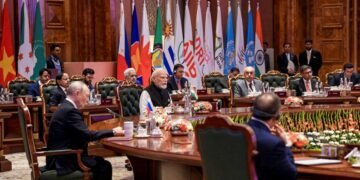
As New Delhi is hosting the 18th summit of BRICS, all eyes are on the outcomes of this high level international meet, since the countries are now dealing with a new world order that is being shaped by wars, sanctions, tariffs and environmental concerns. Ever since the BRICS has formed its members have increased from four to eleven today, revealing its growing outreach especially among the developing nations. But whether its expanding architecture can capture the international market, hedge the ongoing war crisis and act as a separate bloc against western hegemony ,has become central today. Because circumstances under which BRICS formed have changed to a great extent now. Today critical minerals , AI technology , green energy , global warming, carbon emission controlling targets have found significance in international deals. It is necessary now to see how the member nations of BRICS understand the changing global priorities and converge their capabilities and resources in building concrete supply chains, securing sea routes, increasing maritime transactions, reducing climatic hazards and developing cyber security.
Whether resolutions could be found for securing continuous Russian oil supply despite US sanctions, will China extend reasonable negotiation on its rare earth extract and could India’s skilled workforce find a way for filling the labour deficiency of the member nations , remains prime in this BRICS summit. Equally important is whether this summit could deliver the message to Russia to stop the war with Ukraine by raising the humanitarian , economic and environmental concerns. Since it is true that in this ” post -ideological era” , it is the strategic necessity rather than ideological asymmetries which is bringing the nations together. But multilateralism will sound hollow by continuing cooperation with countries situated far away and killing innocent people in the neighbouring nation . Initially BRICS was formed as an anti-western body for counterbalancing the dominance of global bodies like IMF and World Bank, reducing dollar dependency and securing alternative financial routes. But today the situation has travelled far from establishing financial bodies like ‘New Development Bank’. Today super power like US has adopted wars and coercive measures as a part of its normal diplomacy , supply routes are disrupted due to blockage of international transit point like Strait of Hormuz, jobs are shrinking due to emergence of new technologies like AI, climate is deteriorating rapidly due to unchecked effects of industrialization and urbanization and alliances are changing according to economic needs. There is an overall global uncertainty. Whether the BRICS summit of 2026 reflects the understanding of the present circumstances and brings the members closer through cooperation and connectivity will remain vital. India has already demonstrated its will for greater regional connectivity by inviting neighbouring nations like Nepal and Bangladesh in the summit’s outreach session; other giants like Russia and China should also open the diplomatic space for collective dealing of national and global concerns . This BRICS summit of 2026 is now seen not just as an annual meeting for signing financial agreements and MOU’s , but as how nations tend to react in a changing geopolitical order .
Kabir Ahmed Saikia
Rajabari, Jorhat
Assam