













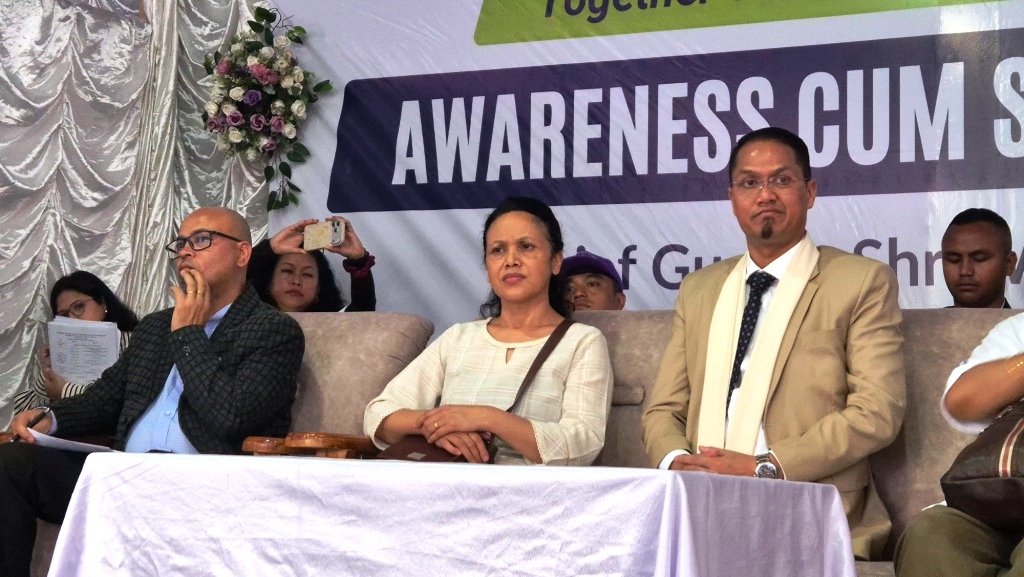
Shillong, Jun 6: Health Minister Wailadmiki Shylla has called for collaborative efforts among various departments in Meghalaya to promote a healthy lifestyle and raise awareness about cancer prevention.
Cancer incidence in Meghalaya is among the highest in India, recording approximately 176 cases per 100,000 people.
Expressing concern over the rising number of cancer cases, Shylla said by working together with the Meghalaya State Cancer Society, stakeholders aim to tackle the growing burden of cancer within the state. This approach ensures that residents receive accurate information regarding cancer prevention, early detection, and treatment options available to them, he added.
Speaking at an awareness programme was organised by the State Cancer Society today in Jowai, Shylla highlighted the role of the HPV vaccine in cancer prevention, which is now being offered free of charge to girls aged between 12 and 14. He encouraged parents and eligible girls to embrace this opportunity, assuring them of the vaccine’s safety and effectiveness.
He informed that cancer treatment is covered under the Meghalaya Health Insurance Scheme (MHIS), which provides financial support of up to Rs. 5 lakhs, supplemented by the Chief Minister’s CM Care Scheme, offering an extra Rs. 2 lakhs.
Dr. JCA Lamin, an oncologist at Shillong Medical College Civil Hospital, pointed out that oesophageal cancer (affecting the food pipe) represents one of the most prevalent forms in the state, closely followed by mouth cancer. A range of lifestyle choices and environmental factors contribute to these alarming rates. Tobacco usage, both smoked and smokeless forms, along with habits like betel nut chewing and alcohol consumption, have been identified as major risk factors. In addition, unhealthy diets, lack of physical activity, pollution, and infections like HPV contribute significantly to the high cancer incidence, he said.
Dr. Lamin said that nearly 70-80 per cent of cancer cases are linked to preventable causes. This makes early detection paramount, as it notably improves the chances of effective treatment. He identified several warning signs to watch for, including unexplained weight loss, non-healing sores, persistent cough, difficulty swallowing, and unusual lumps.
Moreover, he called for regular health screenings, healthy lifestyle choices, and HPV vaccination as vital strategies for reducing cancer risk. Dr. Lamin urged the community, particularly younger generations, to refrain from tobacco and alcohol use, highlighting that prompt medical attention can lead to a better prognosis if cancer is detected early.