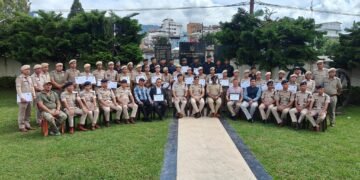






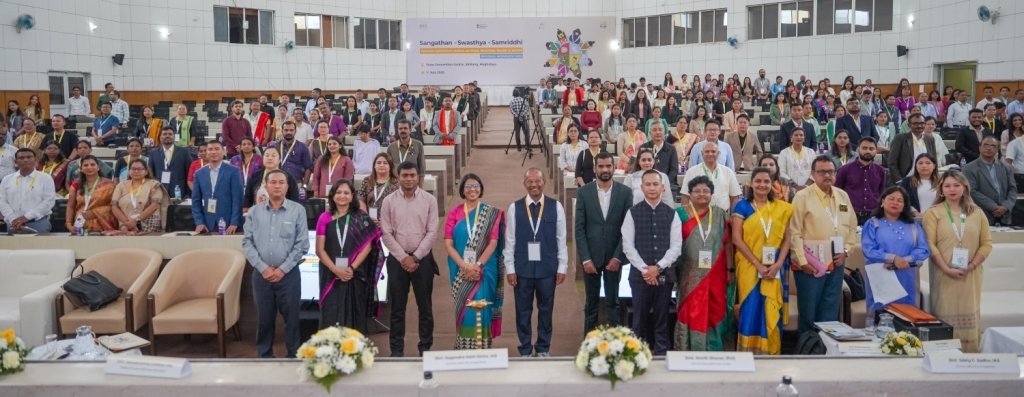
A two-day regional workshop titled “Sangathan, Swasthya, Samriddhi: Women Collective’s Action on Food, Nutrition, Health & WASH (FNHW)” concluded yesterday.
The workshop was organised by the National Mission Management Unit (NMMU) of the Deendayal Antyodaya Yojana – National Rural Livelihoods Mission (DAY-NRLM) in collaboration with Meghalaya State Rural Livelihoods Society (MSRLS).
It aimed to strengthen SHG-led FNHW interventions, encourage cross-learning among states, and showcase community-driven models from across India. It focused on integrating FNHW activities within the DAY-NRLM framework, fostering partnerships with line departments, CSOs and amplifying field insights to shape inclusive and sustainable policies.
Field visits were also conducted in Laitkroh and Shella Bholaganj Blocks, East Khasi Hills District, where delegates interacted with Model CLFs, SHGs, and Community Gender & Health Activists (CGHAs).
Participants observed community-run transit homes promoting institutional deliveries and Agri-Nutri Gardens led by women collectives, providing firsthand experience of community-based innovations.
Uniform for CGHAs was also launched, symbolizing strong visual identity and unified commitment to advancing community health and gender equity, experience-sharing by SRLMs, reflections from CRPs, and a panel discussion on state-specific FNHW initiatives.
An exhibition displaying FNHW practices, products and IEC materials curated and explained by CRPs and community leaders enabled rich cross-learning among SHGs, federation cadres, MoRD, state officials, and sector experts.
Community Resource Persons (CRPs) shared inspiring stories of leading FNHW awareness, strengthening VHSNCs, and promoting Agri-Nutri Gardens across SHG households. Through local campaigns, school-based learning models, and partnerships on waste management, they are driving behavioural change and improving service uptake. Their efforts reflect how SHG-led initiatives are creating healthier, more empowered, and climate-conscious communities.
The SRLM panel discussion emphasized how integrating FNHW within SHG-led livelihoods ensures both economic and health gains, as seen in Nagaland’s Lakhpati model. Tamil Nadu showcased nutri-enterprises, millet cafes, school nutrition programs, and convergence with health departments through women health volunteers. Tripura underlined SHG-driven health promotion, preventive care, and grassroots coordination as vital to achieving Viksit Bharat by 2047.
A session on elderly care highlighted India’s rapidly aging rural population and the urgent need for social security. HelpAge India presented a community-led pyramid model using Elderly SHGs, mobile health units, and telemedicine to ensure age-specific, dignified care and inclusion.
Kerala SRLM shared Kudumbashree’s experience in implementing care economy models like K4 Care and Saantwanam, which create dignified jobs in health and elder care. BUDS institutions, in convergence with LSGIs, support education and livelihoods for the intellectually disabled. The STRIDE program develops assistive devices, and new initiatives were also presented to deepen care and inclusion efforts.
An action plan emerging from the National Conclave on FNHW 2024 shaped through national consultations and regional workshops was discussed. Deliberations focused on embedding FNHW priorities into institutional planning, capacity building, and community platforms. States such as Assam and Kerala shared compelling models of FNHW integration and care service delivery.
Senior officials from MoRD, State Mission Directors, CEOs, COOs, and FNHW State In-Charges, along with CLF leaders and CRPs from 16 states – Andhra Pradesh, Arunachal Pradesh, Assam, Goa, Karnataka, Kerala, Manipur, Mizoram, Nagaland, Odisha, Sikkim, Tamil Nadu, Telangana, Tripura, West Bengal, and Meghalaya attended the workshop.