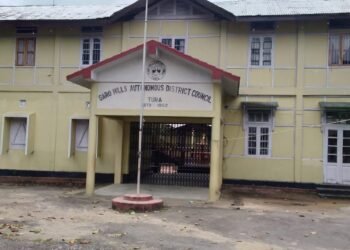










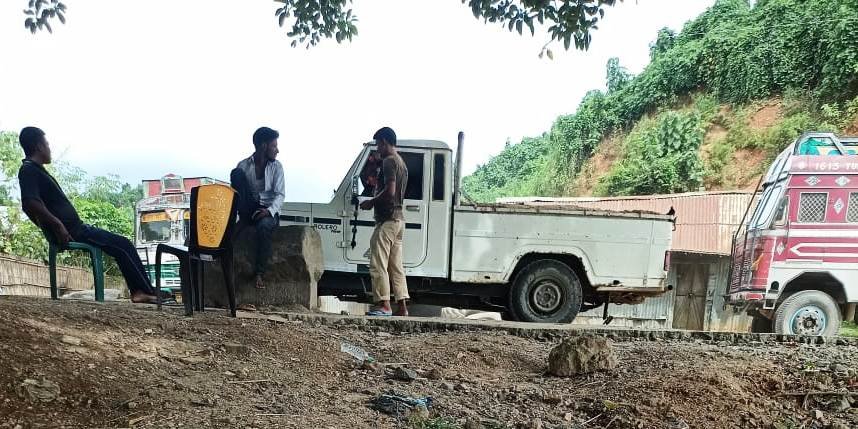
As if indicative of the malaise afflicting the Garo Hills Autonomous District Council (GHADC), a forest check gate in the village of Dhanua near Hallidayganj in West Garo Hills has been showing zero revenue for over five years now despite the check gate collecting huge amounts on a daily basis.
According to reports, the check gate was opened nearly seven years ago by the GHADC owing to huge traffic of commercial vehicles between South Salmara and WGH. Two of the major commercial hubs in Assam, namely Hatsingimari and Mankachar, fall close by, with vehicles carrying goods from these places being taxed by the forest check gate.
The forest gate is apparently being run by a forest gateman identified as Surat Zaman.
Sources said that smaller commercial vehicles, including mini trucks, were charged Rs 50 per vehicle while larger ones paid Rs 150 to pass through the gate. On an average day more than 400 commercial vehicles pass through after paying the forest toll. The payment is mandatory for these vehicles and a conservative estimate shows that at least Rs 28,000 being collected on a daily basis, or Rs 8.4 lakhs a month.
However, forest officials from Phulbari Range under which the Dhanua check gate falls, say that no revenue has been forwarded to the office for the past five years. If estimates of the loss to the GHADC is calculated, the Forest Department and, by extension, the GHADC has lost over Rs 1 crore per year in the past five years.
What is even more eye opening is that the check gate itself has transit pass books through which it collects the revenue in the name of the council. However, not one rupee has been deposited to benefit the GHADC.
“We have not received any revenue from the Dhanua gate despite toll collections taking place on a daily basis. When reminded, they continue making excuses but have not come up with any answer as to why revenue is not being deposited,” said a forest ranger from Phulbari on condition of anonymity.
Adding to the farce, the collectors at the check gate continue to draw a salary, paid for by the GHADC.
While it is too early to state whether the case with the Dhanua check gate is the exception or the norm, the struggles of the GHADC to ensure revenue could well have been over if such revenue leakage by employees or casual workers were addressed in a sincere manner.