










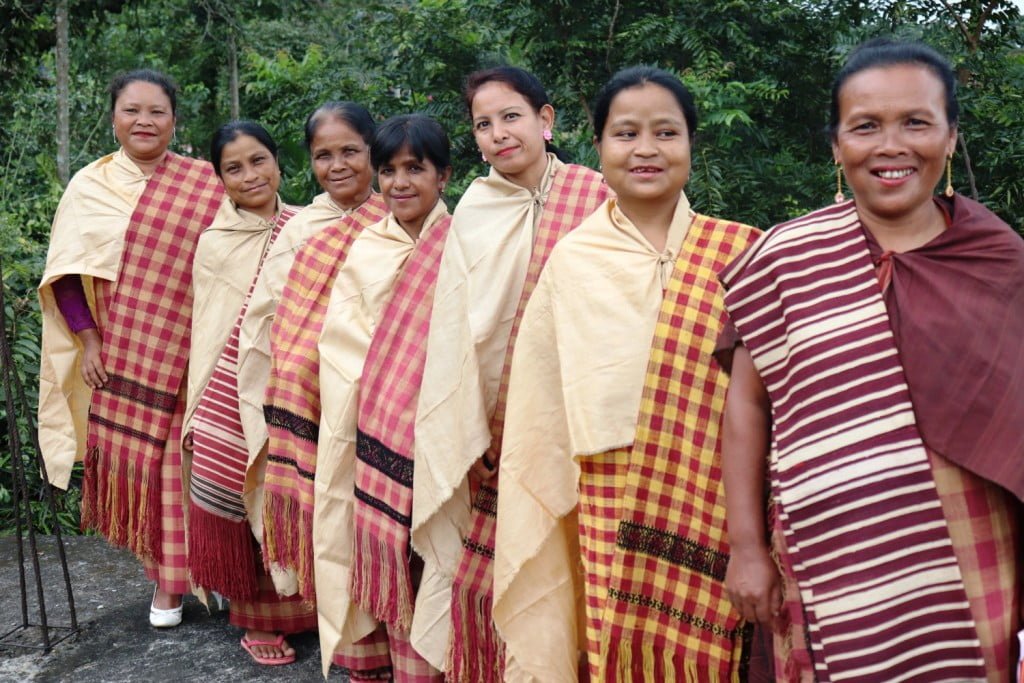
The ‘Khneng Embroidery Competition’ to celebrate National Handloom concluded today at Mustoh village with eight participants.
The competition was organised by the Department of Arts and Culture and the Department of Textiles in collaboration with NESFAS as part of the India@75 and Meghalaya@50 programmes celebrating the indigenous and artistic tribal dexterity in weaves.
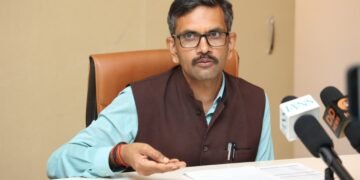
Commissioner and secretary of Textiles, Frederick Kharkongor who added the competition as the chief guest congratulated all participants of the Khneng embroidery competition and invited the artisans to work hard together with the department to make Mustoh the first traditional embroidery village of the State.
The art of Khneng Embroidery is the only known form of embroidery in the state of Meghalaya and can be traced back to 200 years. Phrang Roy, founding Chairman, NESFAS, in 2014 highlighted the importance of saving the vanishing art and in the years that have followed since, Khneng embroidery has been revived under the aegis of NESFAS.
“Although NESFAS works with communities to defend the indigenous food systems, the organisation also realises the importance of understanding the culture and tradition embedded within the community. For Mustoh, it is the Khneng,” said Pius Ranee, executive director, on why the organisation has been closely working with the Mustoh community to revive the indigenous art form.
Victory Synrem, who was only one of the three custodian Khneng embroiderers in the whole of Meghalaya five years ago, today said “We now have 18 women who are skilled in Khneng embroidery. All this is because of NESFAS. They helped us keep the art and tradition of Khneng alive. They helped in facilitating trainings for us to improve the technique as well as small scale marketing.”
Following the competition, the guests also visited the training unit at Saikarap near Shella. Dipica Lyngdoh, Zonal Officer of the Textiles department who will be overseeing the training programmes in future hoped that the collaboration between the weavers, embroiderers, NESFAS and the department would go ahead in full capacity.
The next step of this joint collaboration is a project focused on capacity building of the potential local weavers and embroiderers, NESFAS said, adding, this is to increase the number of artisans, strengthen the supply and value chain, and most importantly, to keep the art forms alive.
Engineering supervisor of the department, Darling Marwein engineering welcomed the community members to use the training centre for all necessary purposes – weaving, textiles, marketing, embroidery and more.