












By Dr Chabungbam Victoria Devi
When natural and organic farming discussions were still evolving in Manipur and the rest of the North East India, it is believed that our Traditional Manipuri Yum Ingkhol were already the strongest foundation.
A natural farm is a complex, self-regulating, designed ecosystem which contains a large variety of interdependent plants, animals, insects, birds and microorganisms? It requires no chemical inputs and minimal physical intervention which utilizes and enriches local natural resources, produces high yields with minimal inputs.
We already have inherited an agroforestry-based living food baskets. A traditional Manipuri house or any traditional tribal houses of North East India represents a masterclass in eco-friendly, sustainable architecture perfectly intertwined with nature. It always has a larger homestead compound called a Yumpham. A core, indispensable element of this setup is the household kitchen garden (Ingkhol), which provides food security and fresh cooking ingredients directly to the family.
The Kitchen Garden (Ingkhol) is typically situated at the backyard or sides of the Yumjao. It functions as a self-sustaining ecosystem where organic, clean food is harvested daily.
Core Flora & Essential Herbs
The garden features a dynamic mix of perennial trees, local seasonal vegetables, and wild aromatic herbs that define Manipuri cuisine:
Herbs & Aromatics: Maroi Nakupi (Chinese chives), Maroi Napakpi (Hooker chives), Mayang-ton (Lemon basil), and Laphrit (Mint).
Vegetables: Yongchak (Stink beans/Yongchak), Sougri (Roselle leaves), pumpkins, chilies, local beans, and various gourds.
Perennials: Bamboo groves (for building and edible shoots), banana trees (Laphoi), and lemon trees are planted around the periphery
Layout & Sustainability Principles
Fencing: The garden is neatly partitioned using a Shamban—a traditional live fence made of intertwined bamboo or thick shrubs.(samballei-Lantana Camara Spp.)
Waste Circularity: Organic kitchen scraps and ash from the Funga (cooking hearth) are directly transferred to a compost pit in the corner of the garden, maximizing soil nutrition naturally.
Culinary Connection: The close proximity of the Ingkhol to the Chakhum Ka allows the cook to harvest fresh herbs minutes before preparing traditional oil-free stews like Kangsoi or boiled side dishes like Champhut.
Manipur households have ponds in the northeast corner of their front courtyard to keep the water clean and uncontaminated. Most of the ponds earlier were planted with flowering aquatic plants such as Lotus (Nelumbo nucifera), Water Lily (Nymphaea stellata), Eshing Ikaithabi (Mimosa nilotica) etc. These plants are very good water purifiers and keep the water healthy. They also have local fishes (Channa punctata,Clarias magur,Ababus testudineus,Amblypharyngodon mola) reared in the pond. In the past, the sources of water were mainly from the ponds. Almost all the Manipuri’s households used to have ponds in their courtyards.
Again, Bamboos are versatile plants and there are many applications; some of the few examples are energy, fodders and fencing materials. Dried bamboo is used as firewood for various purposes such as cooking and heating. The leaves are used as fodders for cattle and other ruminants. Bamboos are also very good for fencing the boundary of the courtyards. The plants are very tall; therefore, planting them in other directions will block the incoming solar radiation. As mentioned earlier, evening sunlight is not significantly useful, thus the best direction for planting bamboo groves is the Western side of the courtyard. Bamboo groves also act as air filters and blocked high-velocity winds.
The Manipuris & other North Eastern farmers have always inherited the conservation of traditional paddy varieties since time immemorial, some of the cultivars are climate-resilient rice varieties. We also have the practice of paddy-cum-crab culture in the hilly terrain.
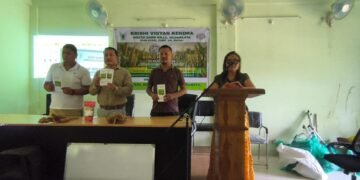
The idea to bring Natural Farming is simple: Rebuild Farmers’ confidence by strengthening what we already have in our hands.The journey can easily begin by creating a living model at our own homes, training rural youth and demonstrating practical techniques – multi-storeyed cropping, no-till and bio-intensive raised beds, bamboo biochar, liquid organic manures, biodegradable and live mulching, cow dung cakes, and self-made yellow sticky traps.
We can also initiate community-based quality seed production and also conservation of the traditional cultivars and the adoption of agroecological farming practices that strengthen biodiversity, nutrition security, and resilient livelihoods.
Every conserved seed is a step towards protecting our rich agricultural heritage and building climate-resilient Natural farming practices in North Eastern India.
(The author is Assistant Professor, Department of Extension Education College of Agriculture, Central Agricultural University, Imphal)