
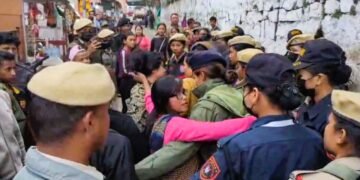







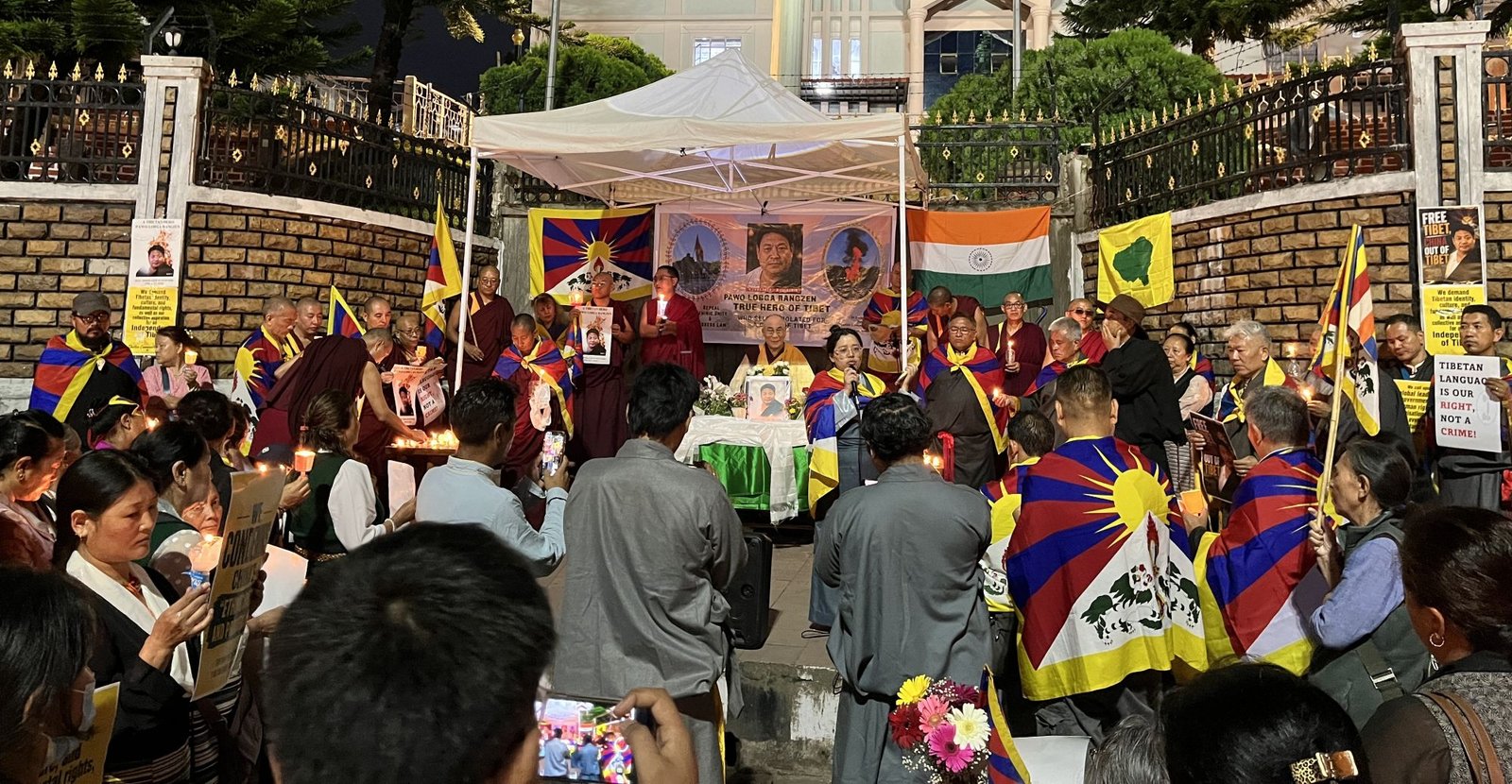
Shillong, Jul 9: Members of the Tibetan community in Shillong held a candlelight vigil at Khyndailad today to honour the memory of Lobga Rangzen, a Tibetan activist who died by self-immolation outside the United Nations headquarters in New York exactly one week ago.
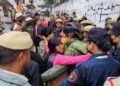
About 200 members of the Tibetan refugee community – including lay people and monks – and well-wishers gathered in the centre of town for the vigil.
Minority communities have been irked by the Chinese government’s new ethnic unity law that aims to forge a shared national identity among ethnic groups. Campaigners, including respected human rights organisations, have argued it will further degrade the rights of ethnic minorities, such as Uyghurs and Tibetans, who the Chinese Communist Party has been persecuting for decades. The governments of Taiwan and the European Union have also expressed their concern.
One of the aspects of the law is in strengthening the status of Mandarin as the official language. Education in the Tibetan language is already restricted and this law may make the situation worse.
Most Tibetans in exile were actually born outside their homeland but, such as those in Shillong, the ties that bind them to Tibet continue to remain strong and language is an important part of that. Demonstrators today displayed posters with different messages, including “Tibetan language is our right, not a crime!”
Today’s vigil was organised by the Regional Tibetan Youth Congress (RTYC) Shillong in collaboration with the Tibetan Women’s Association (TWA) Shillong. Similar solidarity gatherings and commemorative events were held by Tibetans and their supporters across the world, including several cities across India, to express solidarity with the Tibetan people.
One of the reasons for Rangzen’s self-sacrifice was in protest of the ethnic unity law, which came into effect on July 1. He was hailed as a hero to the Tibetan cause at the solemn candlelight vigil where songs were sung and prayers were said. Speakers urged the gathering not to forget their roots and to always remember that, despite adversity, they are “Tibetans first”.
Here the demonstrators were able to speak freely in Tibetan, hold a public protest and display their nation’s flag – none of which would be allowed in occupied Tibet. The thoughts of those present were for their compatriots in the homeland who have to bear unrelenting oppression at the hands of the Chinese government. Their struggle continues.