











The Trinamool Congress is grappling with its most serious internal crisis in nearly three decades after a bruising defeat in the West Bengal Assembly election sent shockwaves through the party’s ranks. What began as post-poll recriminations has now escalated into an open rebellion, with rival claims over leadership, forged signatures, and a vertical split threatening both the Assembly and Parliamentary wings.
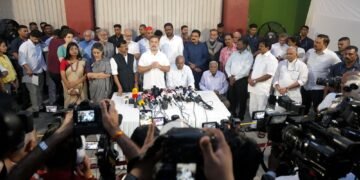
At the center of the storm is the fight for Leader of the Opposition in the West Bengal Assembly. TMC rebel Ritabrata Banerjee has been formally recognised as LoP after asserting the backing of 58 of the party’s 80 MLAs. His elevation came after he challenged a letter sent by Abhishek Banerjee, the party’s national general secretary and nephew of Chief Minister Mamata Banerjee, which had named veteran Sobhandeb Chattopadhyay for the post. Ritabrata Banerjee, who was expelled by the TMC along with fellow MLA Sandipan Saha for alleged anti-party activities, had complained to the Speaker that their signatures on Abhishek Banerjee’s letter were forged. Assembly officials found discrepancies between the signatures on the submitted documents and those recorded during the oath-taking of newly elected MLAs, prompting the state government to order a CID investigation.
Ritabrata Banerjee has described his rise to LoP as a “collective fight against individualism,” making it clear that the resistance was aimed at Abhishek Banerjee while repeatedly pledging loyalty to Mamata Banerjee for public consumption. The move received quiet encouragement from the ruling BJP, which has openly stated that several newly elected TMC MLAs were interested in joining its ranks. Instead of defecting, however, this group appears to have attempted to capture control of the TMC within the Assembly itself — creating a curious case of political consensus against the party’s established leadership.
The turmoil has not been confined to the Assembly. The rebel group of Trinamool parliamentarians is believed to have secured the support of 19 MPs, meeting the two-thirds threshold required under anti-defection law to form a separate faction. Among those who have signed the rebel list are Yusuf Pathan, Saayoni Ghosh and Mala Roy. With the numbers in place, the party now faces the prospect of a vertical split in Parliament just weeks after losing its dominance in the state legislature. The development comes on the heels of a major split already witnessed in the Assembly, marking one of the biggest setbacks for the TMC in its 28-year history.
The exodus extends beyond elected representatives. TMC functionaries are quitting in large numbers, citing frustration over centralised decision-making and the growing influence of Abhishek Banerjee. Senior leaders who built the party from the ground up have found themselves sidelined, alienated by what many describe as the expanding role of the nephew. Meanwhile, both workers and leaders, including Abhishek Banerjee himself, continue to face incidents of physical violence, adding to the sense of instability.
The crisis has also drawn in figures outside the party. TMC MP Sushmita Dev resigned from the Rajya Sabha and met Assam Chief Minister Himanta Biswa Sarma, fueling speculation about realignments.
Reports have circulated that the Congress offered the Vice President’s post if Mamata Banerjee were to join the party, though the TMC has dismissed the claim as rumour.
The present collapse has been years in the making, according to political observers.
After three consecutive terms in power, the party has faced mounting criticism over corruption allegations, authoritarian governance, suppression of dissent, and violence against women.
These issues steadily eroded public confidence in both the administration and the party organisation.
The rise of Abhishek Banerjee as the party’s national face accelerated the rift with senior leaders who resented the shift in power dynamics.
Chief Minister Suvendu Adhikari, now the BJP’s first Chief Minister in the state and once among Mamata Banerjee’s most trusted lieutenants, represents another thread in this complex political unraveling.
He reportedly resented the nephew’s rise and was also vulnerable to pressure from central agencies investigating serious corruption cases against him.
The TMC had long relied on state resources, local administrations, and police machinery to maintain its grip on power, but it now finds itself outmaneuvered by the BJP, which has proven willing to stretch the rules of the political game even further.
As the TMC versus TMC fight plays out, protracted legal tussles are expected over which group constitutes the legitimate party in the Assembly and in Parliament.
The episode also underscores West Bengal’s decades-long political culture marked by violence, defections, and opportunism. Ritabrata Banerjee himself was once a Marxist leader before defecting to the TMC, illustrating how ideological lines have blurred in the state’s shifting political landscape.
With internal dissent, legal battles, and external pressure converging, the Trinamool Congress now faces the challenge of holding its organisation together while Mamata Banerjee attempts to reassert control.
Whether the party can contain the rebellion and rebuild public trust remains the central question as West Bengal politics enters a turbulent new phase.