











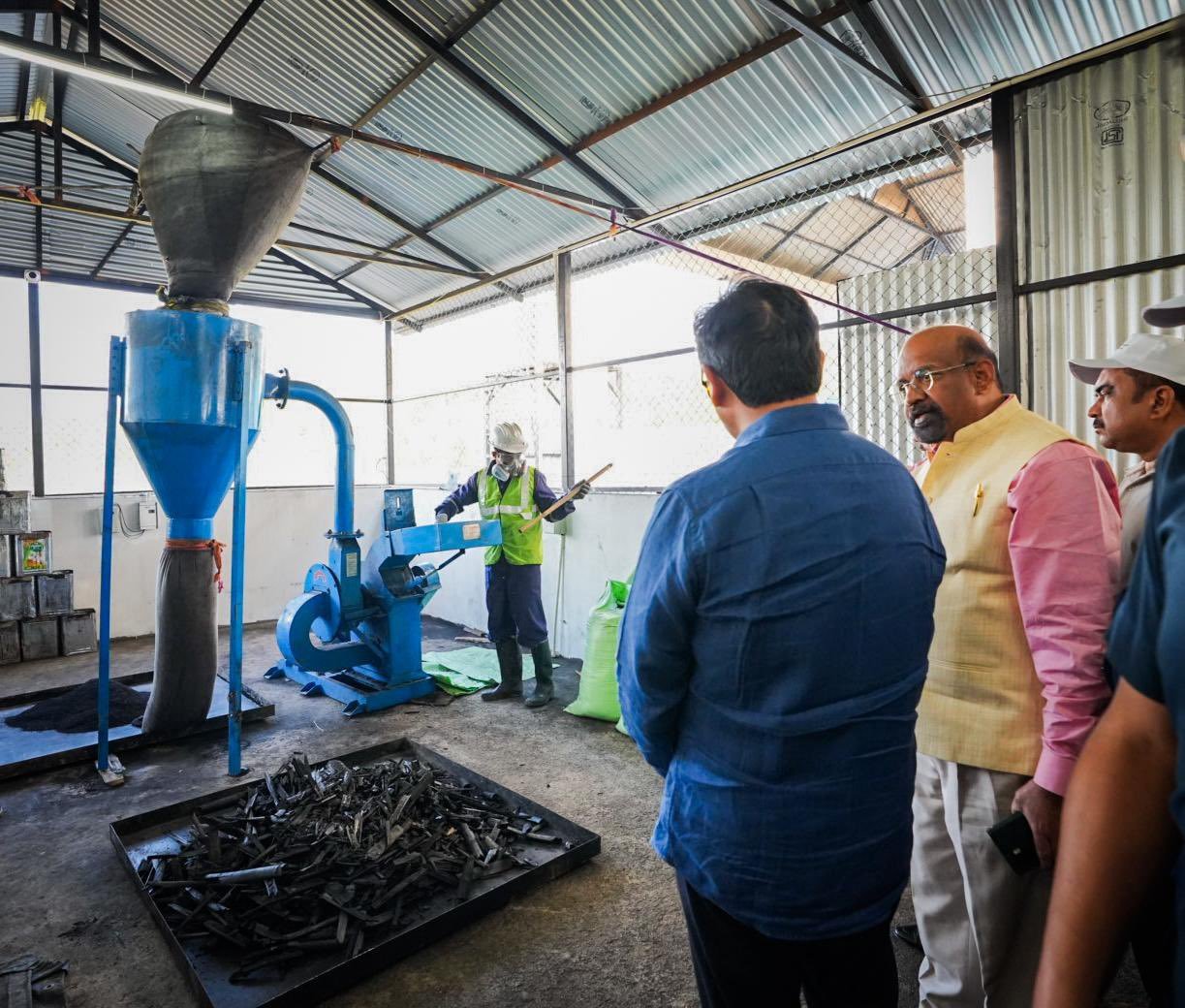
Shillong, May 11: Chief Minister Conrad K Sangma today inaugurated a biochar plant at Eastern Ri Bhoi Organic FPC Processing Plant at Umsli.
Biochar is an organic substance made by heating waste plant material at high temperatures in a low oxygen environment until it forms a type of charcoal. However, instead of the charcoal being burned, it is used as a soil improver on farms. It has the added benefit of locking away carbon that would otherwise be released into the atmosphere if the bio waste was left to decompose naturally, thus reducing greenhouse gas emissions.
Referring to the biochar plant, Sangma said that the plant will have multiple benefits adding, “The soil condition of our state which is acidic, the heavy rainfall that we receive and the abundance of bamboo makes the production of biochar a feasible proposition.” He added that the two pyrolysis units are very powerful ways of locking the carbon in the process of carbon sequestration. He also stated that the byproducts of the biochar plant in the form of bio oil or synthesis gas (syngas) can be further used in many ways and which are environmentally beneficial.
Earlier, S Ashutosh, a retired Indian Forest Service officer, gave an overview of the Meghalaya Community Biochar Initiative, which seeks to address the challenges of soil degradation, declining productivity, occurrences of plant diseases and other impacts of climate change through one integrated solution by leveraging on the abundant resource of bamboo thus creating value and building new livelihood opportunities through community-based biochar enterprises. He said that the benefits of the biochar units will reach farmers, bamboo growers and local institutions. He also informed that another unit in Dadenggre block in West Garo Hills will be operational by June.
The biochar plant is a first of its kind community focussed carbon removal initiative converting sustainably harvested biomass into biochar for permanent carbon storage and thereafter the carbon revenue shall be shared with farmers and local institutions. The project costs Rs 1.5 crore with a capacity of processing 1 tonne of bamboo per day, converting approximately 30 per cent into biochar.
ICAR-NEH Umiam will carry out biochar testing, farmer training, capacity building and periodic soil organic carbon (SOC) monitoring. The project has the potential to remove 6,000 tonnes of carbon dioxide from the atmosphere in the next 20 years and generate a total revenue of Rs 12 crore.
About 250–300 community members in Khasi Hills and Garo Hills are to be directly benefited through these two units – bamboo harvesters, machine operators, farmers applying biochar and those sharing in carbon revenues representing a solution that connects agriculture, environment and economy.