








By Dr. M. L. Gaur
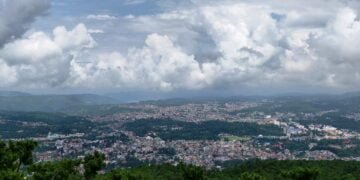
The debate over the proposed Siang Upper Multipurpose Project (SUMP) has entered a sensitive and important phase. A recent article has presented the issue largely as a contest between the State and the indigenous community. The concerns of the people of the Siang valley are unquestionably important and deserve to be heard with seriousness and respect. But I believe that framing the entire question as “State versus indigenous community” risks reducing one of India’s most complex Himalayan river systems to a binary contest. The Siang is far bigger than that binary. It is a river, a watershed, an ecosystem, a source of livelihoods, a carrier of sediment, a conveyor of floods, a geological system and a transboundary watercourse whose behaviour upstream can have consequences for downstream.
For a hydrologist, the starting point is therefore different. The question cannot simply be whether one supports or opposes a project. The more fundamental question is: what does the Siang require, what risks does the river carry, what benefits could responsible water management provide, and what does the evidence tell us about the choices before us?
A river is never merely water flowing between two banks. It is the accumulated expression of everything that happens in its catchment. Rainfall becomes runoff; runoff becomes discharge; mountains release sediment; slopes fail; glaciers change; tributaries alter the flow regime; and extreme events can transmit their consequences hundreds of kilometres downstream. My work in hydrology and watershed management has repeatedly reinforced this simple but profound reality. What happens in the upper catchment does not necessarily remain in the upper catchment. The river carries it forward.
This is particularly important in the case of the Siang-Brahmaputra system. The Siang is part of a transboundary Himalayan river system whose upstream and downstream processes are inseparably connected. Consequently, managing the Siang cannot be viewed merely through the narrow lens of electricity generation. In my earlier assessment of the Siang Upper Multipurpose Project, I had argued that its significance, if technically and environmentally justified, needs to be examined in the wider context of flood moderation, dry-season water security, hydrological monitoring, early warning and strategic water preparedness.
That does not mean that every claimed benefit of a large reservoir should be accepted without scrutiny. Quite the opposite. Every claim must be tested scientifically. A reservoir, where technically appropriate and operated according to sound rules, can potentially retain part of an incoming flood and moderate the downstream flood peak. It cannot eliminate floods, and anyone making such an absolute claim would be scientifically irresponsible. But in a basin repeatedly exposed to extreme rainfall and rapidly changing hydrological conditions, even partial moderation can matter. Similarly, storage can potentially provide regulated releases during lean periods when natural flows decline. In a gradually uncertain climate, ability to manage water across seasons may become as vital as the generation of electricity itself.
But here lies an important principle: potential is not proof. The actual flood-moderation capacity, sediment behaviour, environmental consequences, downstream flow regime and social costs of SUMP must be established through rigorous investigation. A project should not receive scientific legitimacy merely because it is labelled “multipurpose,” just as it should not be rejected merely because it is a large project.
The Himalaya itself is warning us against simplistic thinking. In my recent article, When the Mountain Falls, the River Remembers, I examined the emerging reality of Himalayan cascading disasters. A mountain failure may become an avalanche; an avalanche may become a debris flow; debris may block a river; the blockage may create a temporary lake; and the eventual breach may send a destructive mixture of water, sediment and rock downstream. The original event may occur many kilometres away from the community that ultimately experiences its consequences.
That is the Himalayan cascade. The lesson is particularly relevant to the Siang. The region is characterised by steep terrain, active geological processes, intense rainfall, landslide susceptibility and a changing cryosphere. The future cannot safely be planned by assuming that historical hydrological and geological behaviour will remain unchanged. My earlier analysis therefore argued that Himalayan infrastructure must be designed for an era of greater uncertainty, incorporating rigorous geological investigation, updated hydrological modelling, landslide and glacial-risk assessment, emergency planning, real-time monitoring, independent safety review and transparent downstream warning systems.
- This is not an argument against infrastructure.
- It is an argument against infrastructure without humility.
The same principle applies to the present controversy. The people who are concerned about the project should not be dismissed as anti-development. Equally, people who see potential benefits in the project should not automatically be dismissed as insensitive to indigenous rights or the environment. A democratic society must have room for both concern and inquiry.
There is another distinction that deserves far greater public attention. A survey is not a dam. A geological investigation is not a dam. A pre-feasibility report is not a dam. An environmental assessment is not a dam. A statutory approval is not a dam. These are stages through which society generates information before making a final decision. If people have concerns about surveys or investigations, those concerns deserve transparent answers. But if every attempt to generate scientific evidence is itself treated as equivalent to construction, the public may ultimately be left with less information rather than more. And that would not serve either the State or the community.
The people of the Siang valley possess another form of knowledge that no project report can fully reproduce: generational knowledge of the river and the landscape. They know seasonal changes, local flood behaviour, vulnerable slopes, traditional routes and ecological signals that may escape the attention of an outsider arriving with instruments and maps. In my work on Himalayan resilience, I have argued that a villager noticing a new crack in a slope, a shepherd observing an unusual change in a mountain landscape or a local guide noticing an abnormal change in a glacier valley can become the first warning sensor.
Therefore, communities should not be treated merely as recipients of information. They should become part of the information system itself. Imagine the Siang becoming one of India’s most advanced mountain-to-river monitoring laboratories, where local knowledge is combined with automatic rainfall stations, river gauges, seismic monitoring, satellite radar, slope-deformation measurements, glacier observations, sediment monitoring, weather forecasting and artificial intelligence. Such a system could detect unusual changes before they become disasters and could provide authorities and communities with valuable warning time.
- This is where the Siang debate could become much larger than the question of one project.
- Instead of asking only whether a dam should or should not be built, why should we not ask whether the entire Siang basin can become a model of integrated Himalayan resilience?
Such a system could combine hydrology, geology, seismology, remote sensing, artificial intelligence, ecology and indigenous knowledge. My earlier work proposed the idea of a “Mountain-to-River Intelligence Network” in which seismic stations, satellites, river gauges, slope monitoring and community observations operate as interconnected components of one early-warning architecture.
The technology for many of these components already exists. The challenge is integration.
This becomes even more important when the wider strategic dimension of the Siang is considered. The river originates in Tibet as the Yarlung Tsangpo before entering Arunachal Pradesh and becoming part of the Brahmaputra system. In a transboundary basin, hydrological information itself becomes an important element of preparedness. India cannot control every process occurring upstream, but it can strengthen its own capacity to observe, model and respond to changes in river behaviour. As I have argued previously, no single project can solve every transboundary water challenge, but remaining dependent on uncertainty is not a water-security strategy.
At the same time, strategic considerations cannot become a substitute for environmental or social scrutiny. “China is upstream” cannot be an argument for building anything without adequate examination. Nor can strategic concerns simply be dismissed as irrelevant. The appropriate response is to strengthen India’s scientific, technological and institutional capacity while maintaining rigorous environmental safeguards and meaningful community participation.
The experience of Himalayan disasters reinforces this need for balance.
The Chamoli disaster demonstrated how rapidly a high-altitude failure can transform into a destructive downstream event. The Teesta experience demonstrated the vulnerability of infrastructure in a highly dynamic mountain environment. The lesson from such events should not be that every dam is inherently unsafe. Nor should the lesson be that Himalayan infrastructure is automatically safe. The lesson is more demanding: design assumptions must keep pace with a changing mountain environment.
The future Himalayan project cannot be designed simply for yesterday’s climate, yesterday’s sediment regime or yesterday’s understanding of geological hazards. This is why SUMP, if taken forward, should be subjected to the highest standards of independent scientific examination. The questions should be uncomfortable and comprehensive. What happens under an extreme seismic event? What happens if a massive landslide enters the reservoir? What happens if an upstream natural blockage suddenly forms and fails? What happens if sediment accumulation behaves differently from historical assumptions? What happens if communication systems fail during an emergency? What happens to downstream communities if emergency operations are compromised?
- These questions do not weaken a project.
- They strengthen the decision-making process.
There is also a larger philosophical mistake that we should avoid. The debate should not become “development versus environment.” That is an old binary that does not adequately describe the realities of the twenty-first-century Himalaya.
The real challenge is development with responsibility. We need engineering infrastructure, but we also need forests, wetlands, slope stabilisation and healthy floodplains. We need satellite technology, but we also need local knowledge. We need reservoirs where scientifically justified, but we also need functioning rivers and ecosystems. We need national water security, but we also need community security. We need strategic preparedness, but we also need environmental accountability.
In other words, the future lies in the integration of grey, green and blue infrastructure rather than the dominance of one over the others.
This is why I find the phrase “State versus indigenous community” inadequate.
- The State is not the river.
- The community is not the river.
- Scientists are not the river.
- The project is not the river.
The river is the system within which all of them must coexist. The ultimate question, therefore, should not be who wins the argument. It should be whether we have generated enough reliable evidence to decide that future generations will regard as responsible. If geological investigations demonstrate that a proposed site cannot meet the required safety standards, the evidence must be respected.
- If hydrological modelling demonstrates that claimed benefits are overstated, the claims must be revised.
- If environmental studies reveal unacceptable consequences, alternatives must be examined.
- If engineering can substantially reduce identified risks, those solutions should be evaluated.
- If communities face displacement or livelihood impacts, those issues must be transparently addressed rather than buried beneath administrative language.
And if, after rigorous scientific, environmental, social and statutory examination, the project is found viable and defensible, then the discussion should move from slogans to the conditions under which it can be responsibly implemented.
That is not indecision. That is evidence-based decision-making. The Siang does not need another battle of narratives. It needs a higher quality of public reasoning. It needs a conversation in which the farmer, the indigenous community, the hydrologist, the geologist, the ecologist, the engineer, the disaster-management expert and the policymaker can sit at the same table.
It needs a process in which local knowledge is respected but scientific evidence is not sacrificed; in which national interests are recognised but community rights are not subordinated; and in which development is pursued without pretending that environmental and geological risks do not exist.
Above all, the Siang needs us to understand one fundamental truth:
A river remembers everything that happens in its catchment.
- It remembers the rainfall.
- It remembers the landslide.
- It remembers the sediment.
- It remembers the flood.
And eventually, it carries the consequences downstream. So let us not make the Siang a battlefield between the State and its people.
- Let us make it a laboratory of Himalayan resilience.
- Let us investigate before we decide.
- Let us listen before we conclude.
- Let us measure before we claim.
And let us build only what science, safety, ecology and society can collectively defend. Because the river will outlive every project report, every government and every protest movement. The Siang will continue to flow. The real question is whether our wisdom will flow with it.
(The author is the Vice Chancellor, Assam Kaziranga University, Jorhat)