








• About
  • Advertise
  • Privacy & Policy
  • Contact
Sunday, November 22, 2026
Visit Mawphor
Highland Post
Govt. of Meghalaya
  • Home
  • Meghalaya
    • All
    • East Garo Hills
    • East Jaintia Hills
    • East Khasi Hills
    • Eastern West Khasi Hills
    • North Garo Hills
    • Ri Bhoi
    • South Garo Hills
    • South West Garo Hills
    • South West Khasi Hills
    • Statewide
    • West Garo Hills
    • West Jaintia Hills
    • West Khasi Hills
    Deficit teachers’ strike hits exams, evaluation next fear

    Deficit teachers’ strike hits exams, evaluation next fear

    Nov 25 deadline looms, bus body refuses to move

    Nov 25 deadline looms, bus body refuses to move

    Notification on SIR in Garo Hills at ‘any time’, says Bernard

    Gospel Fest RTI was Bernard’s personal act, not party’s: BJP

    Tura Civil Hospital performs rare, complex surgery for first time

    Tura Civil Hospital performs rare, complex surgery for first time

    NEIGRIHMS trains 38 hospital administrators in disaster preparedness

    NEIGRIHMS trains 38 hospital administrators in disaster preparedness

    Sohra librarian presents paper on digital divide at NCERT national conference

    Sohra librarian presents paper on digital divide at NCERT national conference

    17 villages unite to protect rivers through 4 new fish sanctuaries

    17 villages unite to protect rivers through 4 new fish sanctuaries

    Meghalaya showcases indigenous heritage at Kolkata exhibition

    Meghalaya showcases indigenous heritage at Kolkata exhibition

    First ‘Eat Sustainable Summit’ held in Shillong

    First ‘Eat Sustainable Summit’ held in Shillong

    Trending Tags

    • North East
    • National
      Kharge demands repeal of EC immunity law, removal of CEC Gyanesh Kumar

      INDIA bloc leaders file plea in SC, seek nod to question EC over SIR

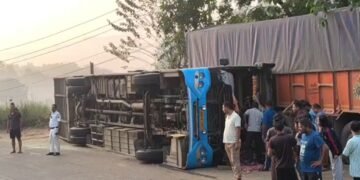
      Night super bus overturns near Jorabat, 3 seriously injured

      16 injured in Kaziranga accident receiving treatment, 3 on ventilator support

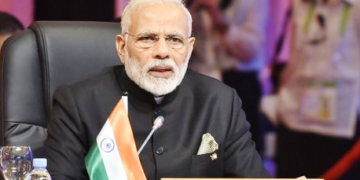
      2026 will be ASEAN-India year of maritime cooperation: PM Modi

      Tribals bore brunt of Naxal violence, were not even allowed to vote: PM

    • Health
    • Editorial
    • Sports
    • Writer’s Column
    • Letters to the Editor
    No Result
    View All Result
    • Home
    • Meghalaya
      • All
      • East Garo Hills
      • East Jaintia Hills
      • East Khasi Hills
      • Eastern West Khasi Hills
      • North Garo Hills
      • Ri Bhoi
      • South Garo Hills
      • South West Garo Hills
      • South West Khasi Hills
      • Statewide
      • West Garo Hills
      • West Jaintia Hills
      • West Khasi Hills
      Deficit teachers’ strike hits exams, evaluation next fear

      Deficit teachers’ strike hits exams, evaluation next fear

      Nov 25 deadline looms, bus body refuses to move

      Nov 25 deadline looms, bus body refuses to move

      Notification on SIR in Garo Hills at ‘any time’, says Bernard

      Gospel Fest RTI was Bernard’s personal act, not party’s: BJP

      Tura Civil Hospital performs rare, complex surgery for first time

      Tura Civil Hospital performs rare, complex surgery for first time

      NEIGRIHMS trains 38 hospital administrators in disaster preparedness

      NEIGRIHMS trains 38 hospital administrators in disaster preparedness

      Sohra librarian presents paper on digital divide at NCERT national conference

      Sohra librarian presents paper on digital divide at NCERT national conference

      17 villages unite to protect rivers through 4 new fish sanctuaries

      17 villages unite to protect rivers through 4 new fish sanctuaries

      Meghalaya showcases indigenous heritage at Kolkata exhibition

      Meghalaya showcases indigenous heritage at Kolkata exhibition

      First ‘Eat Sustainable Summit’ held in Shillong

      First ‘Eat Sustainable Summit’ held in Shillong

      Trending Tags

      • North East
      • National
        Kharge demands repeal of EC immunity law, removal of CEC Gyanesh Kumar

        INDIA bloc leaders file plea in SC, seek nod to question EC over SIR

        Night super bus overturns near Jorabat, 3 seriously injured

        16 injured in Kaziranga accident receiving treatment, 3 on ventilator support

        2026 will be ASEAN-India year of maritime cooperation: PM Modi

        Tribals bore brunt of Naxal violence, were not even allowed to vote: PM

      • Health
      • Editorial
      • Sports
      • Writer’s Column
      • Letters to the Editor
      No Result
      View All Result
      Highland Post
      No Result
      View All Result
      Home Writer's Column

      A Commentary on Khasi Folklore- 40

      HP News Service by HP News Service
      November 22, 2026
      in Writer's Column
      0
      The battle for ballot in the North-East
      0
      SHARES
      3
      VIEWS

      By Raphael Warjri

      Among the many animals that inhabit Khasi folklore, few occupy a position as symbolically profound as the rooster. Its importance is not derived simply from its usefulness as a domestic bird or from its familiar call at dawn. Within the traditional Khasi religious imagination, the rooster belongs to a much larger story concerning darkness and light, responsibility and covenant, life and death. Its three calls before sunrise are associated with an ancient promise made between the fowl and Mother-Sun, through which the rooster became the herald of daylight. From this narrative emerges a conception of the bird as a mediator between darkness and illumination and, ultimately, as a symbol of enlightenment.

      The story begins during the great gathering of creatures when the Sun and Moon appeared at the festival of animals. The Sun and Moon danced together, but their performance became the subject of ridicule among some of the creatures. The comments offended the Sun, who withdrew from the gathering and concealed herself within a cavern known as Krem Lamet Latang. Her disappearance plunged the world into prolonged darkness. The creatures soon realised that the absence of the Sun was not simply an inconvenience but a threat to the order of life itself.

      A Dorbar Blei, or divine assembly, was therefore convened to find a solution. The assembled beings understood that the Sun could not simply be commanded to return. Several creatures nevertheless believed that their own particular qualities would enable them to succeed. The elephant, confident in his immense strength, offered to retrieve her. His attempt failed. The hornbill, relying upon his striking beauty and appearance, subsequently volunteered. He too failed. Their unsuccessful efforts established an important principle within the story: neither physical power nor outward splendour is sufficient to resolve a crisis rooted in a broken relationship.

      The divine assembly then decided that every creature must be summoned, regardless of size or status. A hawk was sent to search for anyone who had been left behind. In the course of this search, the hawk encountered a creature that appeared to possess almost no qualities that would recommend it for such an important undertaking. It was a naked fowl, without feathers and without the imposing physical attributes of the other creatures. Yet the assembly called upon it to attend.

      The fowl was conscious of its apparent inadequacy. It did not pretend to possess strength, beauty or extraordinary ability. Instead, it expressed humility and accepted the responsibility entrusted to it. This is the crucial turning point of the narrative. The story deliberately chooses the apparently insignificant creature as the instrument through which the cosmic crisis will be resolved. The qualities rejected as weaknesses—humility, modesty and willingness to serve—become precisely the qualities required for success.

      The fowl approached the hiding place of Mother-Sun with an etiquette markedly different from that of the previous emissaries. It did not presume the right to enter. It first sought permission, acknowledged the Sun’s authority and explained that it had come because the world was suffering from the absence of light. Its appeal was not an assertion of personal importance but an expression of concern for the wellbeing of all creatures.

      Mother-Sun was moved by the fowl’s conduct. She agreed to return, but she imposed a condition: before she rose again, the fowl must crow three times. The fowl accepted the responsibility and returned to the divine assembly to communicate the terms of the covenant. What had appeared to be an insignificant creature had now become the bearer of the message upon which the return of daylight depended.

      The assembly celebrated the news and rewarded the fowl with a crown and a magnificent robe of feathers. The naked creature that had once been ashamed of its appearance was transformed into the rooster. The transformation is significant because the reward is not simply material. The crown symbolises authority, while the feathers signify the dignity acquired through the fulfilment of a sacred responsibility. The rooster’s outward appearance thus becomes a visible reminder of the covenant it has undertaken.

      When the appointed moment arrived, the rooster crowed three times. The Sun then rose, restoring light to the world. From that moment, according to the traditional narrative, the rooster’s crow became associated with the arrival of dawn. The ordinary biological behaviour of the bird was incorporated into a sacred explanation of one of the most fundamental natural phenomena experienced by humanity—the daily return of sunlight.

      This is why the rooster assumes a particularly important place within Khasi religious thought. Its significance is not limited to the physical act of announcing morning. It represents the transition from darkness to light and, symbolically, from uncertainty to understanding. The bird becomes an intermediary whose voice precedes the appearance of the Sun. In this sense, it can be understood as a harbinger of enlightenment.

      The concept of Khraw Jutang deepens this symbolism. Khraw signifies greatness, while jutang refers to a covenant or solemn agreement. The rooster’s status is therefore connected with a great covenant—the promise to crow three times before the Sun rises again. The importance of the rooster derives from its faithfulness to this obligation. It does not create the light itself; rather, it announces its return. The distinction is important. The rooster is not the source of illumination but the herald of illumination.

      This symbolism extends into the broader Khasi understanding of spiritual communication. The rooster appears in sacrificial rituals as an intermediary through which human beings seek signs and guidance. Its entrails may be examined by traditional religious specialists in an effort to interpret circumstances concerning individuals, families, clans or communities. The ritual should be understood within the religious system that gives it meaning: the rooster functions as a medium through which the human seeks to understand signs believed to originate beyond ordinary perception.

      The association becomes even more profound in funerary practice. Death represents another form of darkness—a departure from the familiar world of the living and a journey toward the realm of the departed. In this context, the rooster’s role is not simply that of a sacrificial animal. It becomes associated with guidance and passage. The Yiar Krad Lynti traditionally accompanies the deceased, symbolically guiding the soul towards the cremation ground and the next stage of its journey.

      The egg placed in association with the deceased, known as Lengkpoh, provides another dimension to this symbolism. The egg represents the beginning of life, while the rooster represents maturity and awakening. Their appearance together in ritual creates a symbolic continuum between birth and death, beginning and completion. The navel, with which the egg is associated in the funeral context, evokes the origin of life and the connection between mother and child. At death, that symbolism is transformed into an image of transition and continuity.

      The relationship between the egg and rooster may therefore be read as a cycle. The egg contains potential; the fowl grows into maturity; the rooster announces the dawn; and the rooster subsequently accompanies the dead on a final journey. Life is not represented as a straight line with an absolute beginning and end, but as a passage through different states. The same symbolic language of life and renewal is therefore capable of appearing in both divination and funeral rites.

      The sacred importance of the rooster also helps explain why it occupies a different ritual position from the hen. While the egg of the fowl is used in divination, and the rooster may be offered in particular sacrificial contexts, the hen does not carry the same ritual function. These distinctions arise from the accumulated meanings attached to the creatures through mythology, ritual practice and oral tradition. The animal’s biological identity is only one part of its cultural identity.

      The rooster’s three calls can also be interpreted symbolically as a movement from silence to proclamation. Darkness is initially silent; the rooster breaks that silence. The Sun follows. In this sequence, the word precedes illumination. The rooster therefore occupies the position of a messenger: it announces something that is about to become visible. This gives its crow a significance beyond its natural sound and transforms it into a ritual reminder of the covenant between the creature and Mother-Sun.

      Such a narrative also reveals how Khasi folklore integrates observation of nature with moral philosophy. The ancestors observed that roosters regularly crow before or around sunrise. Rather than leaving the phenomenon as an unexplained natural occurrence, they incorporated it into a story concerning responsibility and the restoration of cosmic balance. The story gives meaning to the observation. The dawn is not simply something that happens; it becomes something that is remembered through a covenant.

      The narrative’s strongest lesson lies in the reversal of conventional ideas about power. The elephant fails because strength alone cannot heal an offended relationship. The hornbill fails because beauty cannot command spiritual reconciliation. The fowl succeeds because it approaches the Sun with humility and respect. The story therefore elevates ethical conduct above physical superiority. The bearer of enlightenment is not necessarily the most powerful creature but the one capable of approaching another being with understanding and humility.

      Also Read: https://highlandpost.com/a-commentary-on-khasi-folklore-39/
      HP News Service

      HP News Service

      An English daily newspaper from Shillong published by Readington Marwein, proprietor of Mawphor Khasi Daily Newspaper, who established the first Khasi daily in 1989.

      Related Posts

      The battle for ballot in the North-East
      Writer's Column

      Rooted in Resolve, the Women of Laban Stand Guard Over Shillong’s Water

      November 21, 2026
      The battle for ballot in the North-East
      Writer's Column

      Power of community support systems in defeating drug-resistant TB

      November 20, 2026
      The battle for ballot in the North-East
      Writer's Column

      From Right to Know to Right to Trust: Upholding Information Integrity in the Digital Age

      November 19, 2026
      The battle for ballot in the North-East
      Writer's Column

      The Eastern Nagaland Women Organisation & Challenges Before the Frontier Nagaland Territorial Authority

      November 18, 2026
      The battle for ballot in the North-East
      Writer's Column

      The Deficit System: Worth Preserving, Not Destroying

      November 17, 2026
      The battle for ballot in the North-East
      Writer's Column

      A Commentary on Khasi Folklore- 39

      November 14, 2026
      Load More
      Next Post
      Nov 25 deadline looms, bus body refuses to move

      Nov 25 deadline looms, bus body refuses to move

      Leave a Reply Cancel reply

      Your email address will not be published. Required fields are marked *

      We’re on Facebook

      Advertisement

      • Trending
      • Comments
      • Latest
      Sonam & Raja were with 3 other tourists on day they vanished, says tour guide

      Sonam & Raja were with 3 other tourists on day they vanished, says tour guide

      June 7, 2025
      Tourist taxi association launches agitation against outside vehicles

      Tourist taxi association launches agitation against outside vehicles

      September 17, 2025
      Residents of 44 localities in Shillong drink unsafe water

      Residents of 44 localities in Shillong drink unsafe water

      October 3, 2023
      Bike taxi drivers ask Govt for offline option

      Rapido captains caught off guard by DTO, hired and fined

      July 7, 2024
      The battle for ballot in the North-East

      A Commentary on Khasi Folklore- 40

      0
      Nepotism – the executioner of bright deserving minds.

      Save Deficit System

      0
      Deficit teachers’ strike hits exams, evaluation next fear

      Deficit teachers’ strike hits exams, evaluation next fear

      0
      Nov 25 deadline looms, bus body refuses to move

      Nov 25 deadline looms, bus body refuses to move

      0
      Deficit teachers’ strike hits exams, evaluation next fear

      Deficit teachers’ strike hits exams, evaluation next fear

      November 22, 2026
      Nov 25 deadline looms, bus body refuses to move

      Nov 25 deadline looms, bus body refuses to move

      November 22, 2026
      The battle for ballot in the North-East

      A Commentary on Khasi Folklore- 40

      November 22, 2026
      Nepotism – the executioner of bright deserving minds.

      Save Deficit System

      November 22, 2026

      Recommended

      Deficit teachers’ strike hits exams, evaluation next fear

      Deficit teachers’ strike hits exams, evaluation next fear

      November 22, 2026
      Nov 25 deadline looms, bus body refuses to move

      Nov 25 deadline looms, bus body refuses to move

      November 22, 2026
      The battle for ballot in the North-East

      A Commentary on Khasi Folklore- 40

      November 22, 2026
      Nepotism – the executioner of bright deserving minds.

      Save Deficit System

      November 22, 2026

      About Highland Post

      You’re visiting the official website of Highland Post, a leading and most circulated English daily of Meghalaya published by the Mawphor Group. Stay updated with our e-edition for latest updates from Meghalaya, North Eastern India and World as a whole.

      Registered office:
      Mavis Dunn Road, Mawkhar,
      Shillong-793001, Meghalaya
      Phone no: 0364-2545423
      Email: highlandpost.shg@gmail.com, editorhp2019@gmail.com

      Like Us on Facebook

      Follow Us on Twitter

      Tweets by HP

      © 2021 Highland Post – All Rights Reserved.

      • About
      • Advertise
      • Privacy & Policy
      • Contact
      No Result
      View All Result
      • Home
      • Meghalaya
        • East Garo Hills
        • East Jaintia Hills
        • East Khasi Hills
        • North Garo Hills
        • Ri Bhoi
        • South Garo Hills
        • South West Garo Hills
        • South West Khasi Hills
        • Statewide
        • West Garo Hills
        • West Jaintia Hills
        • West Khasi Hills
      • North East
      • National
      • International
      • Health
      • Editorial
      • Musey Toons
      • Sports
      • Writer’s Column
      • Letters to the Editor

      © 2021 Highland Post - All Rights Reserved.