












The Khasi Students’ Union’s recent exposure of alleged collection of money by Meghalaya Police personnel at Mawkhanu and Thangsalai has once again brought the uncomfortable question of policing to the centre of public debate.
The videos circulated by the KSU purportedly show policemen collecting money from trucks, a practice that has long been whispered about on the highways of the state but rarely documented with such directness.
What is significant is not just the allegation itself, but the response it has provoked.
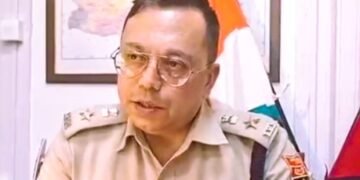
To its credit, the Meghalaya Police has acted swiftly by suspending four personnel pending inquiry.
The department has also stated that the videos show evidence of a thorough and impartial investigation.
The police statement that the absence of money at the time of verification does not conclusively establish or disprove the allegations is legally correct, but it also underscores the difficulty of proving extortion on highways.
Money changes hands quickly. Trucks move. The absence of cash in a pocket during a subsequent search does not erase what a video appears to show.
Equally, a video alone does not establish guilt without corroboration. That is precisely why the investigation must be thorough, time-bound and seen to be impartial.
The inquiry must include examination of duty rosters, statements of truck drivers and crucially, an audit of whether such checkpoints were authorized to collect any amount at all.
What gives this episode a sharper political edge is the statement made by KSU general secretary Rueben Najiar on the day he surrendered after 14 days of interim bail.
Najiar, wanted in connection with the August 19 violence after the bike rally, said if KSU leaders were being arrested for being responsible for the violence, then in the money collection case too the police should own up that higher-ups are involved.
The analogy may be contested, but the sentiment reflects a widespread public perception that accountability in Meghalaya stops at the lower ranks.
When violence erupts, the leaders are held responsible for the actions of followers. By the same principle of command responsibility, when extortion is alleged at a checkpoint, the question of who authorized, who supervised and who benefited cannot be ignored.
This is not about defaming the entire force called Meghalaya Police.