











Kolkata, May 4: The West Bengal Assembly polls were held under the long shadow of the Special Intensive Revision (SIR) of electoral rolls. Experts opine that it had definitely catalysed the BJP’s historic and thumping victory in the state, but might not be the sole factor.
According to them, the BJP’s strengthened organisation at the grassroots, its leadership appeal, sharp campaign strategy, faith-based polarisation, and strong anti-incumbency were also critical in routing Mamata Banerjee from power.
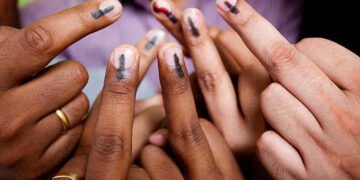
The scale of the SIR exercise that reportedly led to the deletion of nearly nine million names, about 12 per cent of the state’s electorate, emerged as one of the most debated factors, influencing both voter participation and the broader political narrative in the run-up to the polls.
The BJP framed it as a corrective measure to safeguard democracy, while the TMC portrayed it as a threat to voter rights. This clash of narratives ensured SIR remained at the forefront of political discourse throughout the campaign.
But political observers believe a significant portion of negative sentiments on the governance aspects of the TMC, coupled with the Muslim minority community’s fragmented voting pattern, also significantly accounted for the party’s poll debacle.
“The SIR was a targeted and calculated exercise to remove voters, mostly Muslims, from the electoral rolls. The result definitely impacted the poll outcome, although it is too early to say how much influence it has exactly had,” said Sabir Ahmed, the director of Sabar Institute, a Kolkata-based public policy research organisation.
“Even if the BJP managed a 5 per cent advantage from roughly 12 per cent deletions from the rolls, the rest it could garner from mobilising and consolidating the anti-incumbency sentiments among the electorate.”
He added the BJP’s strategy to polarise Hindu voters worked in their favour, and counting figures from Malda and Murshidabad reveal that even the Muslim votes have split.
Even TMC leaders, who blamed SIR for the party’s electoral decimation, refused to acknowledge it as the sole reason for the “unexpected” results, adding that numerous other factors must have contributed to the erosion of people’s trust in the dispensation.
“The loss cannot be the fallout of just one or two reasons, although SIR may have played a substantial role.
“The reasons are surely many, which the party needs to introspect and review. We will accept people’s verdict. But we should concentrate on rectifying our mistakes and ensure that we are able to turn around in the days ahead,” said Krishanu Mitra, a TMC spokesperson.
Another party leader said the counting centre strategy of the TMC wasn’t as effective as that of its primary opponent.
“We are getting information that our agents were pushed out of the counting centres after four or five rounds of counting. We must have failed in getting our resources in order,” he said, citing it as one of the primary reasons for the poor numbers reflected in the results table.
The leader, however, admitted to serious administrative lapses in Mamata Banerjee’s governance model that led to people’s disillusionment.
“There was a critical disconnect between the people and the government departments that serve the public directly. While people may have received the services, they were also abused and mistreated by state employees and officials.
“State-run healthcare facilities and the police stations are the two domains that immediately come to mind in this regard. Despite the government spending a large amount of public funds to rebuild infrastructure, the party couldn’t reap electoral benefits,” he maintained.
At the core is the SIR revision that significantly altered the electoral landscape, more than the political narrative built around it, especially in tightly contested seats where even small changes in voter composition were decisive.
In the 2021 elections, the winning margin in seven constituencies was less than 1,000, while in 36 seats, winners were decided on a lead of 5,000 votes or less.
BJP’s rivals, particularly the TMC, alleged the deletions disproportionately affected minority communities, including Muslims and sections of Dalit voters such as the Matuas.
The BJP strongly contested those claims, defending SIR as a necessary step to eliminate “bogus voters” and ensure electoral integrity.
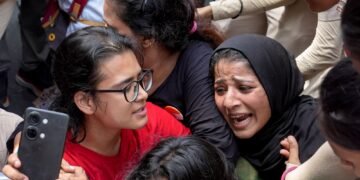
The disenfranchisements also triggered legal challenges. Many electors approached courts after finding their names missing despite claiming to possess valid documents.
This added a layer of uncertainty during the election period, with concerns that as many as 27 lakh valid voters may have been unable to cast their vote on grounds of “logical discrepancy”, a name-removal category the Election Commission implemented allegedly only for West Bengal.
Yet the political effects of the SIR surely have not been uniform. In certain regions, backlash against the revision mobilised affected communities across religious divides, potentially offsetting any perceived advantage that the BJP may have gained through voter deletions.
Analysts suggest the exercise may have cut both ways — benefiting different parties in different constituencies depending on local dynamics.
Maidul Islam, a professor of Political Science with the Centre for Studies in Social Sciences in Kolkata, said pending detailed poll stats, which are yet to unfold, one needs to analyse how the Muslim votes may have split in some key regions following their persisting disgruntlement over OBC status and Waqf Act implementation.
“SIR is surely a key factor, but certainly not the only one that has influenced this sort of an outcome.
“I have reasons to believe the party was internally sabotaged on account of its over-dependence on I-PAC as its poll strategist. Also, people’s endurance threshold was breached by 15 years of corrupt and mafia-led administration. This was a silent vote on anti-incumbency,” he said.
SIR appears to have functioned less as a single determining force and more as a catalyst that intensified existing political trends, analysts said. (PTI)