





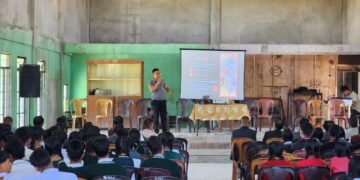








It’s a fact that many schools in rural areas of Meghalaya do not provide the best education. The shortage is due to teachers who cannot keep pace with the computer age or the age of technology.
One of the reasons is that most villages do not have electricity, so even if they receive computers from their elected representatives, they are not useful.
Therefore, the relevant authorities should take this issue seriously so that schools in rural areas can also keep up with the latest technology.
This is an era where most jobs can be done from home on a computer. If the Khasi-Pnar people cannot adapt quickly to the present era, we will always be left behind and remain backward.
Doctors explain that one of the reasons why our children lack in education is that they do not get enough food to build their brains and bodies.
People in rural Meghalaya are so poor that they cannot afford fruits and vegetables due to high prices. Poverty is like a curse on the family.
When a family cannot even feed its children, how can they afford to send them to school? That’s why, when we visit villages in Meghalaya and talk to children who have dropped out of school and are now raising cattle like cows and goats, they say that their parents cannot support them anymore.
According to the latest available data (2021-22), Meghalaya recorded the highest dropout rates across all levels of schooling in India.
The average annual dropout rate at the secondary level (Class 9-10) in Meghalaya is 21.7%, which is significantly higher than the national average of 12.6%.
In some districts, the dropout rate is even more alarming, with an average of over 30% in six districts.
Lack of access to higher secondary schools in rural areas forces students to travel long distances, which can be a significant disincentive for parents.
The curriculum in schools may not be relevant to the local context, leading to a lack of interest in education among students.
Teacher absenteeism and lack of training are also significant contributors to the high dropout rate.
The socioeconomic status of families, particularly single mothers, plays a crucial role in determining whether children can access education.
There is a need for vocational training and skill development programs to provide alternative pathways for students who may not be interested in traditional academic education.
To address the high dropout rate in Meghalaya, the government needs to take a multi-pronged approach that includes:
Improving access to quality education, particularly in rural areas.
Providing vocational training and skill development programmes, addressing poverty and socioeconomic inequality and promoting teacher training and accountability as well as encouraging community involvement in education.
By working together, we can ensure that every child in Meghalaya has access to quality education and the opportunity to build a better future.