









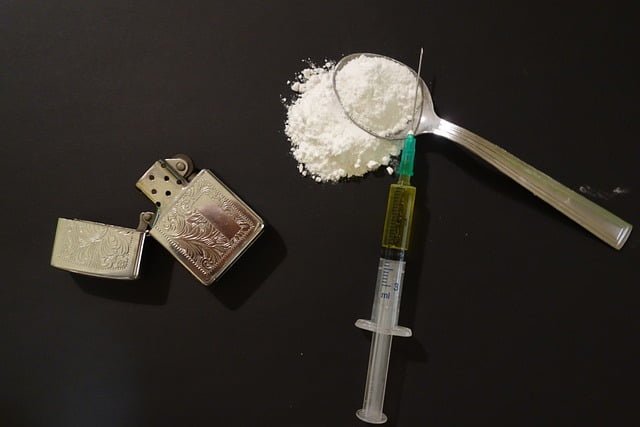
The Customs Department has flagged a growing menace of narcotics trafficking in the North East, revealing that drugs now account for the highest percentage of seizures, surpassing gold and cigarettes, which were previously major smuggled items.
In a media interaction held on the occasion of the International Day Against Drug Abuse and Illicit Trafficking, the Press Information Bureau, Shillong, in collaboration with the office of the Commissioner of Customs (Preventive), NER Headquarters, Shillong, organised an event under the ‘Varta’ series. The session brought together senior Customs officials and members of the press for an in-depth discussion on the alarming rise in drug trafficking across the region.
Delivering a detailed presentation, Joint Commissioner of Customs, Spencer Mylliem, disclosed that 29 percent of total seizures in the region now relate to narcotics, overtaking cigarettes (25 percent) and betel nut (24 percent). Gold seizures now stand at 11 percent, having dropped significantly.
“The focus is now on drugs. Earlier, gold and cigarettes were our main concern, but that has changed. The region has become a key corridor for both transit and consumption,” Mylliem said.
The value of seized narcotics was Rs 57.18 crore, nearly Rs 10 crore more than the value of illicit cigarettes (Rs 47.87 crore) or betel nut (Rs 47.72 crore). Gold came in at Rs 20.92 crore.
Mylliem highlighted that amphetamine-type stimulants, particularly yaba tablets sourced from Myanmar, have become a major threat. “In just the first half of 2025, we have seized 58kg of amphetamine, compared to 20kg in the entire 2023–24 period,” he stated.
Ganja seizures have ranged between 3–4 tonnes, and heroin seizures have touched 4kg. The growing presence of yaba is attributed to Myanmar’s political instability and easy access to precursor chemicals, used in illicit drug manufacturing.
Mylliem referred to the notorious Myanmar-Thailand-Laos region — once known as the Golden Triangle — as the emerging Death Triangle. “This is the source of most of the world’s heroin and methamphetamine, produced in lawless jungle labs controlled by insurgent groups. These groups use drug money to fund their activities,” he said.
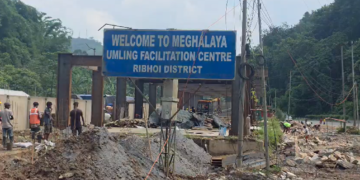
The Customs department operates under the Commissionerate headquartered in Shillong and covers 5,132km of international borders with Bangladesh, Bhutan, China, and Myanmar. There are 39 Land Customs Stations (LCS), most of which are along the Bangladesh border.
Porous and unfenced borders, especially with Myanmar in areas like Moreh and Behiang, combined with strong ethnic ties and well-developed cross-border roads, have facilitated smuggling. The Government of India has proposed fencing parts of this border as a crucial step to combat drug trafficking.
“We operate with limited manpower and rely heavily on coordination with other forces — BSF for Bangladesh, SSB for Bhutan, ITBP for China, and Assam Rifles for Myanmar,” Mylliem said.
The diversion of legal precursor chemicals used in pharmaceutical manufacturing into illicit drug production was also raised as a serious concern. “These are essential for medicines, but when diverted, they become ingredients for heroin and meth,” he explained.
Due to limited personnel and complex terrain, Customs relies significantly on joint operations with paramilitary forces and local police. The department also depends on informer networks, with a reward policy in place to encourage tip-offs.
“We ensure the confidentiality and safety of our informers, which is critical for our intelligence-based operations,” Mylliem said.