













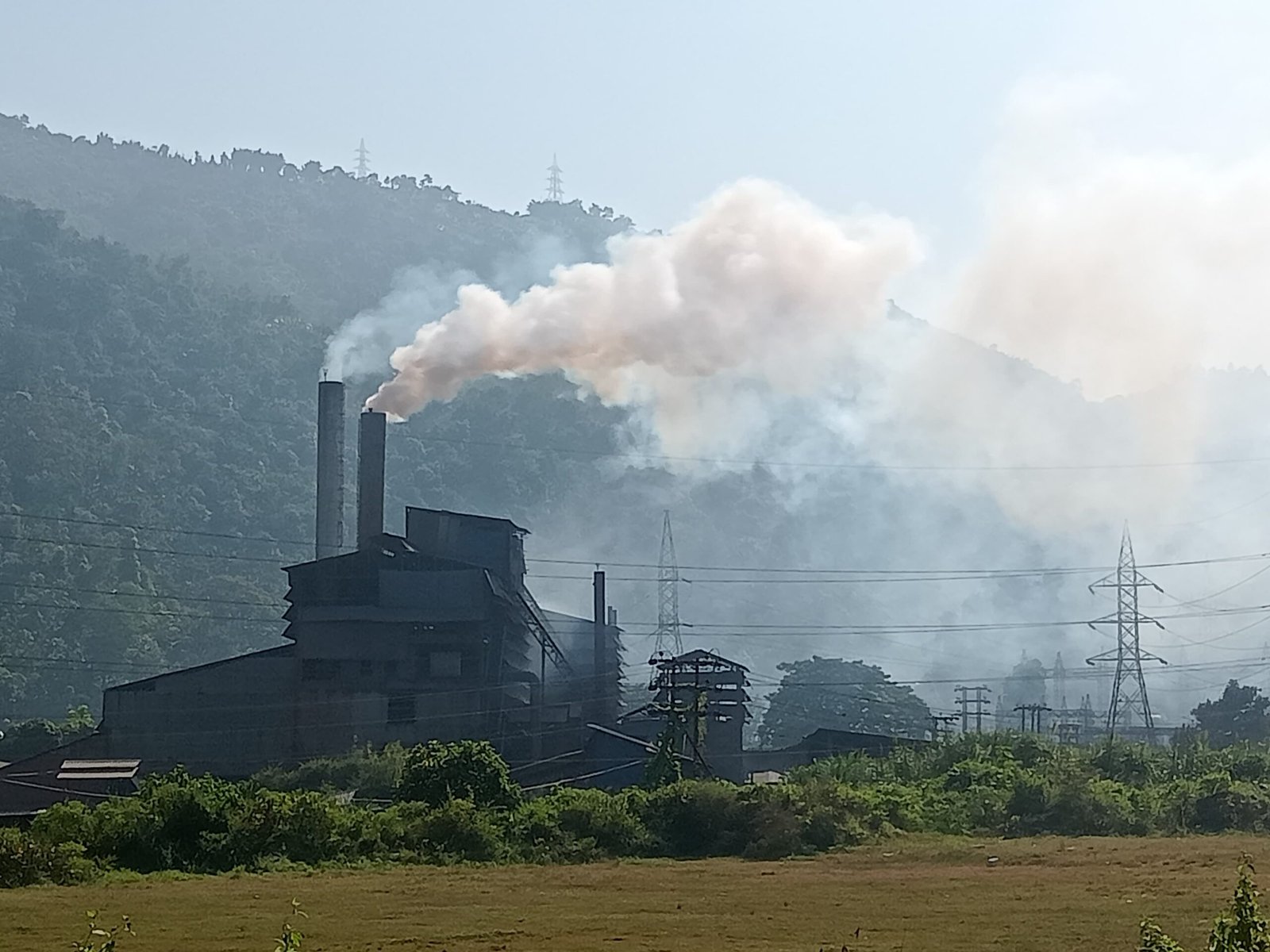
Shillong, Jul 5: Cases of respiratory illness have increased by nearly 77 percent in a span of two years, environmental NGO Green-Tech Foundation (GTF) has warned.
HBN Nonglang, the chairman of the organisation, said that GTF has been consistently engaging with the authorities and communities to evaluate the magnitude of the pollution emergency in Byrnihat and its surrounding villages.
Nonglang said these sustained efforts have sought to draw urgent attention to the alarming deterioration in air quality and he cited official data indicating that reported cases of respiratory disease surged from 2,082 cases in 2022 to 3,681 in 2024.
He said equally disconcerting are the findings of the study conducted by IQAir in collaboration with the Centre for Research on Energy and Clean Air (CREA), which recorded an annual average PM2.5 concentration of 128.2 µg/m³ in Byrnihat, placing the region among the most polluted localities and underscoring the gravity of the environmental catastrophe.
Nonglang said GTF’s initiatives have been directed towards exposing the profound environmental degradation and the escalating public health crisis confronting communities residing along the Assam-Meghalaya border. He said the continued and prolonged exposure of these communities to hazardous levels of air pollution poses an imminent and substantial threat to their health, quality of life and fundamental right to live in a clean and healthy environment, thereby warranting immediate and decisive intervention by the competent authorities.
Last week, the Health Minister’s statement that official action could not be taken because a formal complaint had not been filed drew widespread ridicule. It also proved to be wrong, as the Meghalaya State Pollution Control Board (MSPCB) took suo motu cognisance of the pollution claims regarding an ethanol plant and investigated; it found that the pollution levels from this particular plant were within prescribed norms.
Nonglang said environmental regulators are statutory custodians of the environment and are under a continuing legal obligation to monitor pollution, investigate credible scientific findings and initiate preventive and corrective action whenever there exists evidence of environmental degradation or threats to public health.
He said waiting for citizens, amongst many of whom may lack the resources, technical knowledge, or ability to pursue formal complaints, so as to trigger enforcement action would be inconsistent with the preventive framework embodied in Indian environmental law.
GTF reiterated that environmental protection must be guided by the precautionary principle, the ‘polluter pays’ principle and the principle of sustainable development, all of which have been consistently recognised by environmental jurisprudence.
“The protection of the environment is not merely a discretionary function of the state but a fundamental public duty, and any failure to act would amount to an abdication of that responsibility,” Nonglang said.