










Once again the Meghalaya government is on the back foot when it comes to an environmental matter.
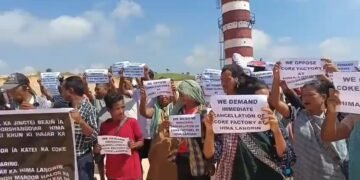
The strength of opposition to the Shillong Ropeway Project is hard to gauge but the voices are loud and only getting louder. A public march on Saturday may give us a better idea of how many people in the city are against the project.
The state government has been up against it when it comes to environmental matters recently. Earlier this year Green-Tech Foundation (which is supporting the protest against the ropeway) mounted a campaign to oppose a five-star hotel development on Lumpongdeng island in Umiam Lake. After many attempts to shift the narrative, the government admitted failure and bowed to public opposition.
Then, in July, came the fierce opposition to the Shree Cement limestone quarry-cum-cement plant in Lum Syrman in East Jaintia Hills. The state constituted a ‘fact-finding’ committee to look into the issue.
Truth be told, the Meghalaya Democratic Alliance government is weak. Not in terms of MLA numbers but in backbone. Put enough pressure on it and it caves – not just on environmental matters but also teacher pay, reservation policy, ILP, you name it. This is fine when the government is on the wrong side of the issue. But even if it is on the right side, it will drop doing the right thing to avoid losing votes.
On the ropeway, the government has not thought it through entirely. Lum Shyllong stirs emotions that may or may not be connected to reality. It has wildlife (that Shillongites never see), springs (that the government insists won’t be affected), trees (that are meant to be replaced) and is the home of a local deity (who most Khasis ostensibly no longer believe in). And it is not as though Lum Shyllong has always been a pristine environment – old photographs from the British era show the slopes devoid of vegetation and even today settlements continue to come up, felling trees that have been grown there over the decades.
Apart from the tourism income, the government has not defended the project well. It talks of compensatory reforestation even when it makes no sense that the trees cut down will be replaced in a different district altogether; the stark photographs of hundreds of trees cut down were jolting to the public. Then there was a bizarre argument that the ropeway will help reduce car emissions in the long run – it felt like the administration was grasping at straws.
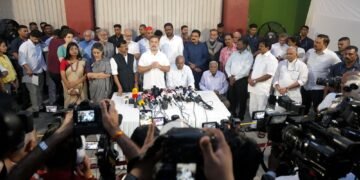
On Thursday former Tourism Minister Paul Lyngdoh persisted with weak arguments – opponents should have raised the matter earlier, he said, not four years after work on it began; he hinted at a conspiracy to malign the government without offering any proof; he suggested that central government clearances demonstrated that the project was sound (this in a country where clearances are proffered to almost anyone who asks no matter the environmental damage); and the best of all was that President Droupadi Murmu would never have laid the project’s foundation stone if it violated environmental safeguards.
Perhaps the members of the joint action committee could have raised their voices earlier. We wouldn’t have lost 500-plus trees in the process then. But we should be grateful to them for speaking up at all. It cannot be all that comfortable to be in the full public gaze but the JAC members have taken the plunge in the interests of future generations.