






In an era where information is abundant but truth is scarce, the most uncomfortable question facing Indian democracy today is not whether the media is biased, but whether mainstream media has lost its credibility altogether.
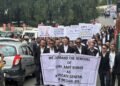
The answer became painfully evident during the NEET protests. Thousands of students poured onto the streets, their futures jeopardised by paper leaks, mismanagement and systemic failure.
The facts were undeniable. The Centre had failed its students. Yet prime-time anchors on national television chose not to ask hard questions of those in power.
Instead, they spoke for the government, spinning narratives, diverting attention, and vilifying the very students who demanded accountability. When journalism should have stood with the young, it chose to stand with the regime.
That pattern has not changed. Even now, as the country witnesses the escalating confrontation between the Cockroach Janata Party and Chief Election Commissioner Gyanesh Kumar, much of the national media remains firmly aligned with the Modi regime.
The role of the press is to question power, not to protect it. It is to hold constitutional institutions accountable, not to reduce every institutional crisis to a partisan campaign. But when channels function as extension counters of the ruling party’s war room, the citizen is left confused about where news ends and propaganda begins.
This vacuum has given rise to the parallel universe of YouTubers and independent content creators. Many are unverified, unregulated, and in several cases, openly inclined towards their own political preferences.
Yet a growing section of citizens now trusts them more than accredited channels. Why? Because even with all their flaws, some of them dare to report what mainstream studios refuse to.
The dilemma for the ordinary citizen is stark: whom to believe? The accredited media, with its studios, resources and access, but sold out to the government? Or the unverified YouTuber, who may occasionally get it right, but often gets it wrong because of lack of verification and training?
This crisis of credibility is not limited to Delhi.
Meghalaya is witnessing its own version of it. Recently unverified videos circulated by supporters of the National People’s Party showed empty seats at a public meeting of the Voice of the People Party to claim lack of public support for a rival programme. The videos went viral.
But those who were actually on the ground knew the truth — the seats were full. This is the other side of the new media disorder.
When mainstream media abdicates its duty, misinformation rushes in to fill the void, and unverified content can be just as manipulative as a prime-time debate.
What India needs is neither a sold-out studio nor an unchecked vlog. It needs a media that is independent of both government and political fandom.
Until mainstream media rediscovers its spine and returns to the basic principles of verification, fairness and fearless questioning, citizens will continue to be trapped between two distorted mirrors — one that shows only what the government wants them to see, and another that shows them what they want to believe.