



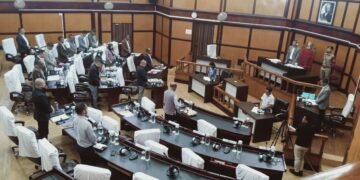








Meghalaya’s aspiration to become a $10 billion economy seems like a distant dream, given its current state of development.
Despite the government’s efforts, the state faces significant challenges in providing basic necessities to its citizens.
Primary health infrastructure is inadequate, with about 42.3% of the population still uncovered by healthcare services.
The state’s health infrastructure consists of 13 state government dispensaries, 22 community health centers, 93 primary health centers, and 408 sub-centers, but these facilities are often understaffed and under-equipped.
The education sector in Meghalaya also requires attention. According to the latest budget analysis, the state has allocated 15.1% of its expenditure on education in 2024-25, which is higher than the average allocation for education by states.
However, the quality of education remains a concern, with many schools lacking proper infrastructure and resources.
A recent study by the Meghalaya Climate Change Centre found that households in 32 blocks of the state earn less than Rs. 5,000 per month, highlighting the widespread poverty in rural areas.
Many rural areas lack motorable roads, with a road density of 41.69 km per 100 square kilometer, which is far below the national average of 75 km per 100 km².
The state’s road network is approximately 7,633 km, with 3,691 km being black-topped and 3,942 km gravelled.
The employment rate in Meghalaya is abysmal, with an unemployment rate of 6%, but higher than the national average of 3.2%.
Urban unemployment is particularly high, at 12.3%, compared to the national average of 5.4%. The lack of employment opportunities and basic necessities forces many people to migrate to urban areas, putting pressure on city infrastructure.
Despite these challenges, the state government has taken initiatives to boost the economy and improve infrastructure albeit with the help of the central government.
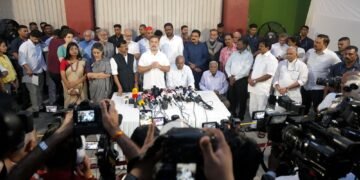
The Union Finance Minister recently inaugurated projects worth Rs 1,087.81 crore, which will help in developing the state’s infrastructure and promoting economic growth.
The government aims to make Meghalaya a $10 billion economy by 2028, and significant progress has been made in recent years, with the state’s economy nearing $6 billion and a growth rate of 15%, significantly higher than the national average.
In conclusion, while Meghalaya has made progress in recent years, the state still faces significant development challenges.
Addressing these challenges will require sustained efforts from the government and other stakeholders.
With the right policies and investments, Meghalaya can unlock its potential and achieve its goal of becoming a $10 billion economy.
The state’s focus on inclusive growth, youth-led innovation, and systemic transformation is a step in the right direction.
By building on its strengths and addressing its weaknesses, Meghalaya can create a brighter future for its citizens.