








Shillong, Jul 19: The Hill Farmers Union (HFU) will meet the East Khasi Hills Deputy Commissioner on July 24 to discuss for farmers hit by a crash in vegetable prices.
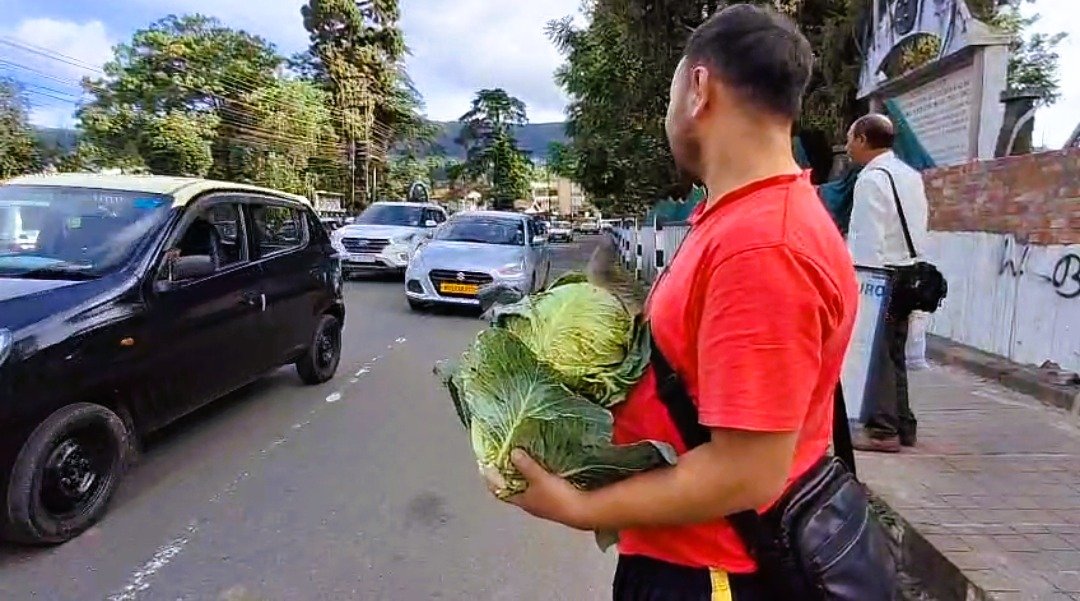
The meeting comes days after the HFU, along with farmers from Smit, Mawpyrshong and other areas under Mawkynrew, distributed cabbages free of cost in Shillong after wholesale market rates fell to Rs 2-3 per kilogramme.
Speaking to Highland Post yesterday, HFU president Commander Shangpliang said the union has received no communication from any government authority following the protest regarding immediate relief or assistance for cabbage farmers.
Shangpliang said the HFU wants the government to constitute a committee to calculate the actual input cost of cultivation.
“If the input cost is found to be Rs 10, then the government should direct that cabbages not be sold for less than Rs 11,” he said.
He also urged the government to extend assistance through the Market Intervention Scheme (MIS) to help farmers recover input costs during price crashes.
On the MIS approved by the government last year, Shangpliang noted that so far it has only been implemented for broomstick under what is called the ‘CM Assure Scheme’.
“They may call it anything, but we would like to call it the Market Intervention Scheme because we made this suggestion when there was a price crash of broomstick,” he said.
Citing that example, he said when broomstick prices crashed to Rs 30–40, the government procured it through the marketing board at Rs 55 and later sold it. “Even if the government sells it at Rs 40, technically it means the government has helped the farmers by Rs 15 per kg,” he added.
Shangpliang said the HFU wants a similar mechanism for vegetables like tomatoes, cabbages and others, which frequently face price crashes due to various factors including the role of middlemen.
Informing that the HFU has over 2 lakh registered farmers, Shangpliang said the issue of Minimum Support Price (MSP) has been raised with the government in the past but was met with constraints. He maintained that a market intervention model would be more practical.
He further stressed the need for regular consultation between farmers and government departments to address such issues. He also advised farmers to focus on crops that have market demand and suit the region’s geography, while urging the government to take initiatives to support them.