













By Dipak Kurmi
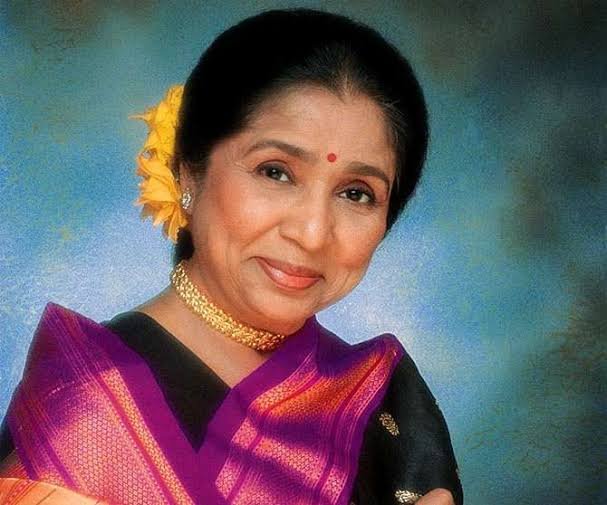
The curtain has finally fallen on one of the most vibrant and expansive chapters in the history of global music. On Sunday, April 12, 2026, the legendary Asha Bhosle passed away in Mumbai at the age of 92, leaving behind a void that no single voice can ever hope to fill. Having been admitted to Breach Candy Hospital just a day prior due to a chest infection and profound exhaustion, her departure marks the end of an era defined by sonic bravery and an almost superhuman versatility. For over seven decades, Bhosle was not merely a playback singer but a cultural phenomenon who redefined the boundaries of Indian vocal expression. While the world mourns the loss of a woman who recorded more than 12,000 songs across nearly two dozen languages, her story remains a masterclass in resilience, artistic evolution, and the relentless pursuit of individuality in the shadow of a monumental family legacy.
Born in 1933 in Sangli, Maharashtra, to the renowned classical singer Pandit Deenanath Mangeshkar and his wife Shevanti, Asha was destined for a life of melody, though her path was fraught with early hardship. She was the second of five siblings, the eldest being the formidable Lata Mangeshkar, whose own voice would eventually become the gold standard of Indian music. When their father passed away in 1942, a nine year old Asha moved with her family to the burgeoning metropolis of Mumbai, then known as Bombay, to seek a livelihood in the film industry. Her professional debut came remarkably early at the age of ten, when she sang “Chala Chala Nav Bhala” for the Marathi film Majha Bal. By 1948, she had broken into the Hindi film industry with the song “Saawan Aaya” for the film Chunariya, signaling the arrival of a talent that, while initially dwarfed by her older sister’s meteoric rise, possessed a distinct, gritty determination.
The early years of Asha’s career were characterized by a complex interplay of personal rebellion and professional struggle. At the age of 16, she made the controversial decision to elope with Ganpatrao Bhosle, a man significantly her senior. This act caused a deep rift within the Mangeshkar family, leading to a period of estrangement from Lata that lasted several years. During this difficult marriage, which produced three children and ultimately ended in divorce in 1960, Asha was often relegated to singing for the “vamps” or secondary characters in films, as the lead heroine roles were almost exclusively reserved for Lata. However, this perceived limitation became the crucible in which her unique style was forged. Forced to tackle songs that required more grit, sensuality, and rhythmic complexity, she developed a vocal range and an experimental edge that would eventually set her apart as the “bold” voice of Indian cinema.
The 1950s and 1960s saw the emergence of the “Asha Bhosle sound,” largely catalyzed by her legendary collaboration with music composer OP Nayyar. Nayyar, who famously never worked with Lata Mangeshkar, found in Asha a perfect muse for his rhythm-heavy, breezy, and often provocative compositions. Together, they produced timeless hits such as “Aaiye Meharbaan,” “Yeh Hai Reshmi Zulfon Ka Andhera,” and “Aao Huzoor Tumko,” which cemented her reputation as a singer capable of immense allure and sophistication. While the public and the press often fueled stories of a bitter professional rivalry between the two sisters, Asha continued to hone her craft under other maestros like Madan Mohan and SD Burman. She proved that while Lata embodied the ethereal purity of the “ideal” Indian woman, Asha represented the modern, multifaceted woman who was unafraid of her own desires and complexities.
As the 1970s dawned, Asha Bhosle’s career reached a fever pitch through her partnership with the visionary RD Burman, whom she would later marry in 1980. This era redefined Bollywood music, blending traditional Indian melodies with Western rock, jazz, and disco influences. Asha became the voice of the “cabaret” and the “item number,” delivering electrifying performances in tracks like “Piya Tu Ab Toh Aaja,” “Yeh Mera Dil Pyar Ka Deewana,” and “Mera Naam Hai Shabnam.” Her ability to incorporate breaths, growls, and high-pitched staccatos into her singing was revolutionary. Yet, she refused to be pigeonholed. In a stunning display of her range, she collaborated with Khayyam for the 1981 film Umrao Jaan, delivering soulful ghazals like “Dil Cheez Kya Hai” that won her the first of two National Film Awards. Her second National Award followed for the hauntingly poetic “Mera Kuch Saamaan” from the film Ijaazat, proving that she could command the heights of classical poignancy just as easily as the dance floor.
Unlike many of her contemporaries who chose a quiet retirement as the 1990s approached, Asha Bhosle embraced the changing musical landscape with the enthusiasm of a newcomer. She became a bridge between generations, famously collaborating with AR Rahman for his Hindi debut in Rangeela, where her tracks like “Tanha Tanha” and “Rangeela Re” showed she could still out-sing performers half her age. She was also a pioneer in the Indipop movement, working with Leslie Lewis on the album Janam Samjha Karo, which introduced her to a whole new demographic of listeners. Her global footprint expanded through collaborations with international artists like the Kronos Quartet and Boy George, showcasing an innate ability to blend Indian classical nuances with avant-garde and pop structures. She was a woman who never stopped learning, constantly updating her palate to match the evolving sounds of the world.
In her later years, Asha became a beloved matriarch of the industry, often appearing on television to share witty and poignant anecdotes about her recordings with legends like Kishore Kumar and Mohammed Rafi. Despite the immense personal loss of her husband RD Burman in 1994 and the passing of her sister Lata in 2022—after which she largely retreated from the public eye—she remained a symbol of endurance. Her contributions were recognized with the Dadasaheb Phalke Award in 2000 and the Padma Vibhushan, honors that reflected her status as a national treasure. Even into her 80s, she continued to perform live, her voice retaining a remarkable clarity and spirit. Today, as she is survived by her youngest son Anand, the world looks back on a life that spanned nearly a century of music. Asha Bhosle did not just sing songs; she breathed life into the very soul of Indian culture, leaving behind a legacy that will resonate as long as there is music to be heard.
(The writer can be reached at dipakkurmiglpltd@gmail.com)