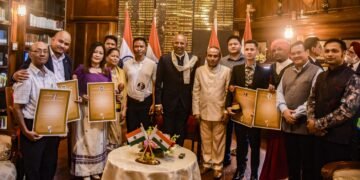




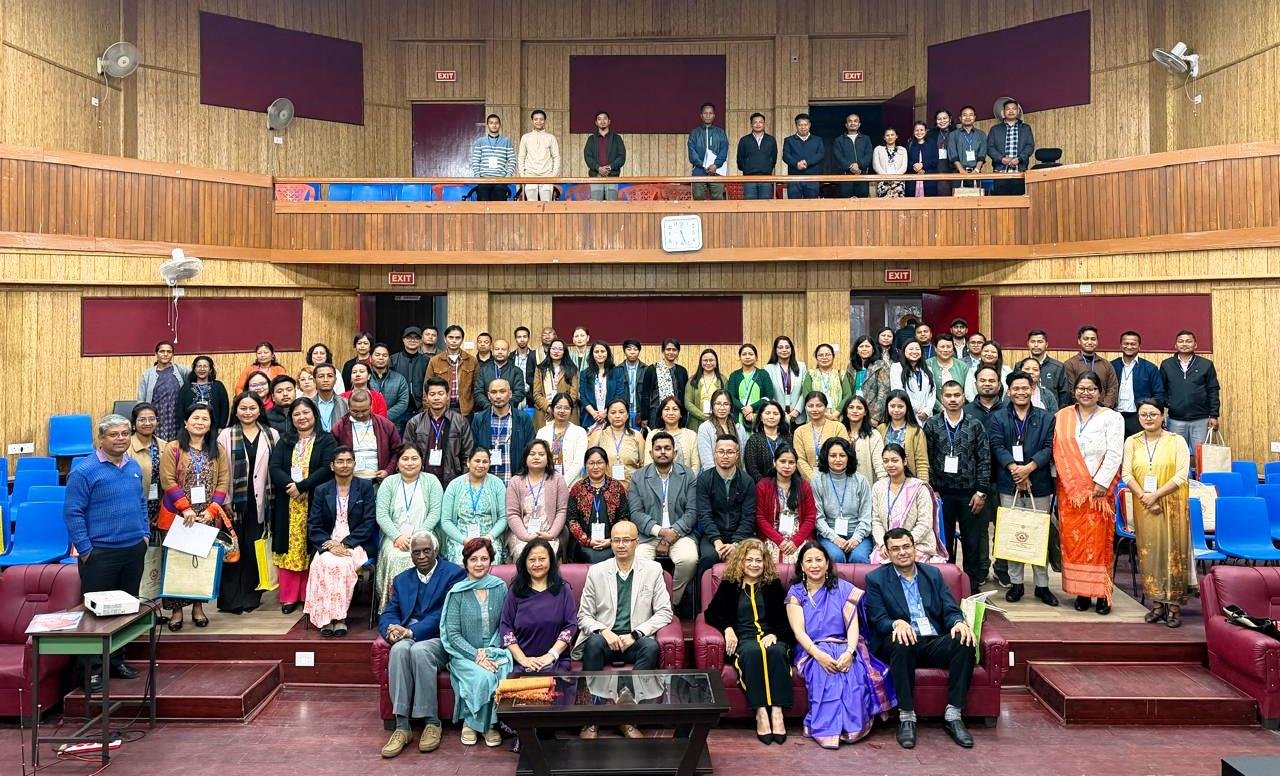
Shillong, Mar 14: A two-day connect programme for school teachers and faculty of higher education institutions was organised by the Department of Higher and Professional Education, National Institute of Educational Planning and Administration (NIEPA), New Delhi, in collaboration with the UGC–Malaviya Mission Teacher Training Centre (MMTTC), NEHU.
The programme, which concluded on March 12, brought together 164 participants, including 92 school teachers and 72 faculty members from higher education institutions across Meghalaya.
The initiative marked a first-of-its-kind programme in the country, designed to bridge the gap between school education and higher education by connecting educators from the foundational stage of schooling to the higher education level.
It aims to help teachers better understand their roles and responsibilities in transforming the education system as envisioned under the National Education Policy 2020. It also sought to sensitise, empower and connect educators, enabling them to learn from each other’s experiences while strengthening their professional capacities.
Developing skills and competencies required for educators to excel both personally and professionally within their institutions were the focus of the programme.
The key objectives of the programme included sensitizing teachers and faculty to incorporate innovative teaching methodologies, familiarising them with emerging trends in pedagogy, promoting the use of ICT tools and digital platforms to enhance student engagement, fostering a culture of research and innovation, and equipping educators with strategies to address challenges in implementing the recommendations of NEP 2020.
The two-day programme incorporated discussions on NEP 2020 interventions for teacher and faculty development, particularly in the context of North-East India and Meghalaya.
The sessions followed a participatory methodology comprising lecture-cum-discussion formats and group work activities designed to encourage active engagement. Lectures, videos, and PowerPoint presentations were used to facilitate interactive learning.
The resource persons for the programme included Jyoti Narayan Baliya, Professor, Department of Educational Studies, Central University of Jammu, Madhusudan J V, Professor and Head, Department of Education and Technology Education, University of Hyderabad, Nilima Bhagabati, Professor Emeritus (Retd.), Gauhati University.