









A crisis has been brewing in Garo Hills over the unpaid salaries of Garo Hills Autonomous District Council staff, which has now accumulated to 43 months’ worth, which is nearly 4 years of arrears.
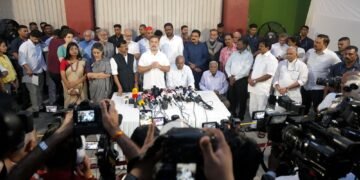
Although a supposedly autonomous body, the situation is extremely embarrassing for the state government as both it and the GHADC are controlled by the National People’s Party. Something had to be done as the opposition parties were gaining traction in Garo Hills over this issue. In came the Chief Minister yesterday to announce a monumental decision for the state government to foot the bill for staff salaries in the GHADC and the councils of Khasi Hills and Jaintia Hills as well.
There are several problems with this move.
For one thing, how will this affect the councils’ autonomy? Currently, the three get their funds through royalty share of minerals extracted in the state, levies from licences that they impose in areas under their jurisdiction and grants from the central government. If the state government now adds to that by taking on the entire burden of employee wages, then will it not want a say in how the councils are run? That might not be such a bad thing given the parlous state of their finances but it could threaten their autonomy going forwards.
According to the Chief Minister, the GHADC needs Rs 70 crore per annum to pay staff but only generates revenue of less than Rs 30 crore per year. In any sane institution, the fat should have been trimmed and staff numbers cut but the latter is hard to impossible in governing institutions in India and, even if possible, would be unpopular with the voters. All three district councils have seen a significant drop in their mineral royalties after the National Green Tribunal imposed a ban on rat-hole coal mining in the state in 2014. But that was more than a decade ago and the ADCs have had adequate time to develop alternative revenue streams or cut expenditure or both.
This may or may not have been done. It is hard to know because even tracking how the councils spend their money is a challenge. The Comptroller and Auditor General has found all three guilty of delays in finalising their annual accounts, being prone to unverified expenditures and failing to provide utilisation certificates, which only increases fears that funds are mismanaged if not outrightly misappropriated.
The state government paying ADC salaries is also problematic because the councils’ appointment processes are questionable. That is not to say that the state is completely praiseworthy in this aspect but the issue recently came to the fore in the KHADC, which, despite having been in existence for more than 70 years, has no rules for the appointment of staff. This has opened the way to blatant patronage and corruption, with those with connections getting jobs. Can the state government be party to such practices?
And where will it end? There are layers of traditional government under the GHADC, KHADC and JHADC – think of Syiems, Lyngdohs, Nokmas, Dallois, myntris, village headmen, etc. Some of these have their own revenue avenues while others are expected to carry out their duties as unpaid volunteers. There could be a time when the state government is called on to pay them too.
While solving one problem, the state may be creating severe issues that will only be felt further down the road. If the councils do not get their individual financial situations in order, if they are not transparent with their expenditure and income reports and if they continue to spend freely while earning only a pittance on their own, Meghalaya will be burdened with a millstone around its neck that only gets heavier with age. It solves the CM’s and NPP’s problem today but may doom Meghalaya tomorrow.