

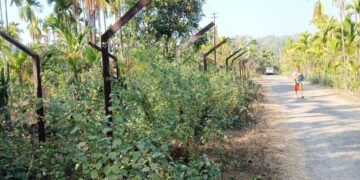







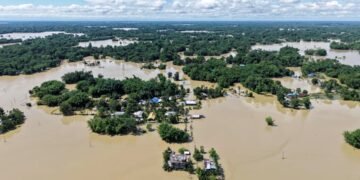




The weather in the Northeast is no longer predictable. It is becoming unstable.
A new scientific study looking at 52 years of weather data, from 1971 to 2022, has confirmed what many farmers and families in Meghalaya, Assam and other states have been feeling. Our region is facing two opposite problems at the same time — very heavy rain in a single day, and longer periods with no rain at all.
This study, published in the International Journal of Climatology, was done by scientists from the India Meteorological Department, Atria University and the National Centre for Medium Range Weather Forecasting. It is important because it does not look at just one problem. It combines seven different dangers — heat, humid heat, heatwaves, drought and others — into one index to understand the full picture.
The main finding is stark. Among all regions of India, the Northeast is the only one where extreme one-day rainfall is clearly and significantly increasing. At the same time, dry spells are also getting longer. In other parts of the country, the story is mostly about more heat and more drought. In our region, it is about swinging between two extremes.
The scientists explain that the Bay of Bengal is getting warmer. Warmer sea means more moisture in the air. When that moist air hits our hills and mountains, it drops as intense, short bursts of rain. But between these bursts, the gaps are getting longer. So, we get floods and dry fields in the same season.
This instability has real consequences. For a farmer in Ri-Bhoi or Barak Valley, it means paddy fields can be submerged one week and cracked the next. For a city like Shillong, it means landslides and waterlogged roads in June, and a water crisis in January. For the government, it means old plans that only prepare for floods, or only prepare for drought, will no longer work.
That is why the recommendation of the study is important. It says flood preparedness and managing rainfall variability must be the top priority for the Northeast. It calls for joint action — agriculture, water resources, health and public works departments working together, not separately.
What the region needs is better local monitoring because a regional average hides reality – rain in Mawsynram is not rain in Tura – the region needs automatic weather stations in every block, not just district headquarters. Store water when it comes in excess by treating every downpour as a recharge opportunity and making rooftop harvesting, check dams and revival of traditional sources mandatory. Farming advisories must change to alert farmers about dry gaps, not just monsoon arrival, and promote short-duration, flood-resistant and drought-tolerant crops together.
The Climate Extremes Index that the scientists have built should be used every year by the government as an early warning tool, like a health check-up for our climate.
The monsoon has always been the lifeline of the Northeast. It is not going away. But it is changing its character. It is becoming more violent and fickler. We cannot stop the warming of the Bay of Bengal alone. But we can prepare for its impact.
Preparing for both floods and drought at the same time is difficult and expensive. But as this 52-year study shows, it is no longer a choice. It is a necessity.