







By Arun Kumar Banerjee
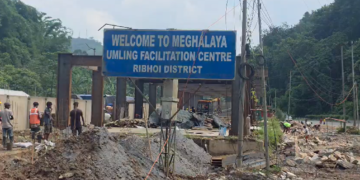
The widening of the Dawki–Lailyngkot road is one of the most significant infrastructure projects presently underway in Meghalaya. It promises to improve connectivity between Shillong and Dawki, facilitate tourism, and strengthen cross-border trade with Bangladesh. The project therefore deserves appreciation as an important investment in the State’s future.
However, every large engineering project also offers an opportunity to ask an important question: Are we building merely for today, or are we building to last for decades?
A road is not merely a strip of asphalt connecting two places. It is a dialogue between gravity, water, rock and human judgment. The better we understand the conversation, the longer the road will endure.
Having spent many years supervising civil construction works, I have observed certain aspects of the ongoing work that deserve thoughtful discussion.
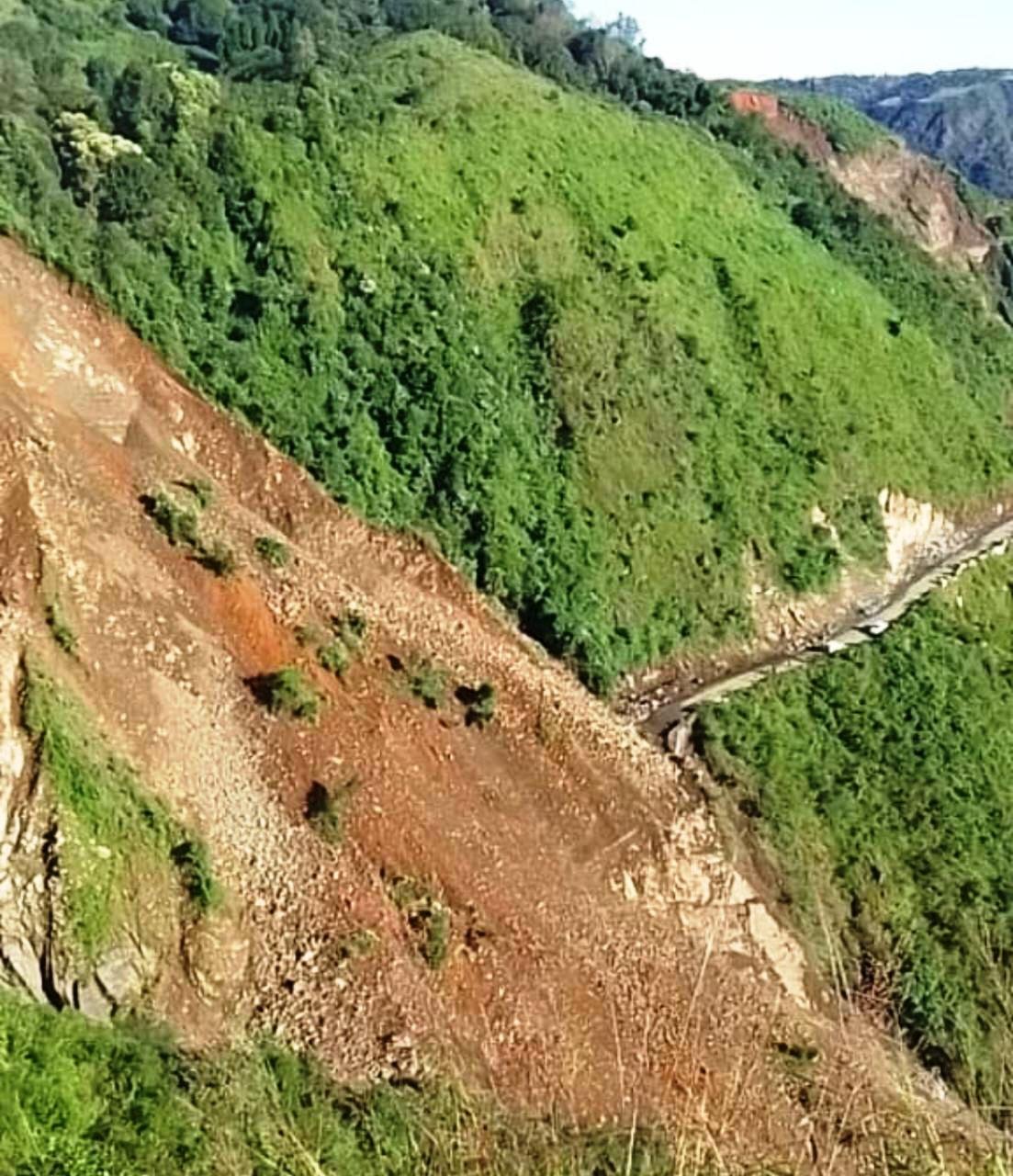
The route passes through one of the most beautiful but geologically sensitive regions of the Khasi Hills. Mountain roads are unlike roads in the plains. They must continuously contend with gravity, intense rainfall, groundwater seepage and weathering of rock. Unless these natural forces are respected, maintenance costs increase and road life decreases.
One aspect that deserves closer attention is drainage. Water is often the greatest enemy of a road. A well-designed drainage system should intercept surface runoff before it reaches the pavement, rapidly remove water from cut slopes and prevent seepage beneath the carriageway. Every monsoon reminds us that inadequate drainage can undo months of expensive construction.
Many retaining walls fail not because they are too weak, but because hydrostatic pressure builds up behind them. A dry wall mainly resists the weight of soil; a waterlogged wall must also resist the force of trapped water. This is why drainage holes and subsurface drains are not optional extras—they are integral to the structural design.
Similarly, the stability of cut slopes deserves careful consideration. Cutting a hill alters the natural balance of forces acting within the rock and soil. Appropriate slope geometry, retaining structures where required, proper benching and vegetation can significantly reduce erosion and improve long-term stability.
One engineering feature that deserves wider use in mountain highways is the French drain. Unlike ordinary roadside drains that remove only surface water, a French drain is designed to intercept groundwater before it reaches the road structure. It consists of a trench filled with graded gravel surrounding a perforated pipe, all wrapped in a geotextile fabric that prevents clogging. Water seeps naturally into the gravel, enters the pipe and is safely carried away. By lowering the water table around the road and preventing seepage into the pavement and embankment, French drains significantly improve slope stability, reduce pavement damage and prolong the life of the highway. Although they involve a modest additional cost during construction, they often pay for themselves many times over through reduced maintenance and increased durability.
Knowing Meghalaya’s climate, I would suggest that every cut slope be viewed as a watershed rather than merely a hill face. Rainwater falling on the slope does not simply disappear—it infiltrates, percolates through joints in the rock, and eventually emerges where it can weaken the pavement or destabilize the slope. A French drain acts as a pressure relief system, intercepting this hidden groundwater before it becomes a problem.
Another issue concerns quality control during construction. Modern road engineering depends not only upon good design but also upon strict adherence to construction practices. Proper proportioning of concrete, adequate compaction, vibration wherever required, curing and systematic quality testing together determine the durability of the finished work. Even small deviations during construction may lead to premature deterioration.
It is important to emphasise that these observations are not intended as criticism of any particular agency or contractor. Rather, they arise from the belief that public infrastructure should deliver maximum value over its intended life. Every additional year of service obtained from a road represents savings to the public exchequer and fewer disruptions to commuters.
The Dawki–Lailyngkot road has the potential to become one of Meghalaya’s showcase highways. By combining sound engineering with rigorous quality assurance and careful environmental management, it can remain safe, durable and economical for many years.
As citizens, engineers and users of this road, we all share a common objective—to ensure that this investment becomes a lasting asset for future generations.
(The writer is a Life Member of the Indian Institute of Physics teachers)