








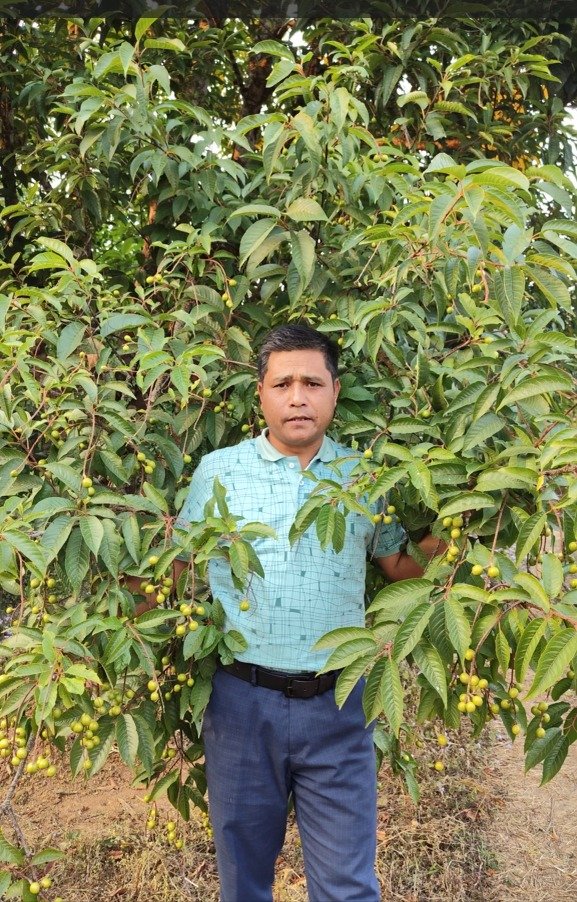
Shillong, Oct 10: Sohiong (Prunus napaulensis), an indigenous fruit of Meghalaya, holds great potential for improving nutrition, increasing farmers’ income and creating rural employment.
To promote its commercial cultivation, the ICAR Research Complex for NEH Region, Umiam, is developing technologies to overcome production and marketing challenges.
Traditionally grown in the Khasi and Jaintia Hills, Sohiong is valued for its dark-purple colour and distinctive taste. It is consumed fresh and processed into juices, jams, jellies, beverages and other value-added products. However, its commercial cultivation has remained limited due to the long time required for fruiting, lack of quality planting materials and inadequate market facilities.
To address these challenges, ICAR scientists have standardised tongue grafting technology, reducing the gestation period from 7–9 years to around 3–4 years after planting. The institute has also identified promising genotypes that are undergoing multilocation evaluation to identify superior types with better fruit quality and productivity. Research is underway to standardise cultivation practices under organic and natural farming systems.
The institute has also developed packaging technology that extends fruit shelf life to up to nine days, helping reduce postharvest losses. Standardised processing methods for beverages, candy, powder, wine and fruit leather offer opportunities for value addition and entrepreneurship. Studies on fruit maturity, nutritional properties and grading are further supporting the development of Sohiong as a potential commercial crop.
Quality planting materials are being produced and disseminated in collaboration with the Farmers’ Commission, Krishi Vigyan Kendras (KVKs), line departments and farmers to encourage wider adoption of these technologies.
With its unique flavour, nutritional potential and indigenous identity, Sohiong offers promising opportunities for commercial orchards, food processing and rural enterprises, particularly for women and youth. Continued research, improved market linkages and collaboration among ICAR, the Government of Meghalaya, KVKs and other stakeholders will be important for developing a sustainable Sohiong value chain.
These initiatives aim to transform Sohiong from an underutilised traditional fruit into a valuable source of income, employment and sustainable horticultural development in Meghalaya.