












Shillong, Aug 12: With more than half of Meghalaya’s population under 20 and with an increasing caseload of HIV/AIDS cases, sex education can no longer be a taboo topic in society, Commissioner and Secretary in the Health Department, Dr Joram Beda, said today.
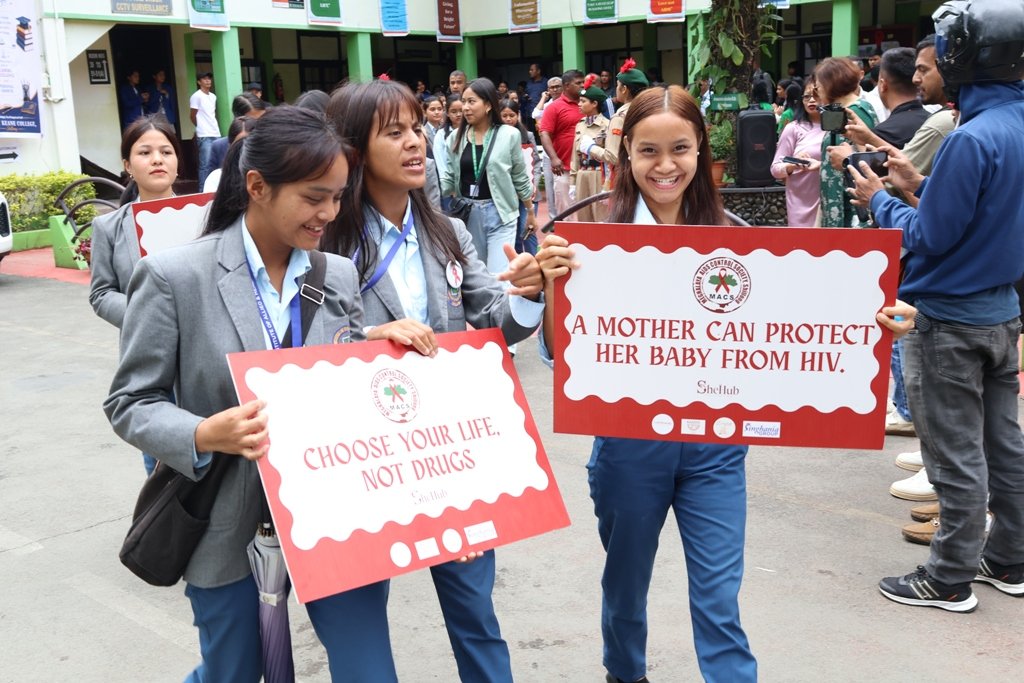
Meghalaya AIDS Control Society (MACS) today launched the Statewide Intensified IEC Campaign 3.0 at Lady Keane College here, coinciding with the observance of International Youth Day, with the state government calling for greater community participation to strengthen HIV awareness, prevention, testing and treatment.
Health Minister Wailadmiki Shylla launched the two-month campaign, which will focus on taking HIV-related information and services to educational institutions, villages, marketplaces, households and communities across Meghalaya.
Addressing the gathering, Shylla called for an end to discrimination against people living with HIV and urged people to encourage HIV testing, timely treatment and care.
He said the fight against HIV could not be left to MACS or the Health Department alone and required the participation of government departments, educational institutions, local communities, civil society organisations, healthcare workers, parents, teachers and young people.
The government is also looking at ways to make testing and treatment more accessible and comfortable for people in rural areas, particularly those who may fear being identified. Shylla said discussions with community groups and people living with HIV would help the government understand what is preventing people from accessing services and explore more effective approaches to testing and treatment. The focus, he said, would be on ensuring that people are aware of their rights to privacy and confidentiality while strengthening outreach services. Shylla said legislators could play an important role in addressing HIV-related stigma within their constituencies, but emphasised that the responsibility cannot rest with elected representatives alone.
With around 51 percent of Meghalaya’s population below the age of 20, Shylla stressed the importance of involving young people in awareness and prevention initiatives. He encouraged students and Red Ribbon Clubs across colleges to actively participate in HIV/AIDS awareness programmes and disseminate accurate information among their peers and communities.
Dr Beda, meanwhile, said the decision to hold the programme at Lady Keane College was deliberate, stressing the need to start conversations on sexual health among young people.
“Since time immemorial, sexual health was a taboo topic. Good boys and girls don’t talk about it. Things have changed. Times have changed,” Beda said, calling for greater emphasis on peer education.
He said young people should be encouraged to discuss HIV and sexual health openly from an educational and health perspective, with peers often being more effective in communicating difficult subjects than teachers or officials.
“This is a very alarming trend and that is the reason why we are here, that we need to talk, we need to start talking about this,” he said.
The health official said Meghalaya is also witnessing a concerning trend, with around 680 HIV-positive cases being detected annually through testing. He stressed that the figures should not be viewed as a problem confined to traditionally identified vulnerable groups, pointing instead to the presence of HIV in the general population.
Beda also linked the state’s HIV response to the wider challenge of substance abuse, cautioning that the spread of drug use could contribute to the transmission of infections. He urged young people to be particularly cautious, saying their age group was vulnerable and that awareness and responsible decision-making were essential.
The campaign will involve extensive grassroots outreach over the next two months. According to Beda, around 1,026 village-level meetings will be conducted, along with 30 dance performances, around 3,000 school outreach sessions and 85 college sessions covering approximately 110 colleges.
The campaign will also feature flash mobs at 30 marketplaces, outreach to around 15,000 households, 12 special camps and 10 pop-up awareness initiatives. The Health Department will also reach out to Dorbar Shnongs through youth clubs to support door-to-door awareness activities.
Dr Beda appealed to students to act as “ambassadors” of the campaign and take HIV awareness messages back to their families and communities.
“It’s time we start opening up and talk. Not vulgarly, but from the point of education,” he said, emphasising the importance of peer-to-peer communication.
The official also sought to dispel fear surrounding HIV, pointing out that advances in treatment have transformed the disease.
“Nobody dies of HIV these days, by the way. It’s just like any other disease,” Beda said, while cautioning that the ability of HIV to spread rapidly makes prevention, early detection and treatment crucial.