











Shillong, Oct 6: The state’s Climate Council had been told to expect a normal amount of rain this year but, in actual fact, the 2026 monsoon has delivered 50-60 per cent less rain than normal.
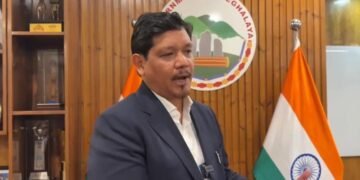
Chief Minister Conrad K Sangma said that the Indian Meteorological Department (IMD) had briefed the Climate Council, which Sangma heads, a few months ago that the amount of rainfall that Meghalaya would receive this year would be roughly average.
However, after the situation unfolded, it was realised that those estimates were not entirely accurate and there was a substantial shortfall. The only mitigating factor is that Meghalaya received more rain than average in March-April, i.e. the pre-monsoon months.
“Though we have seen very less rainfall in August and September, much lower than normal numbers, because of the early showers we received there was some relief,” Sangma said in a video reply to a question by Highland Post.
According to the CM, for the last three to four years the government has been working very aggressively towards mitigating the impact of climate change not only from the aspect of El Nino but through a larger climate change aspect, where focus has been put on rejuvenating the state’s water bodies.
“A Water Policy was created and afterwards actions based on departments was created,” he said giving example that around 70,000 springs were mapped from satellite and out of those mapping which were carried out the government was then able to identify those spring sheds which were extremely dry and then specific measures were taken through Soil Conservation and Water Resources Departments to rejuvenate those springs.
“Today we are seeing the results of that happening,” Sangma added.
Similarly, the studies taken up through the Climate Council were converted into externally aided projects (EAPs) through the World Bank, where two of the main water catchment areas – Umngi, which feeds Shillong, and Ganol, which feeds Tura, close to about Rs 300 crore in external funding were taken up, Sangma informed.
He said that the rejuvenation is being implemented where the traditional heads and community are working with the government to protect the catchment areas and rejuvenate the springs and grow more trees and to ensure that livelihoods are diversified so that families do not depend on the forest and its products.
The CM said that the government started programmes like ‘Payments for Ecosystem Services’, where almost close to 1 lakh hectares of forest area is being protected by the community and the state is paying the people to protect these forest areas.