







Shillong, Jun 29: The Jaiñtia National Council (JNC) and Jaiñtia Students’ Union (JSU) have announced a rally against the proposed limestone mining project of Shree Cement on July 14 to the office of the Jaintia Autonomous District Council (JHADC).
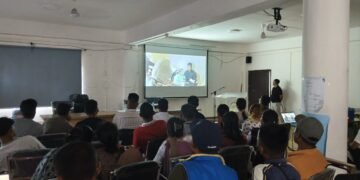
The decision was taken at an urgent meeting of both the pressure groups, which was also attended by land owners, farmers, residents of Daistong village, social worker Reachingson Siangshai and others from the Nongkhlieh Elaka.
During the meeting the stakeholders voiced their concerns about the impact of the mining operations at Lum Shyrman.
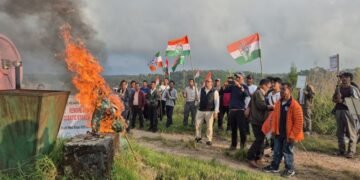
JNC President Sambormi Lyngdoh said the struggle continues after the Shree Cement public hearing on May 22 was called off, following strong opposition and disruption by residents, the Hima Sutnga Youth Federation, JNC, and JSU.
He claimed the project area is not 217 hectares as initially stated, but extends up to 652 hectares, with 217 hectares being only Phase 1. “The residents of Elaka Nongkhlieh have been misled by Shree Cement and its agents who are in close connection with the state government,” Lyngdoh alleged.
He also said a Dorbar Elaka decision to set up the plant outside villages at “Lum Ryngksan” was violated after it was shifted to within Daistong village, cutting off farmers’ access to agricultural land.
The meeting resolved to demand justice for farmers and landowners, and the removal of the Dolloi of Elaka Nongkhlieh. Citing JHADC’s Sanad Point 7 and the Jaintia Hills Autonomous District Act Paragraph 11, the organizations alleged the Dolloi violated rules by re-registering lands in Lum Syrman and issuing NOCs without Dorbar Elaka and Council approval.
The groups also questioned Chief Minister Conrad Sangma’s statement that Shree Cement has complied with all regulations, asking if any law permits companies to “forcibly encroach upon land belonging to residents.”
Calling for wider support, JNC and JSU urged people of Jaiñtia, NGOs, farmers, and landowners to join the rally. They warned MLAs and MDCs against “taking the rights of the people lightly,” saying continued neglect could lead to serious unrest or loss of regional autonomy.