

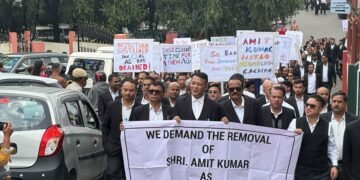












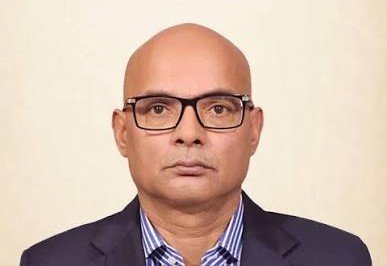
Shillong, Oct 13: Chief Minister Conrad K Sangma today defended the continuation of Advocate General Amit Kumar amid mounting pressure from the legal fraternity for his removal, saying the government could not take such a decision without considering its wider implications for governance.
Acknowledging the concerns raised by members of the High Court bar association and Shillong bar association, Sangma said he had attempted to ease tensions but maintained that replacing the Advocate General was not a straightforward decision, given the role played by the law department in handling cases affecting multiple government departments.
The CM said departments such as finance, the Chief Minister’s Secretariat, home and law were central to the functioning of the government, with their work cutting across several departments and involving complex administrative and legal processes. He said changing key officials responsible for these functions could create a vacuum and affect the government’s ability to handle ongoing matters.
While acknowledging that no individual was irreplaceable, Sangma said decisions involving such positions required careful consideration rather than an immediate response to demands.
“It’s not something that we can just look at today and just do it tomorrow,” he said, adding that the government would examine ways to address the concerns and improve relations with the legal fraternity.
Sangma also said the Advocate General had stayed away from several cases in response to requests from bar associations but had appeared in certain matters where his knowledge of the subject was considered necessary.
He cited cases involving farmers, miners and teachers, arguing that the government’s responsibility to protect their interests could be affected if it withdrew from matters requiring specialised legal understanding.
Sangma urged members of the bar to engage in dialogue to resolve the impasse, saying differences should be addressed without disrupting the government’s legal and administrative functioning.
Responding to questions about his longstanding association with Kumar and whether their personal relationship influenced the latter’s appointment, Sangma acknowledged that the two had known each other for many years.
However, he rejected the suggestion that personal proximity alone explained Kumar’s continuation in office, maintaining that the Advocate General’s work and contribution to the state should be assessed by those who had worked with him.
Sangma recalled that Kumar’s name had been proposed for the post of Advocate General in 2008 by the late Purno A Sangma (Conrad’s father) when a government was briefly formed, but the then CM, Donkupar Roy, had chosen another candidate.
Sangma said bureaucrats, cabinet ministers and serving and retired officials would be better placed to assess Kumar’s professional contribution than he would be, given the allegations surrounding the issue.
“I don’t deny the fact that I know him. But the fact that I know him is what builds that trust, knowing that he is working for the benefit of the state,” he said.
Sangma maintained that he respected the bar associations’ concerns and was willing to facilitate further discussions to find a way forward.
He said dialogue remained the best means of resolving the dispute without creating uncertainty in the government’s legal affairs.