












The Assam government’s announcement to trim the limits of the Eco-Sensitive Zone (ESZ) circling a key protected area like the Kaziranga National Park should concern us in Meghalaya as much as it does in the neighbouring state.
ESZs exist for one reason: to act as a shock absorber. They keep mining, unregulated construction, traffic and waste from pressing right up against forests and wildlife corridors.
Reduce that buffer and you don’t just redraw a map. You move risk closer to the core.
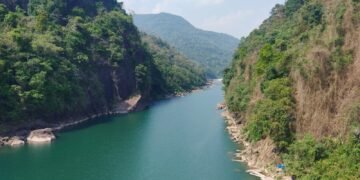
For us in Meghalaya, this is not a distant Assam issue. Our rivers, forests and wildlife don’t stop at the border. Water from Assam’s foothills feeds our plains.
Elephants, gibbons and birds move through corridors that run across both states.
Pollution or rampant construction in a shrunken ESZ in Assam will show up as silt in our streams, pressure on our forests, and more human-wildlife conflict in Garo, Khasi and Jaintia Hills.
We understand the push. Local communities on the edge of protected areas need clarity, livelihoods, and less red tape.
Farmers, small traders and villages deserve development. But trimming the ESZ is a shortcut. The better path is to keep the buffer intact and do the harder work inside it: community forest management, regulated eco-tourism, clear land rights, and strict enforcement against illegal mining and encroachment.
Meghalaya itself is at a turning point. With the National Games coming in 2027 and tourism growing around Sohra, Dawki and Dympep, we are building new infrastructure.
The Dympep Skywalk project shows we want destinations, not just stopovers. That ambition only works if the ecology that draws people here stays healthy.
If Assam weakens its ESZ, the pressure will spill over. More traffic, more extractive activity, and more stress on shared ecosystems.
In the long run we all pay through floods, loss of biodiversity, and fragile livelihoods.
The message to both governments should be the same: development cannot mean sacrificing the green cover that protects us.
Work with communities, not against the buffer. Because once you shrink an eco-sensitive zone, you cannot grow it back.
Let Assam and Meghalaya coordinate, not compete, on this. Our hills and rivers are connected. Our future should be too.