









The year 2020 will forever remain a marker year in the history of the humankind with the Coronavirus dictating the terms of life on the high and the low across the globe.
The virus brought with it extreme suffering and loss, but it also fostered sharing and connection among common people who reached out to each other in support and offering help to complete strangers. The whole state, including the traditional institutions and other non government organizations rallied around the efforts of the government to lessen the impact of the lockdown.
But for Meghalaya the year 2020, even without the burden of the virus, had already begun with the promise of mayhem as the ongoing massive campaign against the controversial Citizenship Amendment Act and the demand for implementation of the Inner Line Permit regime hit the streets.
By February the frayed tempers set off a spiral of violence which led to the first major fall out with the killing of an activist belonging to the local tribe by a mob of non-tribals in the Ichamati-Shella market situated on the sensitive Indo-Bangladesh border. This was followed by, what looked like a revenge spree of several random stabbings in Iewduh, the crowded commercial heart of the capital city which left another two dead. Even in the midst of COVID-19 restrictions Bholaganj non-tribals and their associations raised the spectre of anti-Hindu persecution which triggered protests in Assam and Bengal to which Meghalaya based NGOs responded in kind. This spells trouble for the months ahead.
Not that the ruling politicians of the Meghalaya Democratic Alliance (MDA) or the bureaucracy were in any serene conditions either with the years kicking off with State’s Chief Secretary post bespattered in controversy after the State Government thought fit to post his junior, namely MS Rao, over the head of senior-most IAS of the state, Hector Marwein, who contested the government decision publicly.
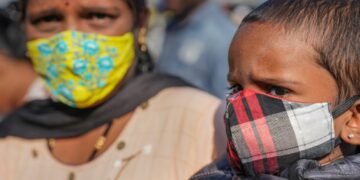
At the moment when these things were set to snowball into a major confrontation, every other consideration was forced to the back-burner when the COVID-19 virus hit Wuhan in China and was unprecedentedly declared a global pandemic by the WHO, leading the country’s rulers to declare a lockdown in the last week of March. Everything was brought to a halt, except of course the movement of migrant workers across the country. Lakhs of them who were caught literally on the streets as their employers shut down work, so much so that thousands had to walk home as all transport was ordered off the road. Within this several thousands of Meghalayans were also caught in a jam, for which the state made preparations to bring them home. Around a lakh of them returned home.
Meghalaya recorded its first Covid death in April as founder of Bethany Hospital, Dr John L Sailo Ryntathiang succumbed to the virus. His death brought in a lot of confusion as the doctor with no travel history got infected. Questions were raised how the Coronavirus made its way into the State.
In June, the Meghalaya government was left red-faced after 41 persons from the state crossed over to Assam to attend a wedding party at Greenwood M Resort in Guwahati amidst the ban on inter-state movement. The marriage party triggered Covid concerns as those who attended the wedding party, tested positive for COVID-19.
Chief Minister Conrad A Sangma, who began the year on this stormy footing did not fare too well throughout the year as accusations of corruption, nepotism, elitism, insensitivity dogged him as he put up a brave front along with his faithful Deputy Chief Minister Prestone Tynsong to deflect every charge verbally, but of course took no action whatsoever to verify these allegations. It was embarrassing for the other coalition partners, like the United Democratic Party (UDP) and the others, to see their own team members hurling charges at each other. Particularly appalling were the many accusations made by the Bharatiya Janata Party (BJP) chief against the functioning of the government and the leadership. They demanded that the CBI take up investigations in the scams in the Garo Hills Autonomous District Council (GHADC) and others pertaining to the continuing illegal coal transportation among other scandals.
The MDA was divided over whether to make a shopping mall in the heritage property of the PWD complex at Barik Point. Originally the Government had grandly planned to make it into an eco friendly site but this abrupt change of plan irked its own coalition partners, particularly its senior partner, the United Democratic Party which publicly asked its own Government to stop its plans to make a shopping mall.
Nothing, not even the COVID-19 global pandemic could keep coal out of the headlines as the alleged illegal movement and mining of coal continued unabated. The year began with activist Kingstone Bolwari alleging illegal transportation. Meghalaya Lokayukta had directed the CBI to probe the illegal coal racket within 15 days and produce a preliminary report.
Meanwhile, the Meghalaya High Court also passed an order that no further lifting and transportation of auctioned coal shall be allowed until January 30. There was no doubt left that rat-hole mining has continued in the Jaiñtia hills even as common people bring forth evidence of ongoing mining. The hundreds of coal loaded trucks on the highway stand testimony to the bleeding economy of Meghalaya as the government machinery again failed to control the illegal movement of the precious mineral. Whether these are legally auctioned coal or not is unknown as the racket of coal mafias is alleged to be ruling the roost. There are other dark stories of the Dainadubi checkpost hijack, fake coal dumps, fake chalans, fake transport permits which continued to circulate in public circuits throughout the year making the MDA vulnerable to attacks from the Opposition Congress Party, news of which provided fodder for the dailies in the State.
So much so that unprecedentedly, the MDA’s own cabinet ministers had to meet the Chief Minister asking him to take action which led to Home Minister, James Sangma being stripped of this portfolio and in another case, the CM holding a meeting with the Director General of Police to ensure that illegal coal trucks were stopped. This was a major step taken by CM Sangma, but as per the records, it did not bring much difference as the new incumbent Home Minister, Lahkmen Rymbui remained equally obtuse about correcting irregularities in the coal sector.
Financially, the state went further into the dumps. Several departments could not get their salaries. The three district councils, the employees of the MCCL, the MECL, the SSA teachers had to constantly agitate for their salaries. The state’s coffers are said to be empty, even though on the other hand lavish expenditures continue to be made in other sectors such as buying sprees for luxury vehicles or plus furniture for officials and by politicians etc, something that the aam-admi cannot understand. The year was marked by agitations by different workers associations demanding their pay. The workers of the MeCL agitated several times demanding a halt to the privatization of the state power corporation.
The monsoon wreaked mayhem as usual with floods, landslides and deaths, but the September rains hit the hardest with three deaths in a vehicle which got submerged as it tried to cross a river and the death of a young girl in a landslide that engulfed her home in a part of the capital which had never seen a landslide ever. Roads and bridges were destroyed by the rising waters and the loss of homes, properties and crops ran into crores of rupees at a time when the state was struggling to make ends meet.
Meghalaya spent Rs.399 crores on COVID management as it shelved out money on corona care centres, procurement of PPW, ambulances, laboratories, health care equipment, bringing home stranded citizens, food, financial assistance to people and other related works.
The State slowly started opening up with the essential markets allowed to function. Iewduh, which remained closed for months, was allowed to open up in mid August bringing relief to farmers and other traders. A new tourism policy was announced by the Government while it accepted the new national Education Policy with some reservations. Tourist spots were opened up this month while the first Entry check point was inaugurated in Umling earlier this month.
Schools remained closed but formal education went online. It was in the later part of September that schools were allowed to open but most pupils preferred to stay away and continue with online classes.
Rights and Right to Information activists across the state did yeoman’s service by unearthing unprecedented corruption and siphoning off of Mahatma Gandhi National Rural Employment Scheme (NREGA public funds across the state. Many activists were ostracized and threatened but their work has exposed the failure of the Community and Rural Development Department which handles NREGA. This issue will have to be taken more seriously by the chief secretary of the state as several letters have been addressed to him, but unfortunately the top bureaucrat has failed to acknowledge these grassroots voices.
A new Governor Satya Pal Malik was sworn in August replacing the previous controversial incumbent. He is said to be an RSS loyalist and a staunch party man of the BJP. In the last few months of the year, he has given his word that he would take up the issues of ILP with the Union Home Ministry even as the campaign to demand their implementation is once again rallying around for a fresh push.
As the uranium issue made a fresh comeback with allegations that the tanks holding the remains of the uranium ore have cracked endangering the entire surroundings in South West Khasi Hills, Spelity Lyngdoh Langrin, the stalwart landowner who remained opposed to uranium mining on her lands passed away this year, weakening the anti-uranium movement.
The pandemic seems to have aggravated the condition of women and children as the year saw a rise in the number of crimes against women and children and an alarming rise in the death of infants at birth and pregnant women which was noted at a total of 877 or more.
As the future looks gloomy, the state can only hang on to the ‘Restart Meghalaya Mission’ which was launched in August with a promise of Rs. 14, 515 to revive the COVID-19 hit state economy. While announcing this, the CM had said that this amount is to be spent over the next three years and for this particular year an amount of Rs. 78,839 has been earmarked. The core of this restart mission is for farmers and agriculturists.
“The economic slogan today is localisation and NOT globalization. Meghalaya will strive for self sufficiency” the Chief Minister had said which should be the clarion call for 2021, not only for the State but for the world as well as the impact of Coronavirus looks to further cut down the global economy.