








By Balakmen Suting
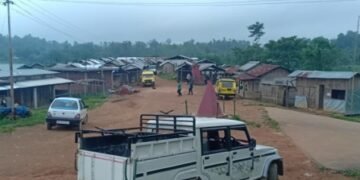
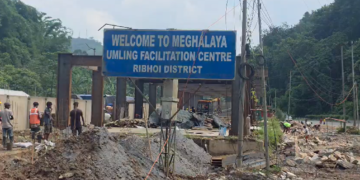
I lived in Byrnihat from 2023 to 2024. I watched it change in real time, soot settling thicker on leaves each month, a smell that no longer left your clothes, a cough that became a permanent resident in every household I knew. What I see now, through the flood of videos and reels circulating from the area, is not a new crisis. It is the same crisis, grown louder, and still being denied.
Byrnihat does not need an introduction anymore. The 2024 IQAir World Air Quality Report named it the most polluted metropolitan area on Earth, with PM2.5 levels of 128.2 micrograms per cubic metre more than 25 times the WHO’s safe guideline. CREA had already flagged it as India’s most polluted city the year before. These are international, peer-reviewed measurements, not activist exaggerations. Yet every time the data surfaces, the response from officialdom is the same: deflect to Assam’s side of the border, question the methodology, and demand a “formal complaint” before admitting what every resident already breathes in daily.
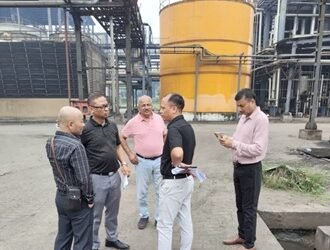
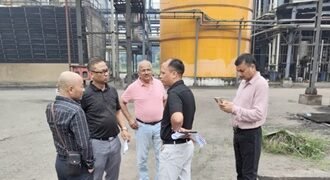
This is where the ethanol story enters, and the irony is cruel: a fuel meant to be India’s exit from pollution has, in Byrnihat, become its address. Ethanol blending exists on paper as the country’s green answer to crude oil dependence, cutting carbon emissions, reducing import bills, and supporting farmers. Nationally, the programme has saved over Rs 1.40 lakh crore in foreign exchange, a real and defensible gain. But a fuel’s climate credentials at the tailpipe mean nothing if its production poisons the village next door. Ethanol distilleries, alongside cement units and coke plants in the Export Promotion Industrial Park beside the Umtrew river, have been named repeatedly by residents as the source of thick black smoke, foul odour, and soot that coats vegetables, clothes, and lungs alike.
A recent viral ground report confirmed what locals have said for years: vegetables must be washed multiple times before they are safe to cook, laundry cannot be dried outdoors, and children are kept inside to avoid the dust. Government data cited in that report shows respiratory disease cases rising from 2,082 in 2022 to 3,681 in 2024, nearly double in two years. Residents describe skin rashes, eye irritation, tuberculosis, and a frightening rise in cancer cases. Even livestock have stopped grazing on contaminated grass, and the Umtrew river, once a lifeline, now carries the runoff of this industrial sprawl. This is not collateral damage; it is the collapse of an entire ecosystem. Water, soil, air, plant, animal, and human health failing together, because they were never separate to begin with.
The state’s response has been disappointing. The Health Minister says the department only learned of the ethanol unit “through social media” and will act only on a written complaint. The Chief Minister disputes the international pollution figures with the state’s own, lower numbers. The Pollution Control Board, meanwhile, has reportedly received an award for “reducing pollution” in a town that international monitors still rank among the dirtiest in the world. Closures of a handful of non-compliant units, while welcome, have not meaningfully changed the air people breathe, by the Board’s own admission.
A body does not function in parts. If a hand is wounded and left untreated, the infection does not stay in the hand, it spreads, weakening the whole system. Byrnihat is that wounded hand of our region. Ignoring it because the worst factories sit “on the Assam side,” or because no resident has filed the right form in triplicate, will not stop the poison from spreading into Meghalaya’s lungs, water, and future.
Byrnihat does not need more award ceremonies or jurisdictional finger-pointing between Assam and Meghalaya. It needs a joint, independent, real-time air and water monitoring system across both sides of the border. It needs the Health Department to proactively survey respiratory and cancer cases instead of waiting for paperwork that sick, exhausted residents may never have the means to file. It needs strict, enforced emission standards for every distillery and ethanol unit, not selective closures that vanish from headlines after a week. Above all, it needs the ethanol industry and the policymakers championing it nationally to confront the gap between the promise of clean fuel and the reality of its production. A green claim built on a poisoned town is not green; it is greenwashing with a body count.
Plutarch tells of a Roman who divorced his beautiful, wealthy wife. When friends pressed him, “Is she not fair? Is she not faithful?” He held up his shoe and said, “This shoe is new and well-made, yet none of you knows where it pinches me.” That reply lingers with me. Everyone else simply admires how the shoe looks. Byrnihat’s smoke has been viewed in a hundred reels, its statistics quoted in a hundred bulletins, its residents’ anger captured in a hundred viral videos and still nothing moves, because the soot is not settling on anyone else’s windowsill, and the cough is not in anyone else’s chest. Outrage that costs nothing is easy to perform and easier to forget.
A neighbour in Byrnihat used to joke, half-bitterly, that visitors would photograph the haze for their stories and leave before dinner, never staying long enough to taste what the water did to their throat the next morning. That is the quiet tragedy here: the crisis has become content before it has become a cause. A problem this visible should not need a viral moment to be believed yet even a viral moment has not been enough to make it acted upon.
I left Byrnihat, but the town and its people did not get to leave with me. They are still there, washing soot off their vegetables, watching their children cough, waiting for someone in power, or simply someone watching from a screen, to feel what they feel and not just see it. Before it is too late, someone must.