











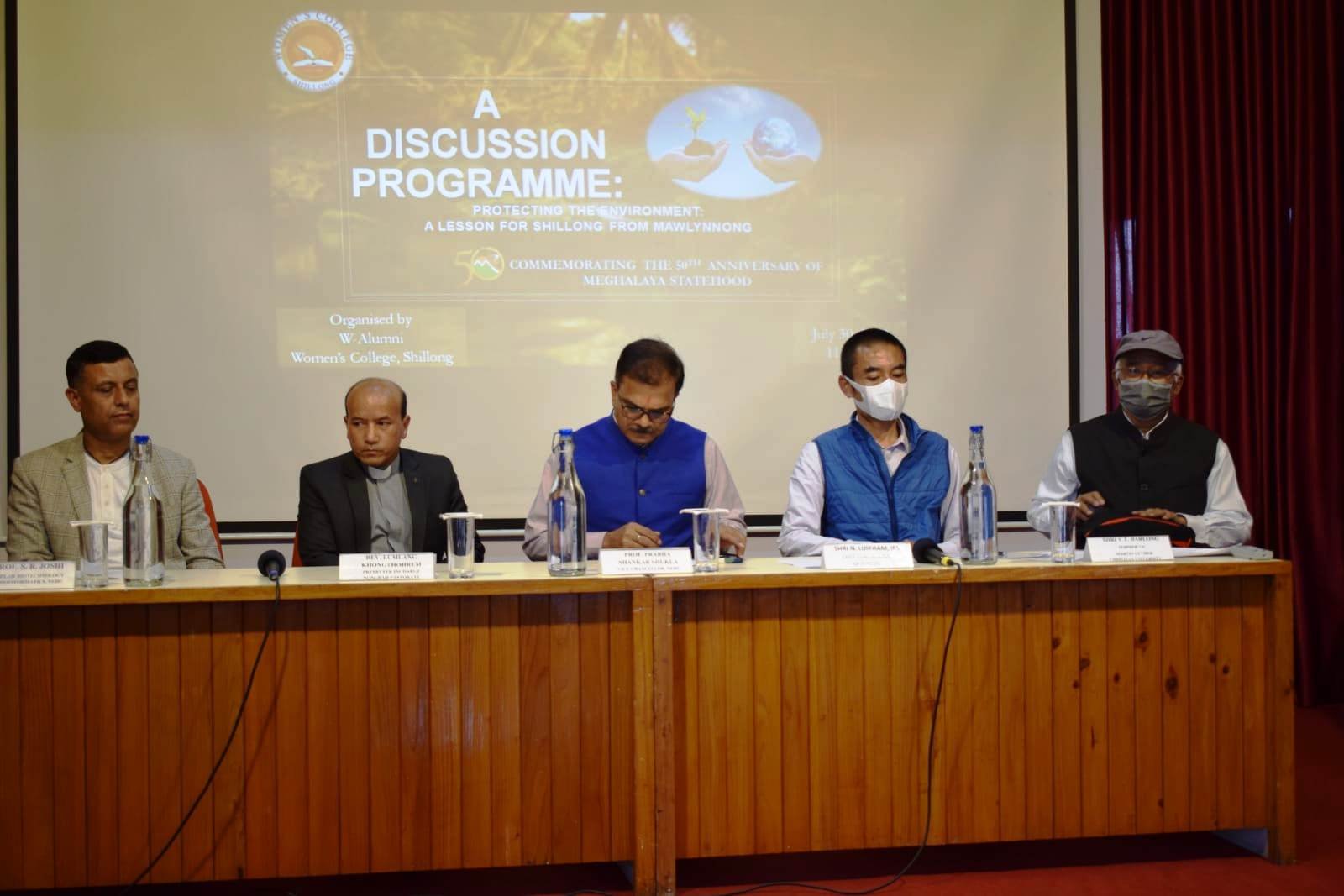
A one-day discussion programme on, ‘Protecting the Environment: A Lesson for Shillong from Mawlynnong” was organised to celebrate Meghalaya’s 50 years of Statehood at Mawlynnong village today.
The discussion was organised by the W- Alumni Women’s College, Shillong which was attended by academicians, government officials, faculty members and students.
Women’s College Principal, Dr Ratnadeep Roy, in his welcome address spoke on the importance of protecting the environment. He describes about how through the ages, environmental problems and protection have gained momentum through the works of Philosophers and Environmentalist.
NEHU Vice Chancellor, Prof Prabha Shankar Shukla who attended the programme as the chief guest spoke on “Swachh Bharat Abhiyan: Shillong Vs Mawlynnong”. He discussed about the cleanliness and beauty of human life and how rich North-East is in bio-diversity.
He also made a comparison between the pristine beauty of Mawlynnong and what Shillong is becoming today. He touched on how traditions and customs inculcated in the tribals have manage to keep Mawlynnong clean.
Chief Conservator of Forest, N. Luikham in his presentation stressed on the inter linkages among the different components of the eco-system and how the mindset of people is very essential to counter the ways in which we are diminishing the environment.
Former Vice Chancellor of MLCU, VT Darlong encapsulated the spiritual aspect of nature in the physical realm. He said that people should try to replicate teachings of Mawlynnong villagers where ‘Awareness into Action’ has been demonstrated and social capital has been contributed by the villagers.
Prof S.R. Joshi of NEHU in his talk on the topic, “Environment: Let’s try understanding it” stated that “the air that goes around comes around”. He spoke about bio-diversity and the ways to protect the environment.
Rev. Lumlang Khongthohrem, Church of North India describes about his experiences as a resident of Mawlynnong. He said cleanliness of the village is possible because of collective responsibility and communal ownership of the village. He remarks that the values and teachings of the village elders have helped to preserved and protect the beauty of the village.