







The Forests and Environment Department is studying proposals to once again redefine what exactly constitutes a forest in Meghalaya, which could see the strict definition adopted in 2012 loosened and thus classify more land in the state as forested.
This was stated by retired forest officer and environmental activist Naba Bhattacharjee in a press release today.
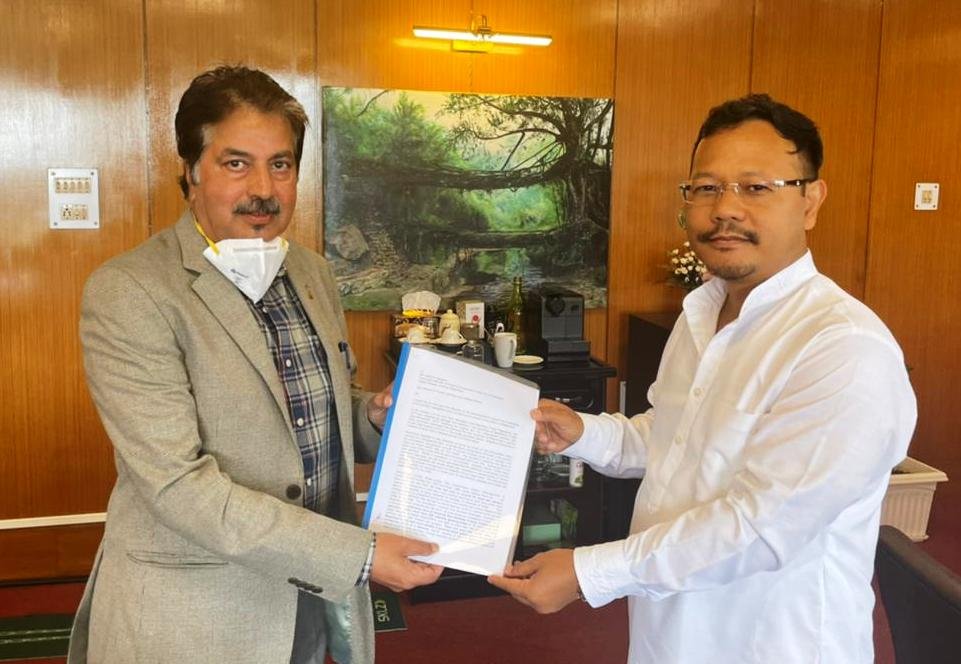
In 2012 the Meghalaya Assembly passed an amendment to the Meghalaya Forest Regulation Act that brought in a stricter interpretation of what counts as a forest in the state. The amendment required that a continuous tract of at least four hectares had to contain at least 250 naturally growing trees of a specific height or 100 bamboo clumps to be classified as a forest. In a memorandum to Forests Minister James Sangma, Bhattacharjee pointed out that the definition of a forest by the erstwhile United Khasi-Jaintia Hills Autonomous District Council was any piece of land that contained 25 trees per acre or 65 per hectare, which, he said, was closer to the definition employed by the Supreme Court.
The amendment, Bhattacharjee added, “sought to justify the diversion of forest land for non-forestry purpose and evade the applicability” of the Forest Conservation Act 1980 and would, by extension, reduce the forest cover in the state by a massive amount.
Since 2012, Bhattacharjee has been working towards getting the definition reverted. “The sustained efforts are appearing to be headed for a review and correction of the definition as suggested by me,” he said.
Sangma reportedly told him that the department is already working on field studies and legal aspects “and a favourable outcome can be expected through another amendment to the definition of forest and restore the original definition as far as practicable”.
Last month Bhattacharjee was one of three people dedicated to protecting the environment who Sangma had a meeting with in an effort to engage and promote participative governance with people-centric agenda in mind.