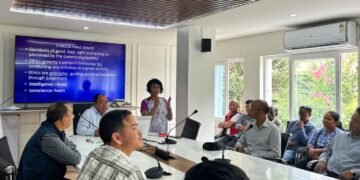




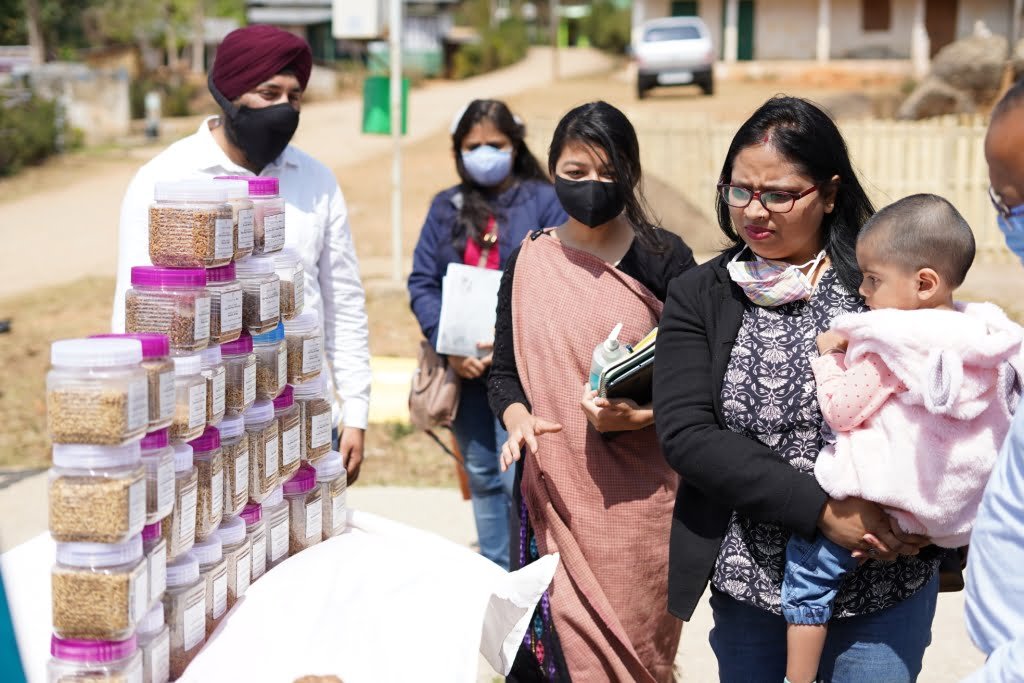
To celebrate and strengthen partnership in promoting indigenous food systems, the North East Slow Food and Agrobiodiversity (NESFAS) along with the community members of Khweng in Ri-Bhoi district and Mulum in West Jaiñtia Hills district, organized a two-day event which concluded today.
‘The NESFAS-REC’s Journey with Communities’ was a programme to acknowledge the Rural Electrification Corporation Foundation (REC)-funded project “No One Shall Be Left Behind Initiative” in enhancing their well-being.
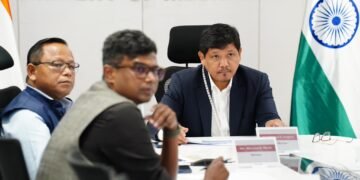
Preeti Kumari, Associate Sustainable Development, REC foundation from New Delhi who graced both occasions as the chief guest lauded NESFAS’ works as “amazing activities in different communities across Meghalaya”.
“It is important how we find out the ways to live, and through traditional systems, you have proved to be on the right track. By visiting these two project sites, I am much more aware of all the projects and progress happening, which we would have not learned just by sitting in the head office in New Delhi,” she said.
Kumari added that she learned that the communities in Meghalaya are very knowledgeable and have abundant traditional knowledge which is a very enriching experience. “I believe this information should be shared with the rest of India. It’s such a pleasant sight to see how you all are reviving and preserving age-old practices, keeping in mind the importance of health and food security,” she said.
The NESFAS staff also screened the NESFAS film entitled Sacred Futures which was screened at the 2021-IFAD Indigenous Peoples Award last month after NESFAS’ “No One Shall Be Left Behind Initiative” won the “Best performing project” Award 2021 from United Nation’s IFAD.
Pius Ranee, Executive Director, NESFAS thanked the community members, REC officials from REC Foundation for supporting the organisation and the project. “We went from working with a few communities to now working with 130 communities across Meghalaya and Nagaland. All this is only possible because REC believed in us as an organization.
“Through this project, we have received multiple recognition from the Meghalaya government, a brief example of this is of NABARD and how they have appreciated our WASH campaign which is part of one of our components –The Consumption component,” he said.
He cited another example of how the communities here lost the ragi variety of millet. But as a result of the exchange programme which was held in 2018 in Nagaland, some farmer representatives from the state got it from there and started cultivation again in the Meghalaya region.
After the formal programme in Khweng, the chief guest along with the other dignitaries visited the Integrated Child Development Services (ICDS) center where they took part in planting French beans at the centre’s garden. They also visited a community member’s kitchen garden and the school garden nearby and Eri Training Centre at Khweng.