






By Erwin K. Syiem Sutnga
In his 23 November 2026 article for Highland Post, Jerry Pyrtuh argues that the Shillong Peak ropeway is a symptom of a development policy that favours tourism in the capital while starving essential sectors and other parts of Meghalaya. He is right to ask who benefits from public investment. But to answer that question, we must look beyond the most visible project in Shillong and examine what has actually reached the villages. On that test, the record under Conrad Sangma is broader than Pyrtuh allows.
There are two questions here. Is the Shillong Peak ropeway justified on its own merits? And has the State neglected development outside tourism? Rural road building cannot answer the first question, just as objections to the ropeway cannot answer the second.
Start with roads. In his 2026–27 Budget speech, the Chief Minister reported that more than 3,300 kilometres of roads had been completed under the Pradhan Mantri Gram Sadak Yojana over the preceding eight years, connecting 280 previously unconnected villages. A usable road can mean a shorter journey to a hospital, a more dependable route to school and a better chance of getting a crop to market. Where roads fail after the rains, the State must identify who is responsible for maintenance and publish a schedule for repairs.
Rural housing also belongs in this assessment. A Lok Sabha reply dated 3 February 2026 records 1,55,930 completed PMAY-Gramin houses in Meghalaya. This is a cumulative total, not a count attributable wholly to the period since 2018. Credit belongs jointly to the Union, successive State administrations, implementing institutions and beneficiary households.
The State Budget speech reports that more than Rs 9,100 crore flowed through the rural employment guarantee programme over eight years and that Jal Jeevan Mission had reached 83 per cent of rural households with tap connections. A connection is not the same as a reliable supply of safe water, just as expenditure under MGNREGA does not establish that wages arrived on time.
The mission’s separate 2024 functionality assessment found that 68.2 per cent of sampled household tap connections in Meghalaya’s Har Ghar Jal villages met its functionality criteria. That is not a statewide connection rate, or a measure of service in 2026. It shows why the State should publish village-level results on the regularity and quality of supply. For rural employment, it should publish how long workers wait for wages.
The spending record is also relevant. From the State’s budget documents, PRS Legislative Research records actual expenditure in 2024–25 of Rs 1,803 crore on health and family welfare, Rs 1,494 crore on rural development and Rs 1,065 crore on agriculture and allied activities. These are sums spent, not promises of future allocations.
Those sums do not tell us how well the money was spent. But to argue that tourism crowded out essential sectors, one must show which priorities lost funding or were left unmet because of those choices. A highly visible project is not, on its own, evidence of that trade-off.
The same applies to women’s economic institutions. A Union Rural Development Ministry reply published on 11 August 2026 lists 47,946 women’s self-help groups in Meghalaya under DAY-NRLM. The State Budget separately reports cumulative Community Investment Fund support of Rs 415 crore and credit linkage of Rs 756 crore. Credit is repayable finance and must not be described as a government grant.
The relevant questions are whether these groups can obtain affordable finance, sustain their businesses and increase women’s control over earnings. Those are questions of everyday economic independence. An assessment centred almost entirely on tourists overlooks the rural women organising production, handling accounts and seeking markets through these institutions.
There is also direct assistance to producers. On 22 September 2026, the State reported a FOCUS Plus instalment of Rs 2,500 each to about 1.14 lakh beneficiaries. A payment is evidence of financial assistance, not proof that a household has escaped poverty. It should be assessed for timeliness, inclusion and productive use. But it is plainly an intervention directed towards farming families.
Agricultural processing offers a more concrete example. The Eastern Ri-Bhoi Organic Farmer Producer Company runs an organic spice processing facility at Bhoirymbong, inaugurated in June 2026. In October, the International Fund for Agricultural Development (IFAD) reported the flag-off of a Singapore-bound shipment of organic spices processed there. The roughly Rs 32 crore facility is designed to process about 10,000 tonnes a year. A shipment tells us more than an inauguration or a capacity figure. It does not yet establish a regular export trade.
Farmers often sell their crops with little bargaining power while others capture the value of storage, processing and marketing. The test at Bhoirymbong is how much produce the plant buys from local farmers, what it pays them and how promptly it pays. If the facility can retain a greater share of the sale value in the villages that supply it, that is development worth measuring.
IFAD’s March 2026 supervision report records Megha-LAMP reaching 1,72,501 households and forming 571 Integrated Village Cooperative Societies by December 2024. The project predates Conrad Sangma’s government, having been approved in 2014. Its continued implementation deserves recognition without rewriting that history.
IFAD also found that only 186 of the village societies were profitable as of March 2025, against a target of 210. A society formed is not necessarily a society that can sustain itself. The figures tell us both the scale of the work and where it still falls short.
In May 2025, the World Bank reported that the Meghalaya Community Led Landscape Management Project had worked with about 400 village communities, restored nearly 10,000 hectares of forest and rejuvenated 3,000 springs. The figures come from a financing partner, but they describe a specific body of work that should figure in any account of rural development.
The achievement belongs substantially to the communities that carried out the work. Their experience should inform how we protect water sources elsewhere. Communities should have access to the underlying data and a role in deciding what happens to the springs and forests on which they depend.
Restoration in one district is no substitute for protecting the catchment at Lum Shyllong. The State should publish the ropeway’s projected water demand, the proposed source of supply and its assessment of the impact on nearby springs, including in the dry season. Any restoration plan must include work within the affected catchment. Whether the project proceeds or not, the work of protecting the hill and its water sources remains.
Health is another essential part of the record. The Meghalaya State Health Systems Resource Center’s May 2026 brief, using HMIS data, reports recorded maternal deaths falling from 244 in 2020–21 to 106 in 2025–26. These are administrative death counts, not the maternal mortality ratio, and they do not establish that one scheme alone caused the decline.
The September 2026 health infrastructure review also reported more than 110 sub-centres completed over the preceding two years. Construction must be followed by staffing, medicines, referral transport and dependable services. The government should publish which of the completed centres have opened, their hours and the services available at each.
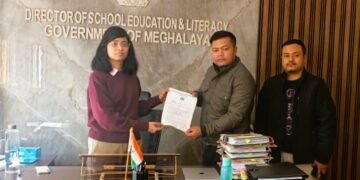
In education, the government reported in September that more than 2,000 elementary government schools had received infrastructure improvements. That is worth recording, but it tells us little about classroom learning or whether sanctioned teaching posts are filled. The deficit-school teachers’ grievances over pay and retirement benefits need a substantive response. A meeting is not a settlement, and improvements to government school buildings are no answer to the service conditions of deficit-school teachers.
The strongest reason to keep the focus on basic services is that rural deprivation remains widespread. NITI Aayog’s 2023 National Multidimensional Poverty Index puts the share of rural Meghalaya’s population experiencing multidimensional poverty at 38.49 per cent in 2015–16 and 32.43 per cent in 2019–21. The two survey periods show a fall in the share of people facing overlapping deprivations in health, education and living standards, but they do not establish today’s poverty rate or isolate the effect of one government.
The Comptroller and Auditor General identified 777 outstanding utilisation certificates covering Rs 5,428.54 crore as at 31 March 2025. These certificates are how departments account for the use of grants. The State should publish a department-wise reconciliation showing how many have been furnished and verified since the audit cut-off, what amounts remain outstanding and when the balance will be accounted for. A progress report should also say what action was taken where departments repeatedly failed to account for grants.
Pyrtuh’s treatment of hospitality also needs reconsideration. Colonial domination involved coercive political power and subordination. A local household choosing to operate a homestay, a farmer supplying food or a trained young person providing a paid service does not, merely by doing so, enter the same relationship. Commercial hospitality can involve exploitation, but that must be demonstrated through ownership, working conditions, bargaining power and the distribution of income.
We should therefore insist on local ownership, fair remuneration, protection of community resources and the freedom to refuse unacceptable projects. We should also respect the freedom to participate in an enterprise. Describing service work as inherently servile risks diminishing the agency of the very people whose dignity the argument seeks to defend.
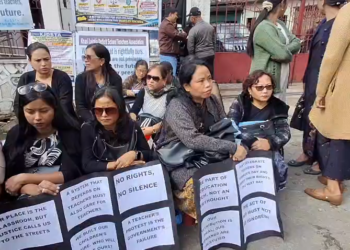
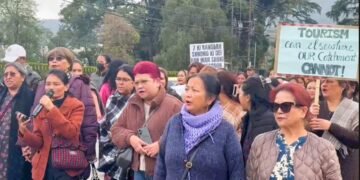
Women protesting against the ropeway deserve to be heard. So do women investing their savings through self-help groups, women producing and marketing agricultural goods, and women seeking reliable maternity care. Their interests may overlap, and their views may differ. No single political position should be treated as the authentic voice of all rural or indigenous women.
Tourism should operate within ecological limits. The case for supporting it is strongest where households and communities retain a real share of the income and have a say in how their land and water are used. But a tourism policy is not a rural development policy. Rural settlements need dependable roads, clean water, schools and clinics whether or not a single visitor comes.
The strongest case for Conrad Sangma’s development record rests on the breadth of implementation beyond tourism: rural connectivity, housing delivery, producer support, women’s institutions, agricultural infrastructure, village conservation and public services. Much of this work depends on Central funding, programmes begun earlier and the effort of communities and public servants. Effective leadership includes sustaining and coordinating those contributions. Implementation matters, even when the original policy was inherited.
The government must answer for defective work, delayed entitlements and projects whose costs exceed their public value. Critics must account for what has been delivered. The same test applies to a ropeway and to a village road: who benefits, who bears the cost and what can the public verify?