






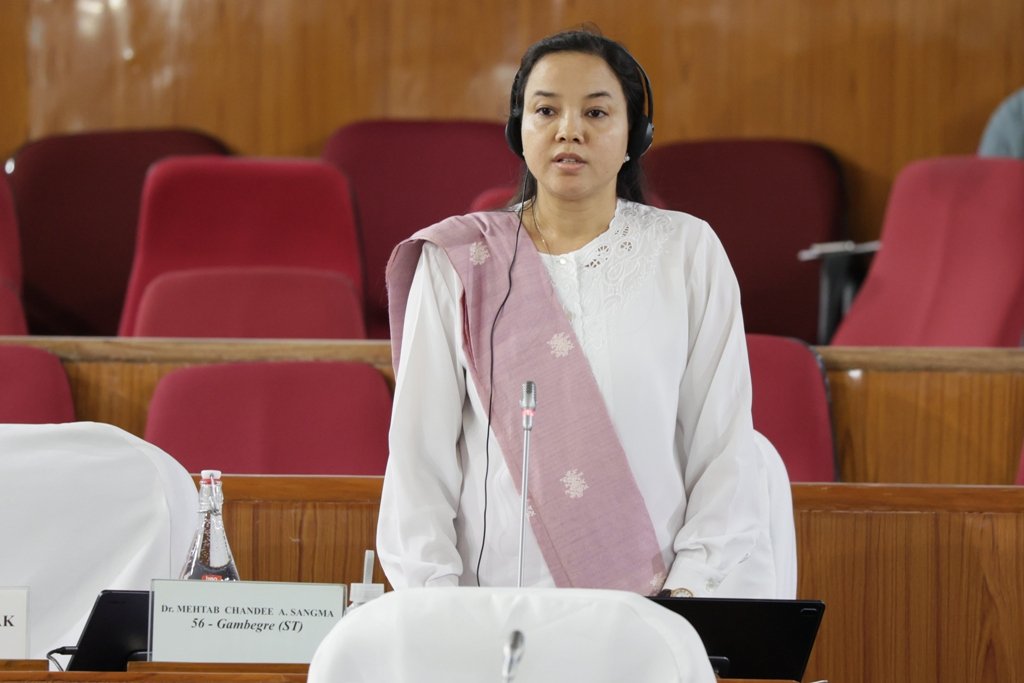
Shillong, Aug 27: Gambegre MLA Mehtab Chandee A Sangma, participating in the short duration discussion on the current state of education in Meghalaya, welcomed the improvement in examination results and reduction in school dropout rates while calling for greater focus on learning outcomes, equitable distribution of higher secondary schools and skill-based education in rural areas.
While the improvements seen “are very promising,” Chandee said, there was also a need to look beyond examination results and assess whether students were achieving meaningful learning outcomes.
She stressed that quality of teaching and critical-thinking skills should be given equal importance as the programme continues.
Chandee also raised concerns over the uneven distribution of HSSLC schools across Meghalaya.
HSSLC centres are concentrated largely in Shillong’s urban areas and Tura, while many rural areas continue to lack adequate access to higher secondary education.
Using her Gambegre constituency as an example, Chandee said there was currently only one HSSLC school in the Medlem area, forcing students from some areas to travel for two to three hours to reach their centres.
She urged the Education Department to undertake a district-wise assessment and survey to determine whether the existing number and location of HSSLC schools are adequate and equitably distributed.
“The distribution should be based on the actual needs of students in rural and remote areas,” she suggested.
Chandee further called for greater emphasis on vocational education and skill development, particularly for students in rural Meghalaya. She suggested that the government consider establishing more skilling centres and vocational training institutes across the state.
With Meghalaya now having its own state university, she said there was an opportunity to develop courses and curricula specifically suited to the needs of the state’s youth and local economic conditions.
She particularly advocated for agriculture-based skill training in rural areas, noting that Meghalaya remains largely an agrarian society.