








Shillong, Jul 12: The KHADC’s amendment to the Regulation and Administration of Land will remove strong protective layers of governance, which is a puzzling move by a body tasked with securing the future of the Khasi community.
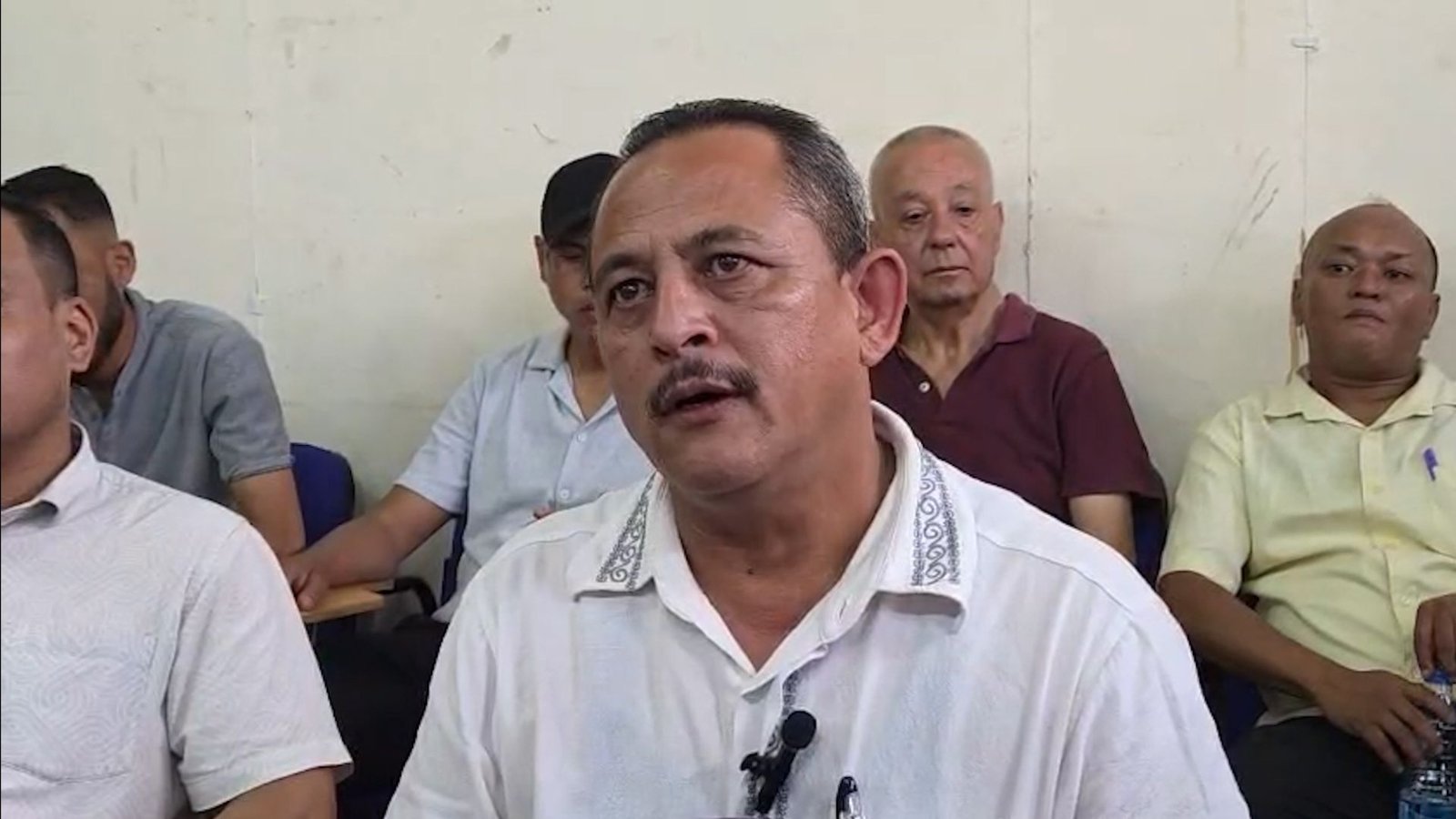
This was argued by Nongrim Hills Rangbah Shnong Bantylli Nari, who spoke to Highland Post on Saturday. He said that there has still been no communication from the Khasi Hills Autonomous District Council (KHADC) since the July 7 meeting of the Synjuk ki Nongsynshar Shnong ka Bri u Hynñiewtrep (SNSBH) and clan elders, where they demanded that KHADC recall the Regulation and Administration of Land Amendment 2026.
Nari, who is also president of the Synjuk Nongthymmai and convenor of the Hynriew Synjuk covering Nongthymmai, Shiliang Umkhen, Pynthorbah, Laitkor, Upper Shillong and Mawlai, said they are not against land ceilings.
“We strongly oppose the executive committee of the KHADC that has removed Clause 16 and deleted the words ‘after consultation with the Dorbar Shnong, Dorbar Raid, and Dorbar Hima’ from the new amendment bill,” he said, adding that this amendment will give the KHADC too much power without a mechanism to rein it in if its decisions go against the public interest.
He defended the existing multi-layer process as a “strong wall” protecting land. Even after a no-objection certificate from the Dorbar Shnong, a proposal goes to Dorbar Raid and Dorbar Hima, then to the state government via the Deputy Commissioner and finally needs KHADC consent.
“And if the district council fails to give its consent, the acquisition process fails and ends. The wall is very strong. Moreover, some of the cases end within the Dorbar Shnong itself, which also eases the workload of the district council,” he added. “Now the district council wants to remove all these strong walls, which is not understood.”
Nari argued the council cannot act alone because land belongs to communities.
“The district council is just a custodian while land could belong to Dorbar Shnong, Dorbar Raid or Dorbar Hima and the council only watches over them. So how can the council talk about these lands without the concerned stakeholders?” he asked. “You want to formulate the land ceiling without the stakeholders. That makes no sense.”
When asked what happens if the KHADC refuses to recall the bill, Nari said the Synjuk has not yet taken any decision on the matter but hinted that necessary steps would be taken.
“The first and foremost step that we decided is to meet the Governor, the Chief Minister and the minister in charge of District Council Affairs,” he said, adding they are certain to meet the Governor and others next week.
“We were never consulted on the move of the KHADC and, had there been consultation, such a blunder in the bill would not have taken place. It could have been much better if it had been brought to the table of discussion,” Nari said.
On whether the KHADC is trying to grab powers of the Dorbars, he said, “The desire seems so,” and warned Dorbars also have powers, including “non-cooperation.”
“Even the state government cannot function without the Dorbar Shnong. We have seen during Covid-19 and in developmental schemes that it understands it cannot execute by itself – whether health, law and order, drinking water, etc. The same goes for the district council. It cannot function without the Dorbar Shnong,” he said.