










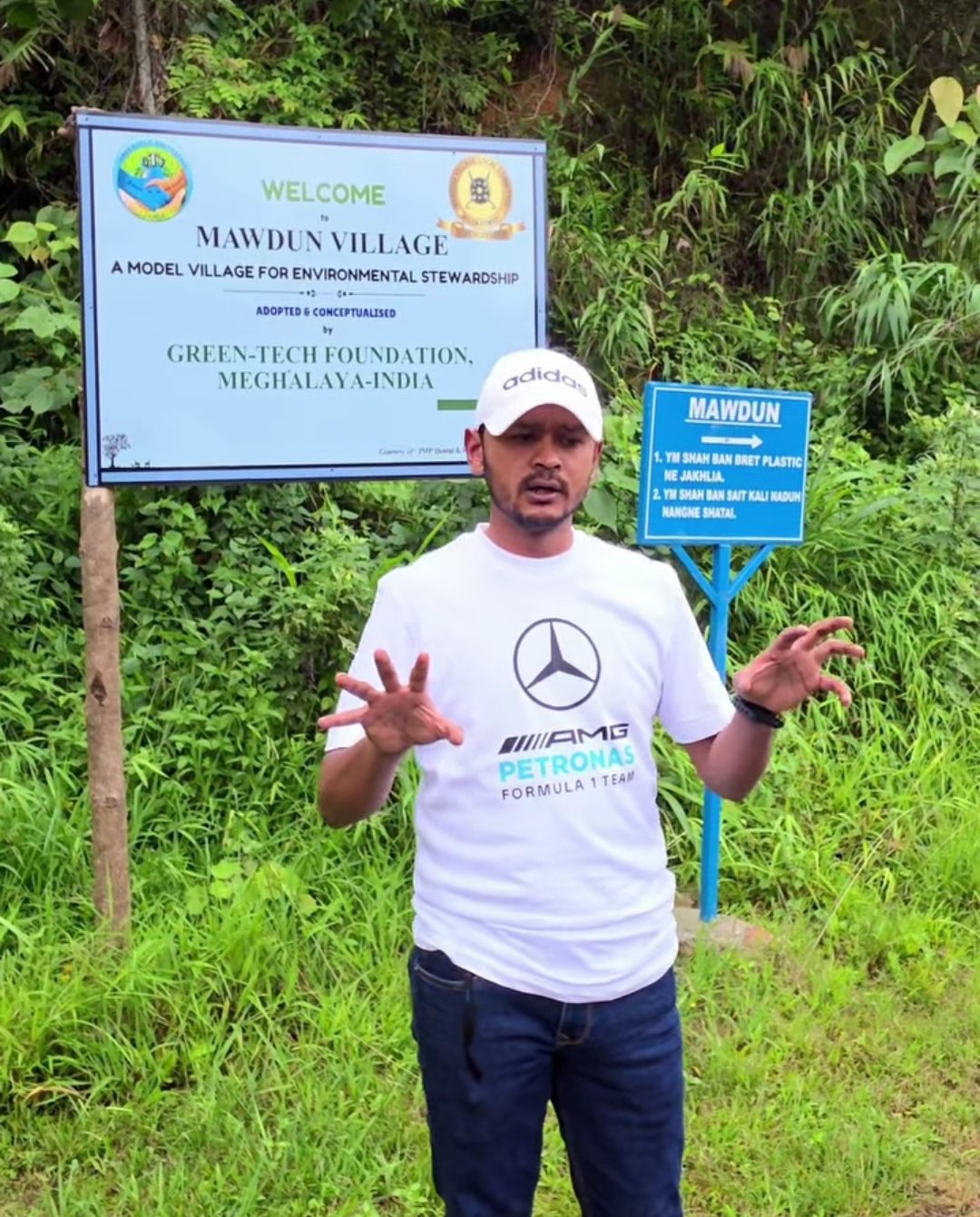
Shillong, Jul 4: The Green-Tech Foundation (GTF), Meghalaya has devised a strategy to elevate Mawdun into a model village that emphasises both environmental stewardship and economic development.
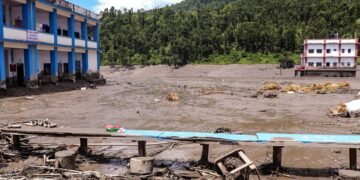
Mawdun is situated amidst dense forests and rivers, surrounded by diverse flora and fauna, with striking views of the Umiam Lake catchment. However, the village faces environmental challenges due to urban waste flow from Shillong, which exposes it to solid waste and pollutants.
The foundation, dedicated to restoring fragile ecosystems and promoting community-led environmental stewardship, now has identified three economic and environmental tracks—eco-tourism, clean village development and waste-to-wealth innovation—aimed at enhancing the overall quality of life for the community while preserving the region’s rich ecological heritage.
GTF chairman H. Bansiewdor Nonglang told Highland Post that the initiative aims to safeguard Mawdun’s ecological assets while also positioning the settlement as a frontline community for the protection of the Umiam Lake catchment.
Describing Mawdun as an “environmental sentinel” he said it an ideal site to implement community-led initiatives like river conservation, watershed management, and riparian restoration.
According to the Nonglang, Mawdun’s forests support wildlife, endemic plants, medicinal species and interconnected ecosystems that contribute to regional biodiversity. Its riverine system sustains both livelihoods and ecological processes.
As upstream urban waste moves downstream, Mawdun becomes one of the earliest points where pollution can be intercepted before it reaches Umiam Lake. Strengthening environmental infrastructure here, the foundation believes, would help protect water quality, fisheries and the wider lake ecosystem.
Nonglang said residents of Mawdun have already engaged in formidable environmental stewardship, participating in cleanliness drives and forest conservation efforts. Despite this commitment, they require institutional support, including better infrastructure and technical expertise.
He informed that the foundation plans to develop Mawdun into a Centre for Environmental Learning and Research. The village will be used as a living laboratory for students, universities, researchers and institutions to study biodiversity conservation, river ecology, waste management, climate resilience, ecosystem restoration and indigenous ecological knowledge.
Nonglang said the overall objective is to show how ecological conservation and sustainable rural development can coexist through planning, scientific management and community participation.
Mawdun, he added, can serve as a flagship example of rural communities turning environmental challenges into opportunities while guarding one of Meghalaya’s most important freshwater ecosystems.