













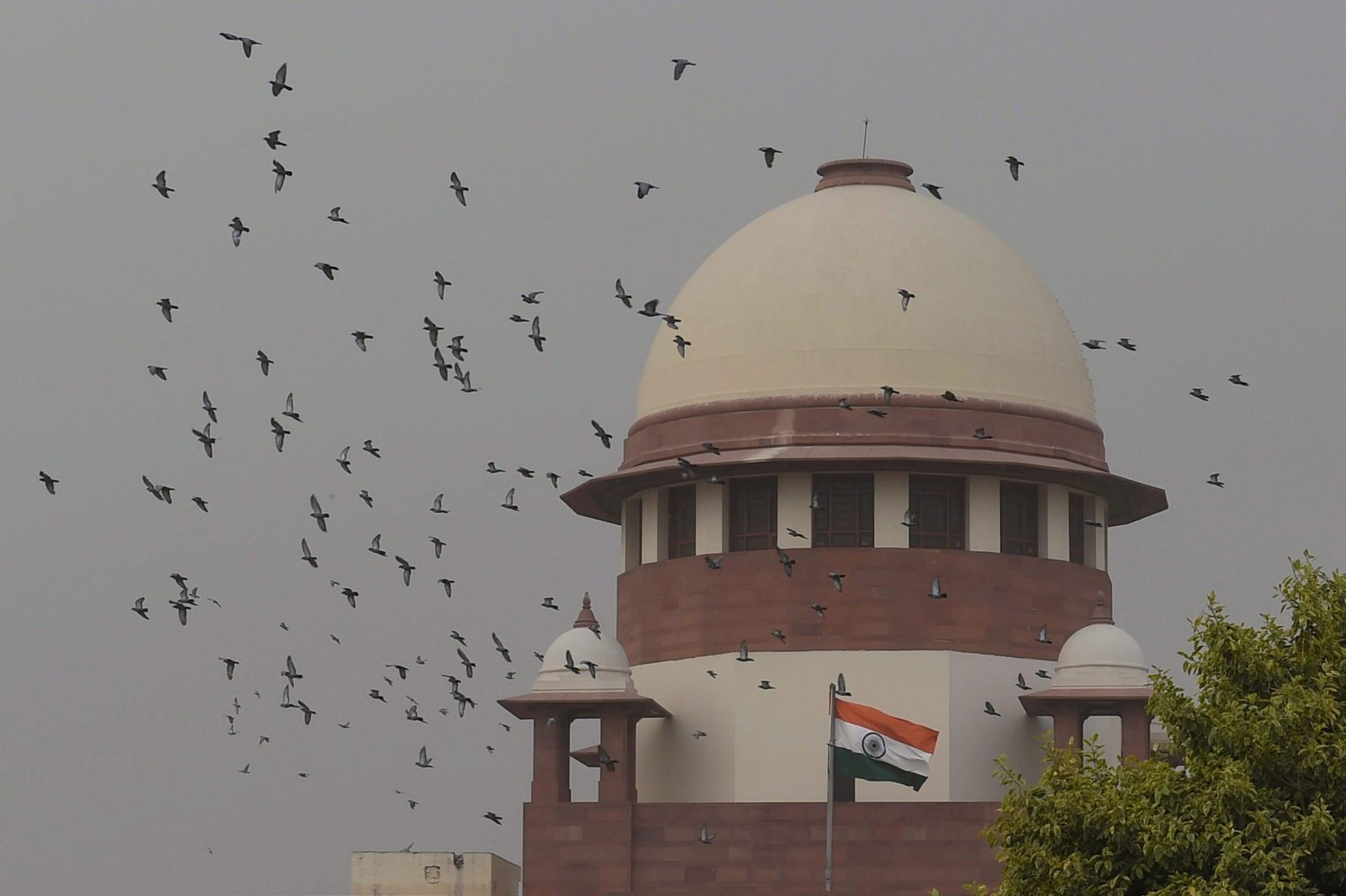
Shillong, Jul 2: The Supreme Court is set to hear the Meghalaya government’s petition challenging the bail granted to Sonam Raghuvanshi, the prime accused in the alleged murder of her husband, Raja Raghuvanshi, on Friday.
The matter was mentioned before a bench headed by Justice MM Sundresh by Solicitor General of India Tushar Mehta, who sought an urgent hearing on the state’s Special Leave Petition (SLP). The bench, which also includes Justice Sheel Nagu, agreed to list the case for hearing on Friday. Court records indicate that the Meghalaya government filed the SLP on Wednesday evening.
Sonam is on trial for the so-called honeymoon murder, where she is alleged to have conspired with her boyfriend and three others to murder her husband Raja soon after they got married.
She had secured bail through a lower court and the end of April, which was confirmed by the High Court of Meghalaya last month. Sonam was granted bail on the grounds that she was not accurately told the reasons for her arrest by police, which thus caused prejudice to her defence. In a significant slip-up, the police had erroneously referred to Section 403(1) BNS instead of Section 103(1). The latter is the correct section for punishment for murder. The police had not just made this mistake once but several times, including in the checklist for justification of arrest, memo of arrest, inspection memo, intimation of rights of the arrested person and case diary extract.
During the mentioning, the Solicitor General argued that there was a significant possibility of the accused, a resident of Madhya Pradesh, fleeing if the bail order remained in force. He submitted before the court that concerns over Sonam absconding had earlier been cited on two occasions when her bail was first denied.
After the High Court dismissed the state government’s petition, the family of Raja also announced their decision to move the Supreme Court seeking cancellation of Sonam’s bail. The family had criticised the prosecution’s handling of the case and stated that it would appoint a private lawyer to pursue the matter independently.
In its High Court challenge, the state’s counsel submitted that there was not a single line in Sonam’s fourth bail application indicating that any actual prejudice had been caused by the procedural error. He maintained that Sonam was fully aware of the serious charges against her, including murder, as evidenced by her signature on arrest memos and the remand orders. He had also referred to a Supreme Court case as precedent where an irregularity, in the absence of demonstrable prejudice, is, at best, a curable defect rather than a justification for bail.